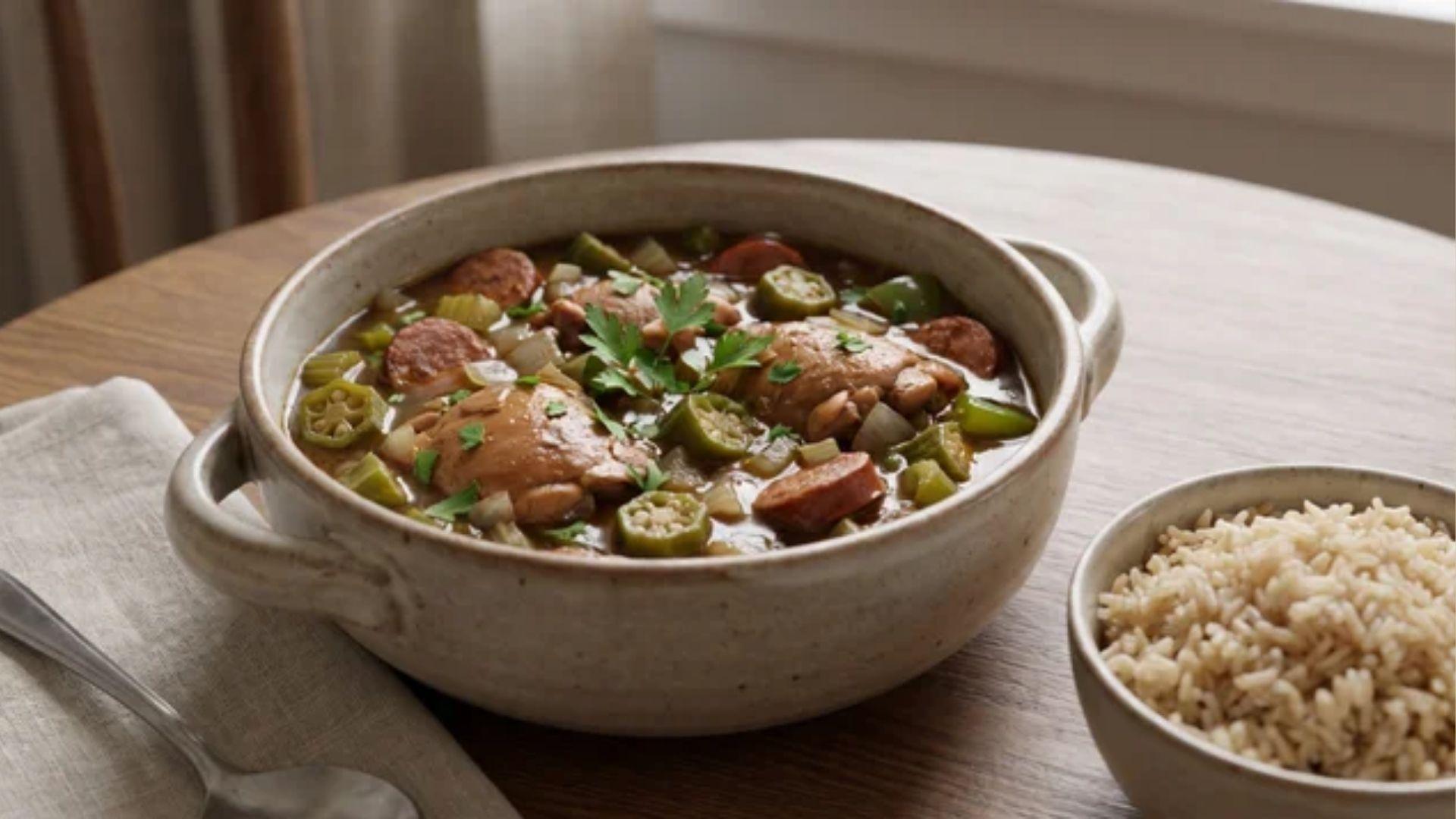
A good healthy gumbo recipe should still taste like gumbo. It needs a dark, nutty roux, smoky sausage, and a broth thick enough to coat a spoon.
Many lightened-up versions cut the roux down to almost nothing, though, and the pot comes out thin and pale, closer to chicken soup than anything from Louisiana.
The answer is to trim the right things. In a classic pot, most of the extra fat and sodium come from three places.
A butter-heavy roux, a pound or more of sausage, and salty stock and seasoning. Portion size and the mound of rice underneath account for the rest.
In this post, you will learn how I build a lighter chicken and sausage gumbo that keeps its slow-cooked depth.
I cover the roux colour to aim for, when the okra goes in, how to keep sodium under control, and how to store leftovers safely.
If you’ve cooked my healthy chili recipe, the approach will feel familiar: keep the long cooking time and cut the excess.
What Makes Gumbo Healthy Without Losing Its Character
Gumbo can be a balanced, satisfying meal once you lighten the parts that carry the most fat and sodium.
Make the roux with olive oil instead of butter, use less andouille, choose low-sodium stock, and fill the pot with onion, celery, bell pepper, and okra.
The flavour comes from technique and time, not from extra fat.
Olive oil does two jobs here. Butter contains milk solids that tend to scorch during a long roux, and most of its fat is saturated, while olive oil holds up to slow browning and is mostly unsaturated fat.
Sausage stays in the pot, but 8 ounces spread across six servings gives you the smoke without a layer of grease on top.
Boneless chicken thighs provide most of the protein, and they stay juicy through a long simmer where breast meat can dry out. The bowl matters as much as the pot.
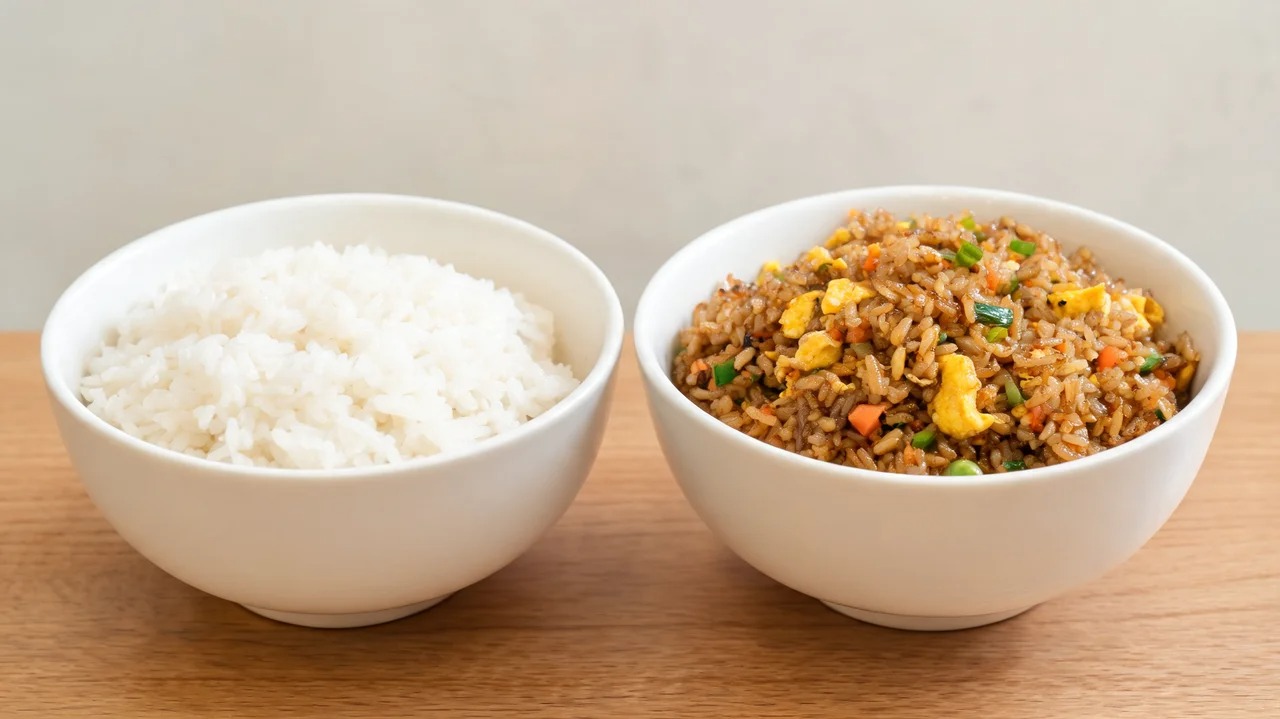
I serve gumbo over a measured half cup of nutty brown basmati rice rather than a heaping pile of white rice, which adds fibre and keeps the gumbo itself as the main event.
Ingredients for a Healthy Chicken and Sausage Gumbo
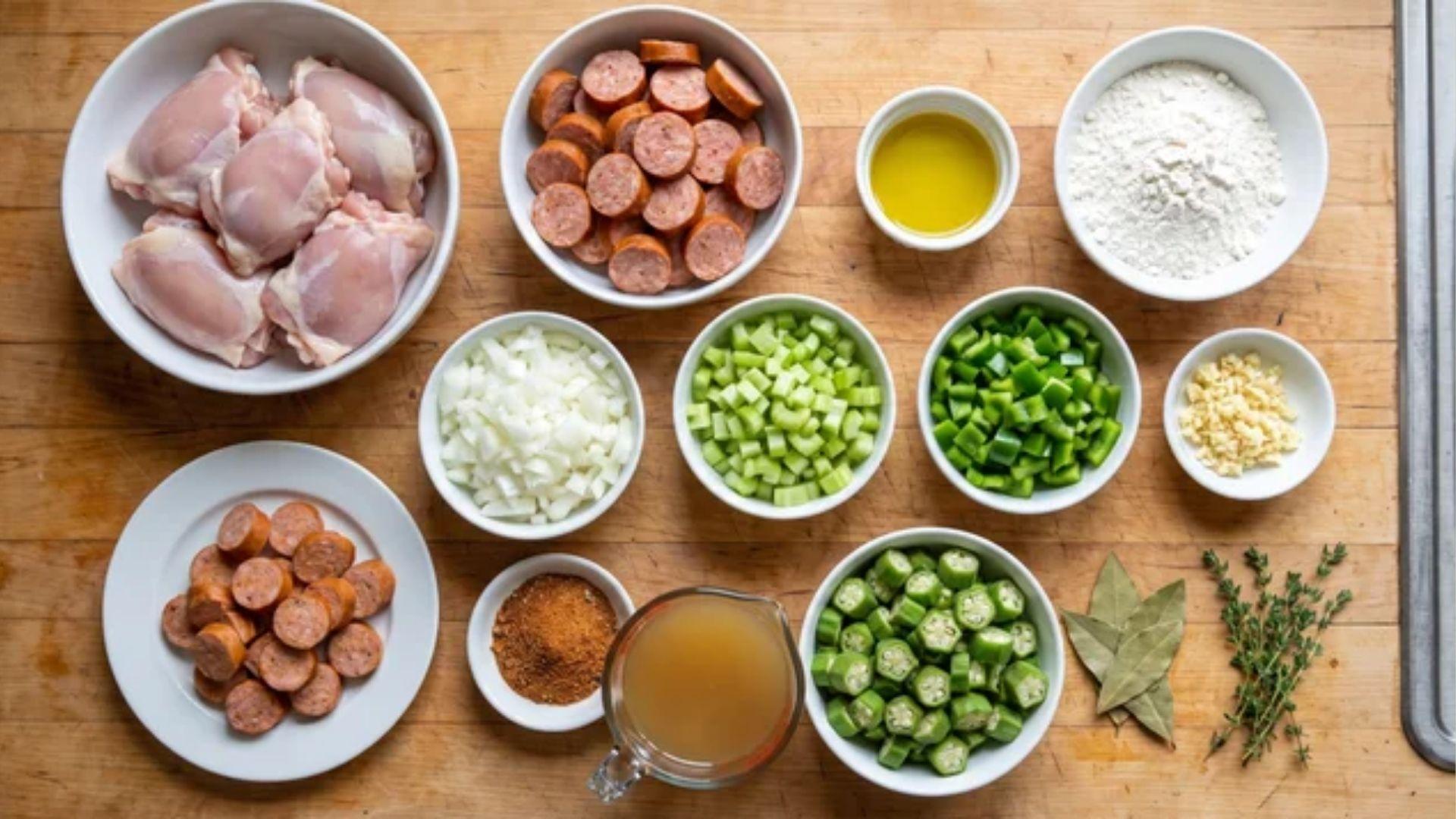
This recipe is built on the holy trinity of onion, celery, and green bell pepper, the same base that anchors Cajun and Creole dishes like étouffée and jambalaya.
In gumbo, those vegetables cook directly into the roux, which is where much of the pot’s sweetness and body comes from.
Everything below is available at a regular grocery store, and the recipe makes six servings.
- 1 lb (450 g) boneless, skinless chicken thighs, cut into 1-inch pieces
- 8 oz (225 g) andouille sausage, sliced into rounds
- 6 tbsp olive oil
- ½ cup (about 65 g) all-purpose flour
- 1 large onion, diced
- 3 celery stalks, diced
- 1 green bell pepper, diced
- 4 garlic cloves, minced
- 1 tbsp Cajun seasoning (a salt-free blend if you can find one)
- 6 cups (1.4 L) low-sodium chicken stock, warmed
- 1 cup fresh or frozen sliced okra
- 2 bay leaves
- 1 tsp dried thyme
- Sliced green onions and hot sauce, for serving (optional)
Turkey or chicken sausage works in place of andouille, although you’ll lose some smokiness, so add 1 teaspoon of smoked paprika with the Cajun seasoning to bring it back.
Andouille is usually sold fully cooked, but check the package, since a raw sausage needs to cook through in the simmer.
Okra vs. Filé Powder: Which One to Use
Okra and filé powder both thicken gumbo, but they go in at different times.
Okra simmers in the pot for the last 15 to 20 minutes until tender, releasing a natural thickener as it cooks.
Filé powder, made from dried, ground sassafras leaves, is stirred in off the heat right before serving, because boiling it turns the broth stringy.
I use okra in this recipe because it adds vegetables to the bowl as well as the body.
If its texture bothers you, sear the slices in a hot, dry skillet for a few minutes before they go in the pot, which cuts down on the slick feel.
Choosing the Fat for Your Roux
A lighter roux works best with a little less oil than flour by volume, which is why this recipe uses 6 tablespoons of oil to 8 tablespoons (½ cup) of flour.
With too little oil, the roux turns into a dry paste that won’t stir smoothly and scorches in spots. With too much, oil pools on the surface of the finished gumbo.
All-purpose flour gives the most predictable browning. For a gluten-free pot, a gluten-free all-purpose blend works, but it can brown at a different pace, so judge by colour rather than time and check your sausage and seasoning labels too.
How to Make Healthy Gumbo Step by Step
This healthy gumbo recipe takes about 90 minutes, and close to half of that is spent on the roux.
Chop every vegetable before the flour goes into the pot, because a dark roux can go from brown to burned quickly and you won’t have time to chop once it reaches the right colour.
Step 1: Make the Roux
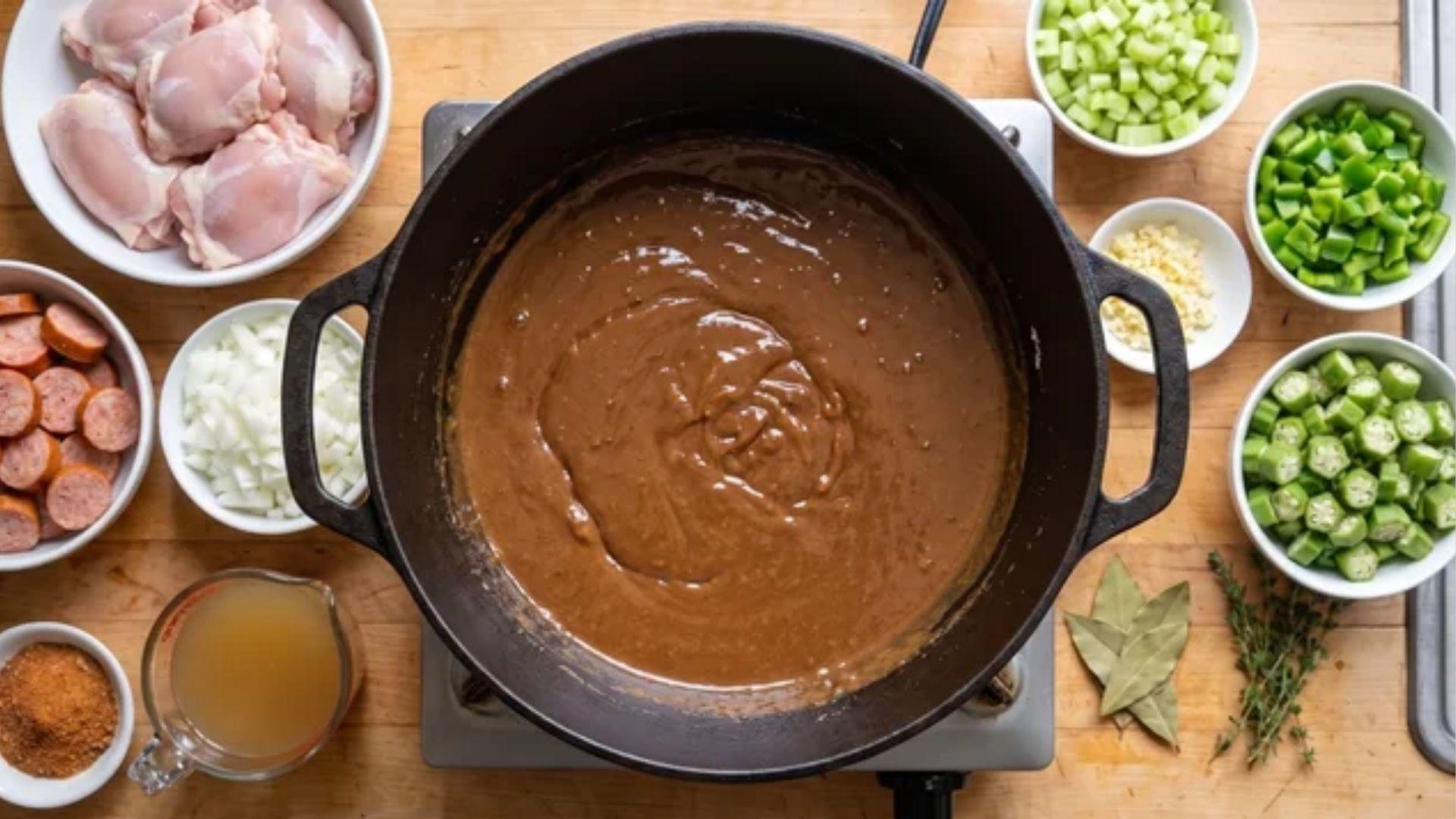
Watch the color rather than the clock, and stop when the roux reaches a milk chocolate brown and smells nutty.
If you see black flecks or smell anything bitter, the roux has burned, and the only fix is to start over.
Step 2: Build the Holy Trinity Base
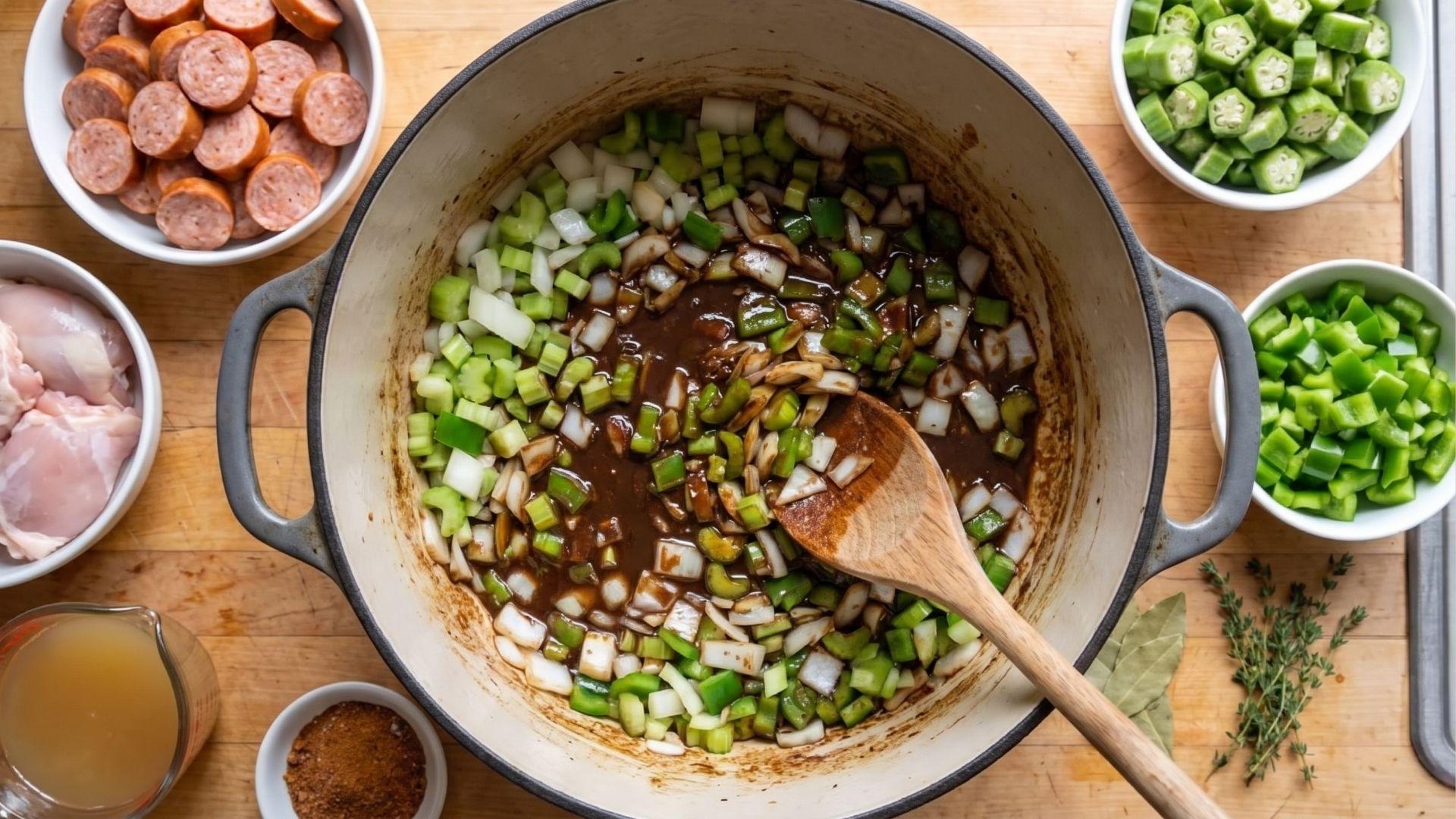
Add the onion, celery, and bell pepper as soon as the roux is ready, since the cooler vegetables also stop it from darkening further.
Stir for about five minutes until they soften, then add the garlic and Cajun seasoning for the last 30 seconds.
The mixture will look thick and clumpy at this stage, which is normal.
Step 3: Add Stock, Protein, and Simmer
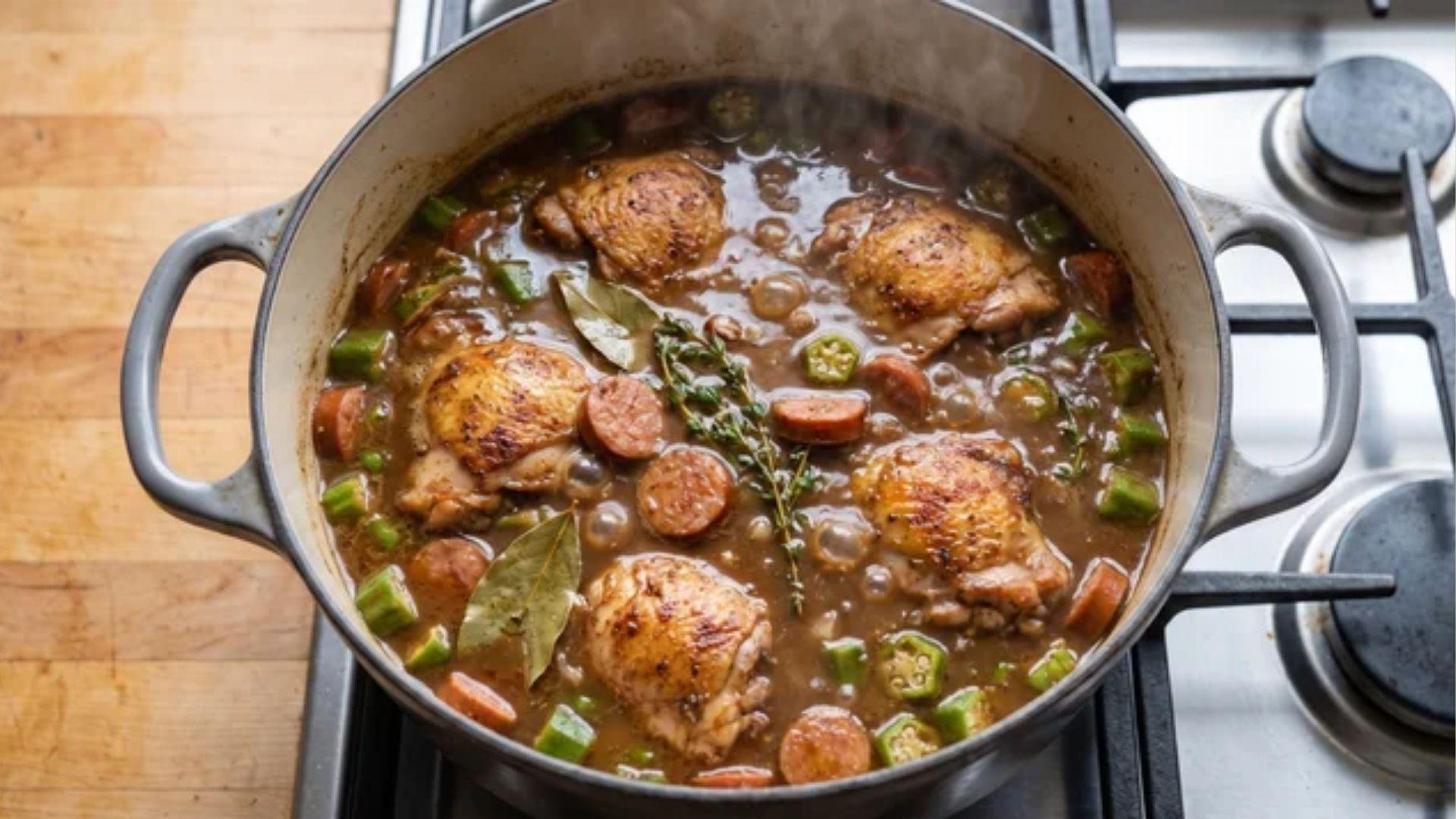
Pour in the warm stock a ladle at a time, whisking after each addition so the roux dissolves without lumps.
Add the chicken, andouille, bay leaves, and thyme, bring the pot to a boil, then lower it to a gentle simmer for 30 to 45 minutes, uncovered.
Skim off any fat that rises from the sausage, which is one of the easiest ways to lighten the finished gumbo.
Add the okra for the final 15 to 20 minutes, and make sure the chicken reaches 165°F (74°C). Remove the bay leaves, then taste and adjust the seasoning.
Keeping the Sodium in Check
Fat gets most of the attention in lighter gumbo, but sodium adds up faster.
Andouille, Cajun seasoning, and boxed stock each bring their own salt, so seasoning by habit at every stage can leave the pot far saltier than you meant it to be.
Stock labels need a careful read. According to FDA sodium label definitions, “low sodium” means 140 mg or less per serving, while “reduced sodium” only means 25% less than the regular version, which can still be a lot.
The same FDA page notes that the Dietary Guidelines for Americans recommend adults stay under 2,300 mg of sodium per day.
My rule is to add no salt until the gumbo has finished simmering, because the broth reduces and concentrates as it cooks.
A splash of hot sauce or a squeeze of lemon at the table brightens the bowl without much added sodium.
If you follow a sodium-restricted diet for blood pressure, heart, or kidney health, check with your doctor or a registered dietitian about how this recipe fits into your plan.
Mistakes That Thin Out a Lighter Gumbo
The most common mistake is burning the roux, which happens when the heat creeps up or the cook walks away.
Keep the burner at medium-low and stay at the pot.
The opposite mistake does nearly as much damage, because pulling the roux early at peanut-butter color leaves the gumbo tasting flat, and a lighter recipe has less fat to cover for that.
Cold stock can also seize the roux into lumps, so warm it first and add it gradually.
Once everything is in, keep the pot at a gentle simmer rather than a hard boil, which tends to toughen the chicken.
Taste once the vegetables soften and again at the end, so the seasoning builds in layers instead of arriving all at once.
Healthy Gumbo Variations Worth Trying
Once you’re comfortable with the roux and the trinity, you can change the protein or the cooking method and still end up with a pot that tastes like gumbo.
Healthy Shrimp and Seafood Gumbo
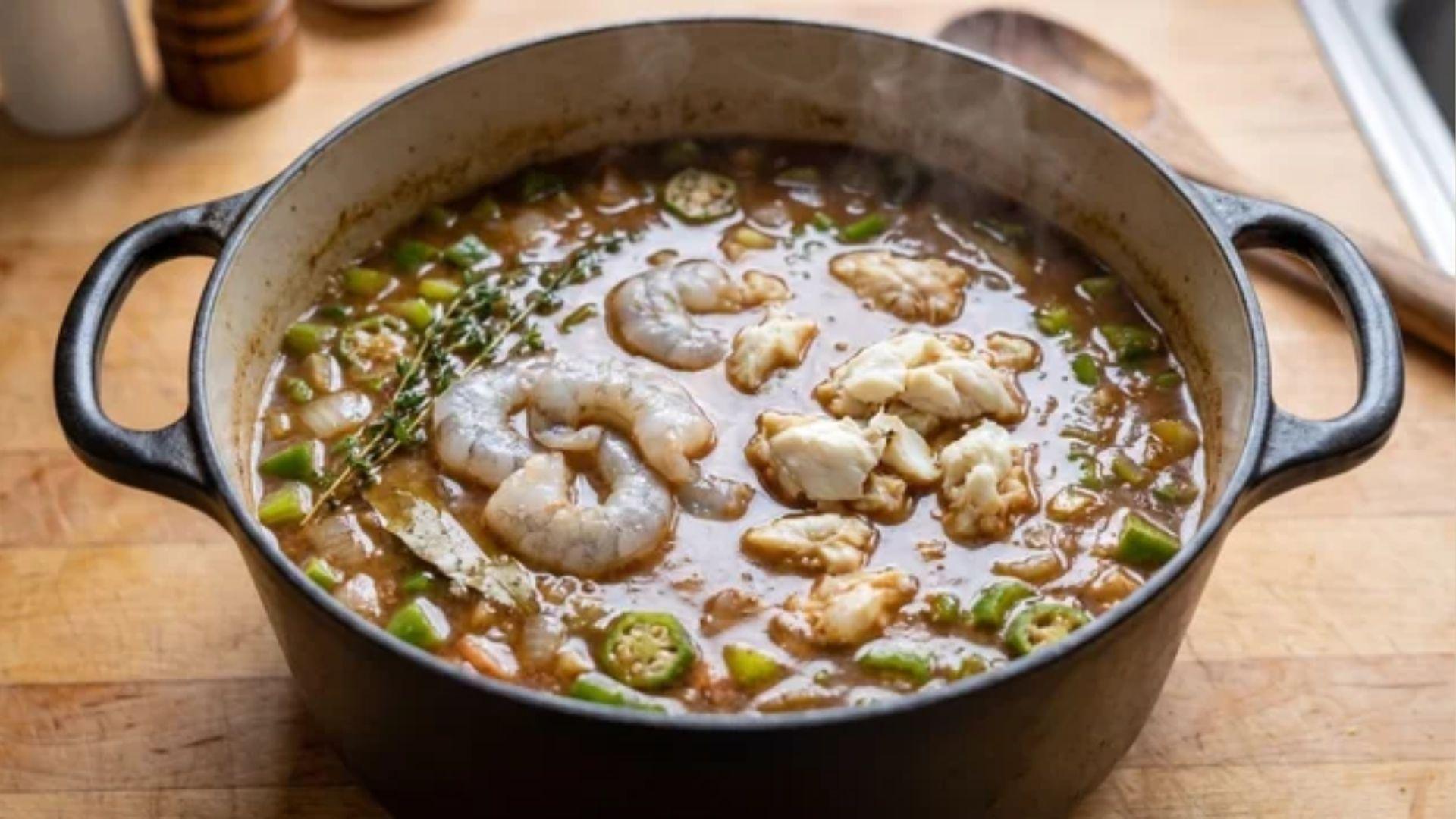
Replace the chicken and sausage with 1 pound of peeled shrimp and 6 to 8 ounces of crabmeat, and use seafood or fish stock if you can find a low-sodium version.
Build the base the same way and simmer it for about 30 minutes before adding the seafood.
Shrimp needs only 3 to 5 minutes, until pink and opaque, and cooked crabmeat needs only to warm through.
This version contains shellfish, one of the major food allergens, so label it clearly if you’re serving guests.
No-Sausage Chicken Gumbo
Leave out the andouille and add 1 to 2 teaspoons of smoked paprika with the Cajun seasoning to replace some of the smoke.
Because sausage contributes a good share of the pot’s sodium, this version is the easiest way to lower it further.
Healthy Crockpot Gumbo
The roux can’t be made in a slow cooker, so make it and cook the vegetables on the stove first.
Transfer the base to the slow cooker with the stock, thawed chicken, sausage, and herbs, then cook on low for 6 to 8 hours, adding the okra during the final hour.
Use thawed meat rather than frozen, so it moves through the unsafe temperature range quickly.
What to Serve With Healthy Gumbo
Rice is the traditional base, and brown basmati is my pick because it’s a whole grain with more fiber than white rice, and its long grains stay separate under a thick broth.
Cauliflower rice works if you want a lower-carb bowl, since it soaks up the broth without adding much starch.
Crusty bread is the old-school way to finish every last drop, and it works best alongside a smaller scoop of rice or none at all.
Lighter Gumbo Comes Down to Technique
A healthy gumbo recipe doesn’t need fewer flavours. It needs the right fat in the roux, a smaller amount of sausage, low-sodium stock, and a measured scoop of whole-grain rice.
The dark roux and slowly softened trinity still give the pot its depth, while skimming the fat and seasoning at the end keep it from turning heavy or salty.
Make the stovetop version this weekend so you can learn the roux color by eye, then try the crockpot variation on a busy weeknight.
Frequently Asked Questions
Can gumbo be healthy?
Yes, though restaurant and canned gumbo can be a different story. Restaurant versions often use more butter or oil in the roux and larger portions of sausage, and canned gumbo can be high in sodium. When ordering out, ask for a cup instead of a bowl and less rice.
Is gumbo good for a diet?
Gumbo can fit into most balanced eating plans because it combines lean protein, vegetables, and a flavorful broth that tends to be filling. How it fits depends on portion size, the amount of sausage, and what goes underneath it.
What is healthier, jambalaya or gumbo?
Neither is automatically healthier, since both depend on the sausage, fat, and portion. The main difference is the rice. Jambalaya cooks the rice in the pot, so it makes up a large share of each serving, while gumbo is served over rice that you portion yourself.
What’s that one thing Cajuns don’t put in their gumbo?
Tomatoes. Many Cajun cooks leave them out and rely on the dark roux for color and depth. Creole gumbo, associated with New Orleans, often includes tomatoes, which add acidity and a redder broth. This recipe follows the Cajun style, but a can of no-salt-added diced tomatoes works if you prefer the Creole approach.