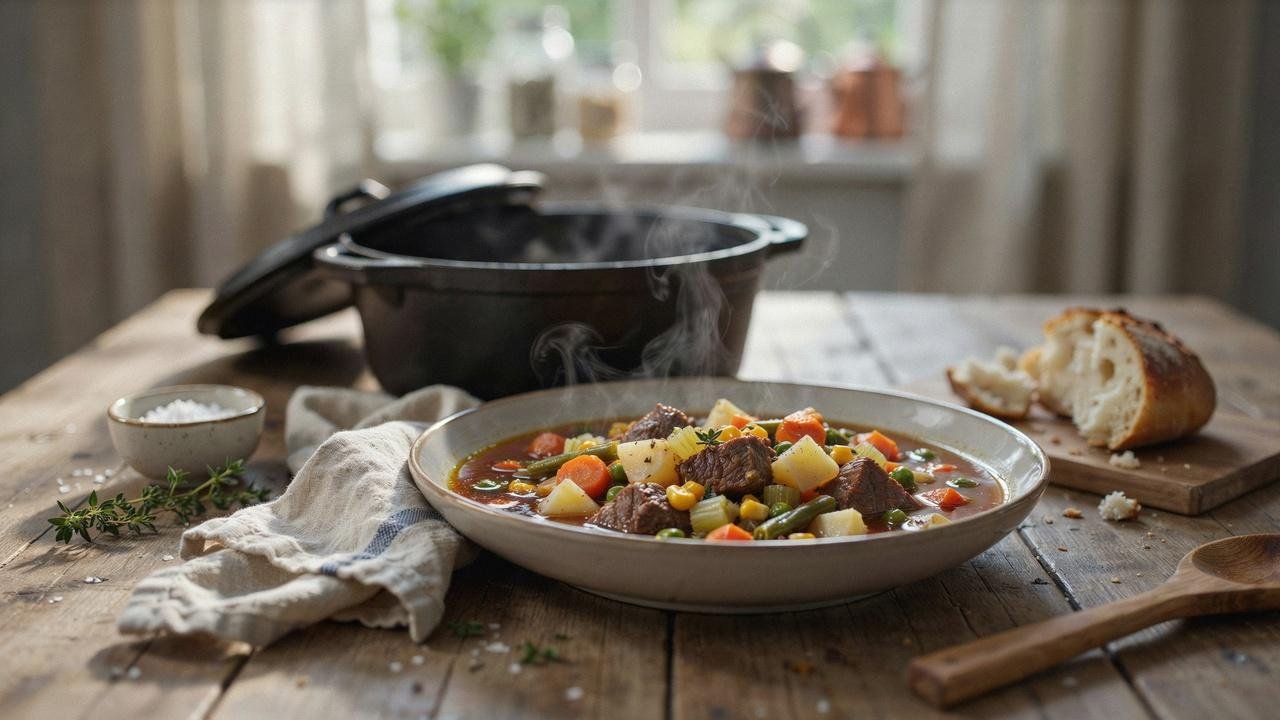
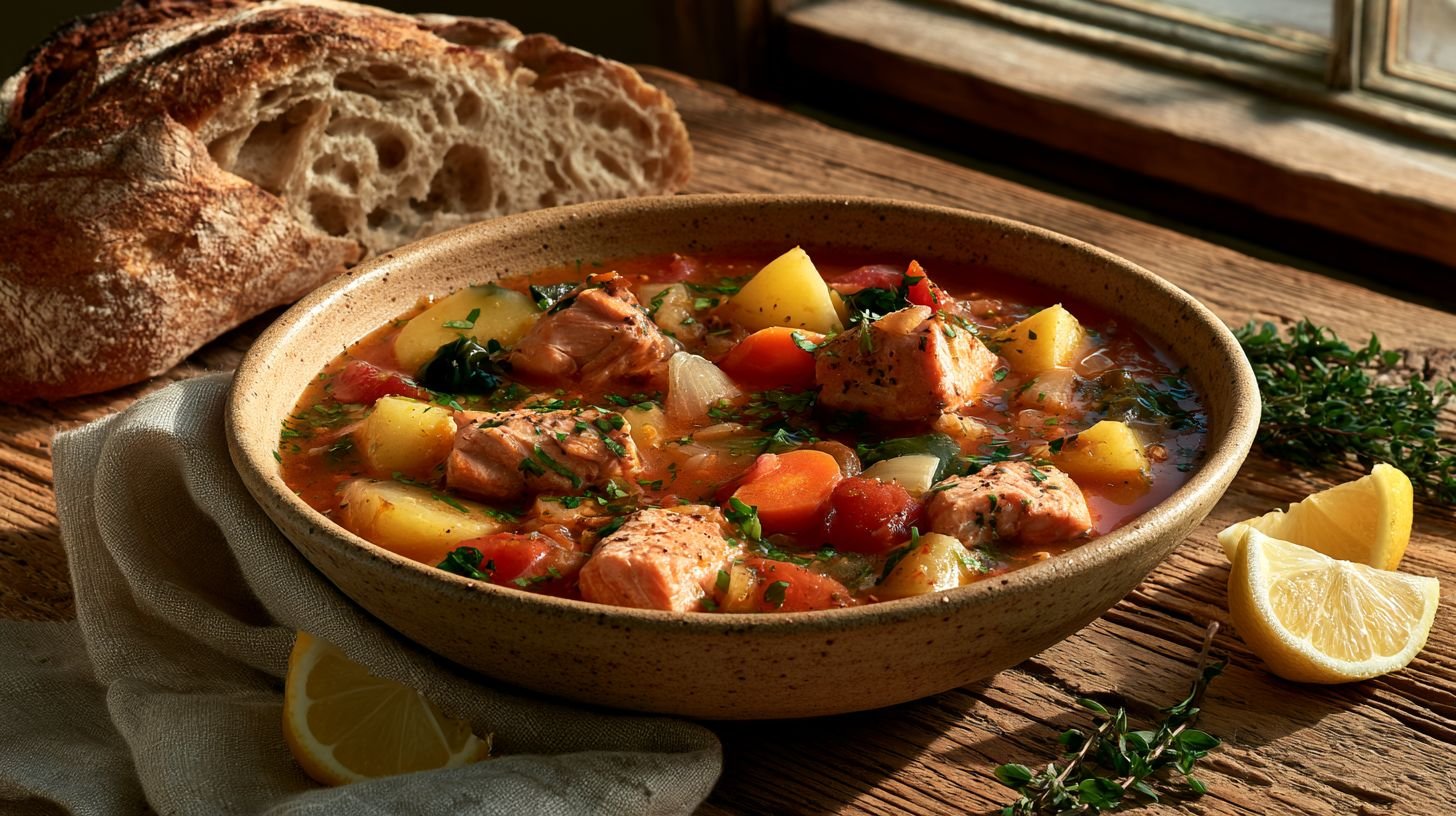
Cold nights call for something filling and flavorful. This homemade salmon stew checks both boxes. It's built on a tomato-based broth layered with aromatics, root vegetables, and tender salmon.
It's the kind of one-pot meal that gets better with every bite. In this post, I'll walk you through everything.
You'll learn what salmon stew is, the ingredients you need, and step-by-step directions to make it right the first time.
I'll also cover variations, serving ideas, storage tips, and mistakes beginners often make.
What Is Salmon Stew?
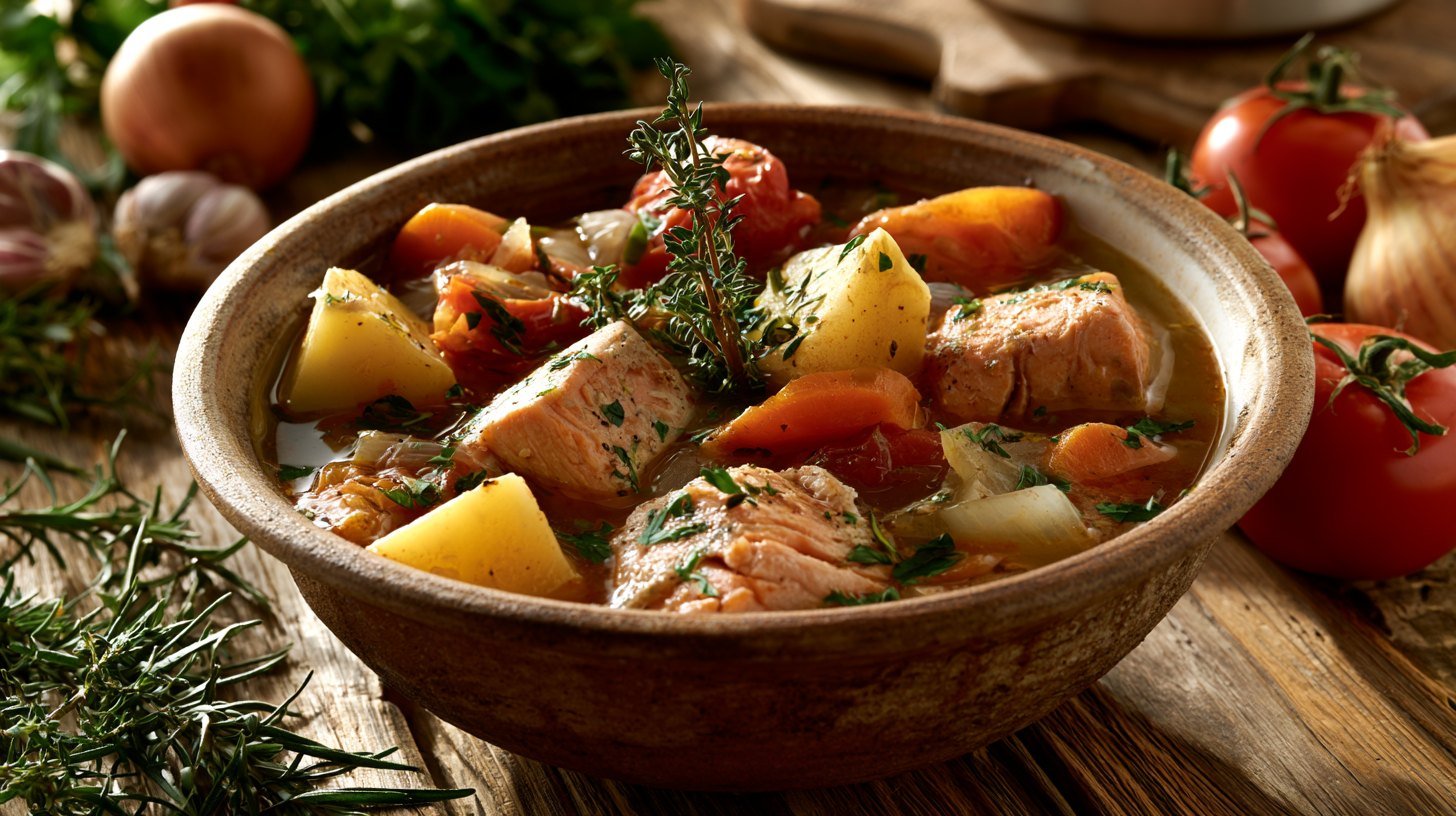
It's a one-pot meal built on broth, fish, and vegetables that comes together faster than most people expect.
Salmon stew is a hearty dish made by simmering salmon with vegetables in a flavorful broth. Think potatoes, onions, tomatoes, and herbs cooked together until the flavors fully develop.
It's filling enough to stand alone as a complete meal, and it adapts easily to whatever proteins or vegetables you already have in the fridge.
Ingredients You'll Need
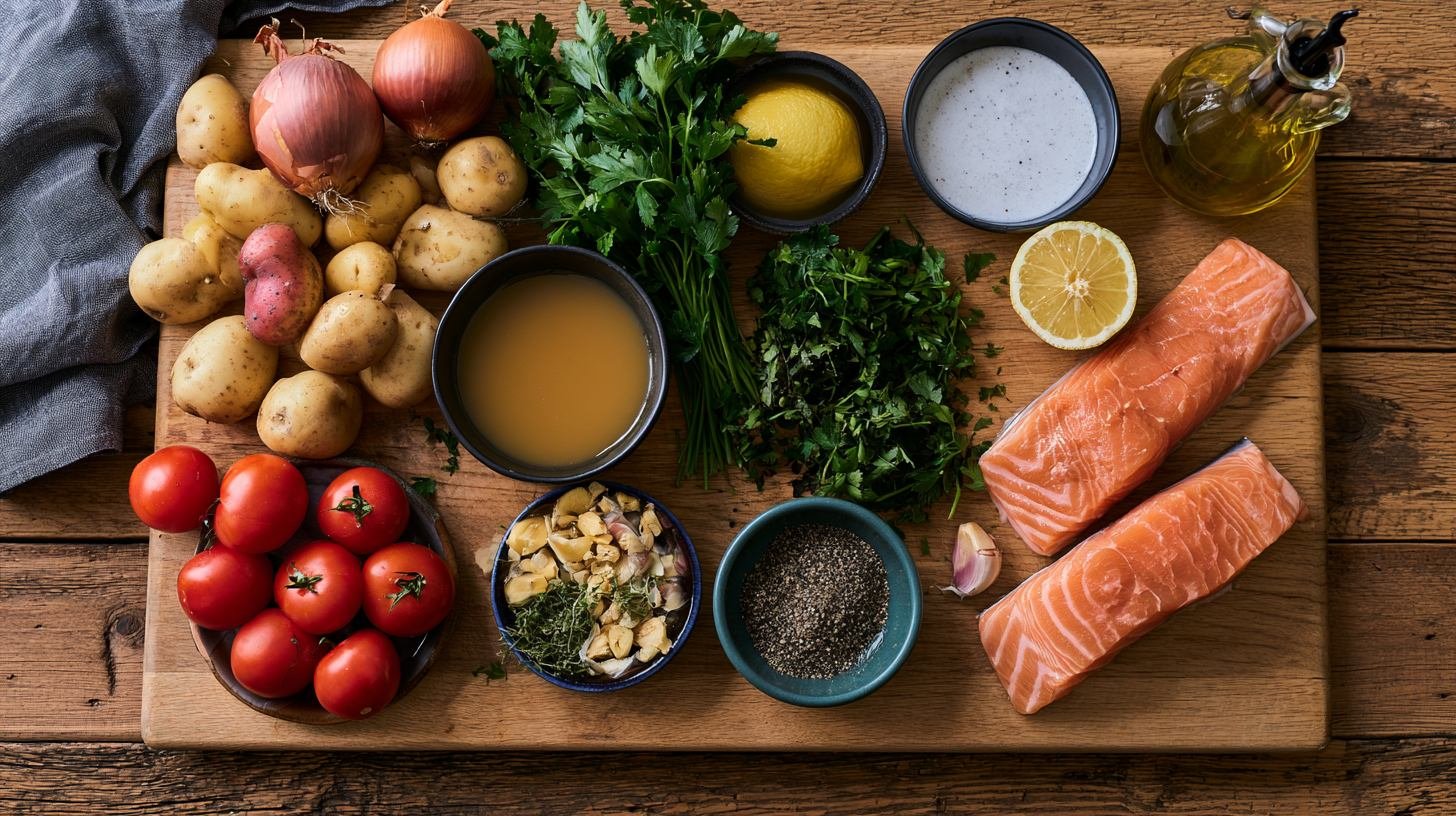
Servings: 4 | Prep Time: 15 minutes | Cook Time: 35 minutes | Total Time: 50 minutes
Estimated Nutrition Per Serving: ~380 calories | 30g protein | 22g carbs | 16g fat
For the stew:
- 1.5 lbs (680g) fresh salmon fillets, skin removed, cut into 2-inch chunks. Or use 2 cans (14.75 oz each) of wild-caught canned salmon, drained.
- 1 lb (450g) Yukon Gold potatoes, peeled and cut into 1-inch cubes. Yukon Golds hold their shape better than Russets and add natural creaminess.
- 1 medium yellow onion, diced
- 4 cloves garlic, minced
- 2 medium carrots, sliced into rounds
- 1 can (14 oz) crushed tomatoes, or 2 tablespoons tomato paste plus 1 cup diced fresh tomatoes
- 3 cups seafood broth (preferred for depth), or low-sodium chicken or vegetable broth
- 1 cup coconut milk or heavy cream (optional, for creamy version)
- 2 tablespoons olive oil
- 1 teaspoon smoked paprika
- 1/2 teaspoon dried thyme
- Salt and black pepper to taste
- Juice of 1 lemon, added at the end
Optional toppings: Fresh parsley, crumbled feta, lemon wedges
Ingredient notes:
- Salmon: Atlantic works fine for everyday use, but sockeye or king salmon bring richer flavor. For canned, choose wild-caught over farmed.
- Broth: Seafood broth gives the most depth. Using chicken broth instead? Add a bay leaf and a strip of lemon zest to compensate.
- Potatoes: Yukon Golds hold their shape and add natural creaminess without any dairy needed.
- Tomatoes: Canned crushed tomatoes give a more consistent acidity than fresh, which may need a pinch of sugar in summer.
How to Make Salmon Stew Recipe (Step-by-Step)
Seven easy steps to a warm, comforting bowl of stew that comes together in one pot with minimal cleanup and maximum flavor. Each step builds directly on the last, from softening the aromatics to nestling in the salmon at just the right moment, so nothing overcooks while something else is still catching up.
Step 1: Prep the Salmon and Vegetables
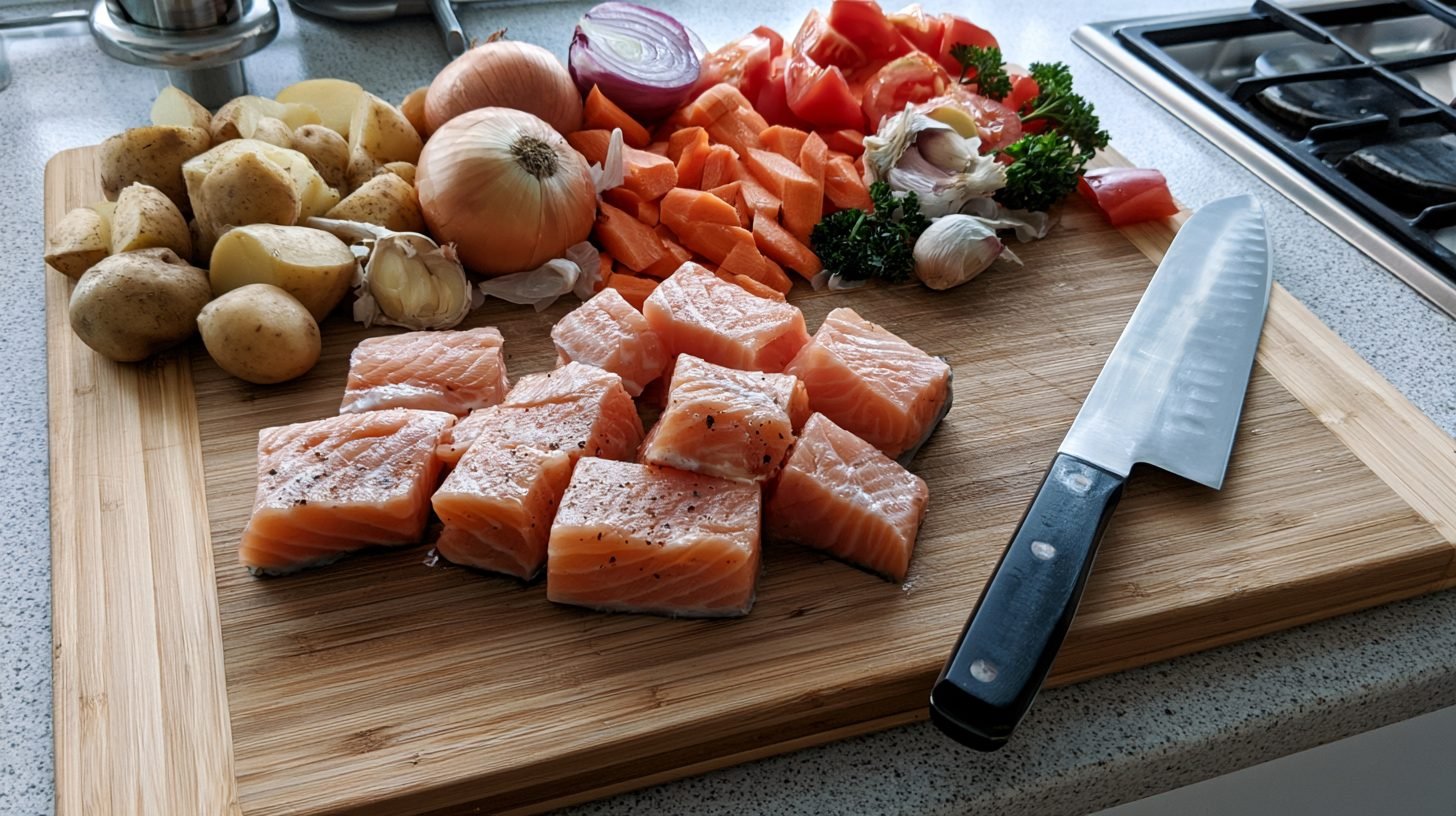
Cut fresh salmon into uniform 2-inch chunks so they cook evenly. If using canned salmon, drain it well and break it into large flakes.
Add it in the last 5 minutes since it only needs to heat through. Peel and cube the potatoes, slice the carrots, dice the onion, and mince the garlic before you turn on the heat.
Step 2: Sauté Onions and Aromatics
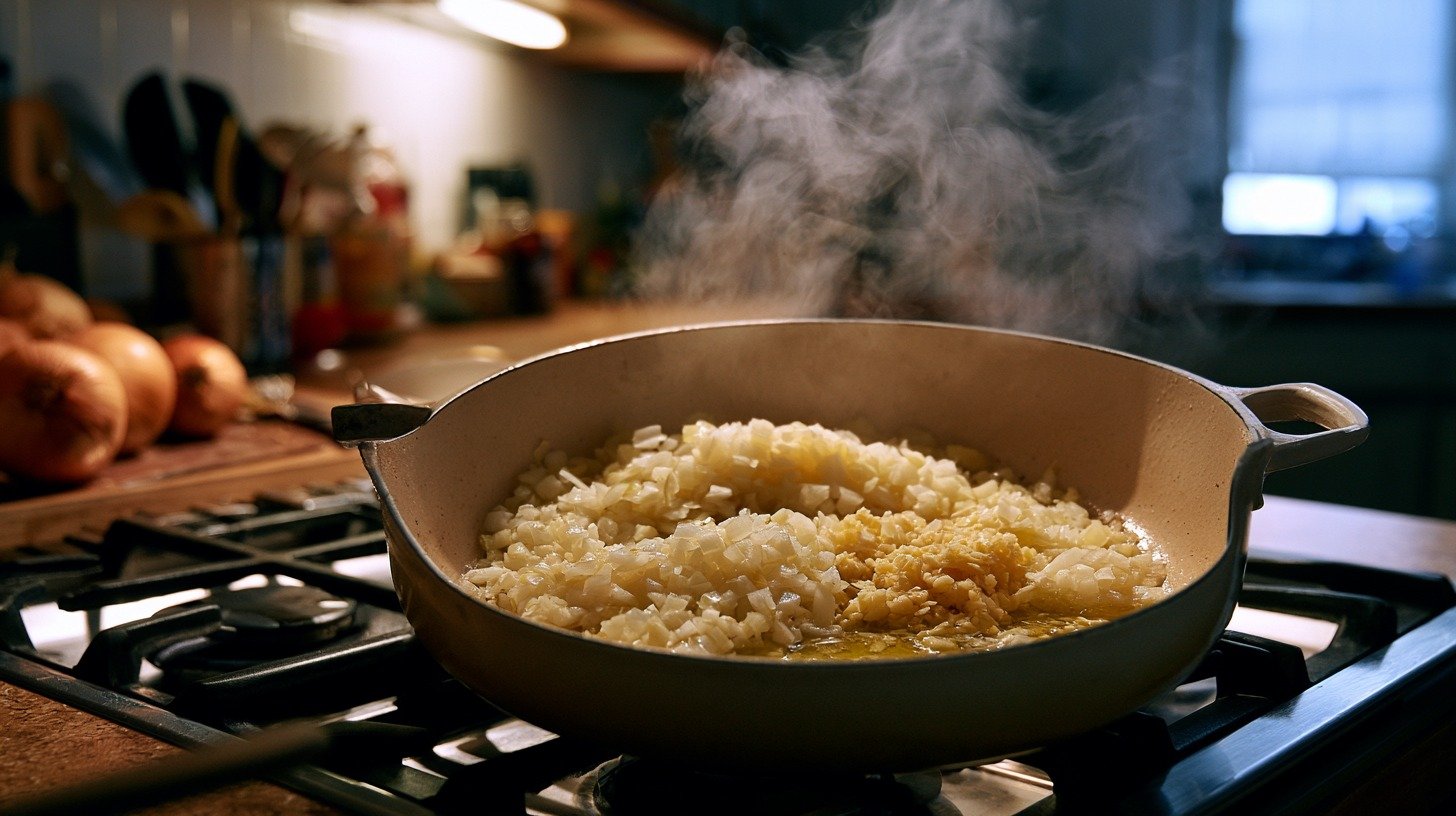
Heat 2 tablespoons of olive oil in a large, heavy-bottomed pot over medium heat. Add the diced onion and cook for 5 to 6 minutes, stirring occasionally, until it's soft and translucent but not browned. Add the garlic and cook for 60 seconds until fragrant.
This step builds the flavor base. Taking the extra time to soften the onion properly adds sweetness to the broth and removes any sharpness.
Step 3: Cook the Potatoes and Vegetables
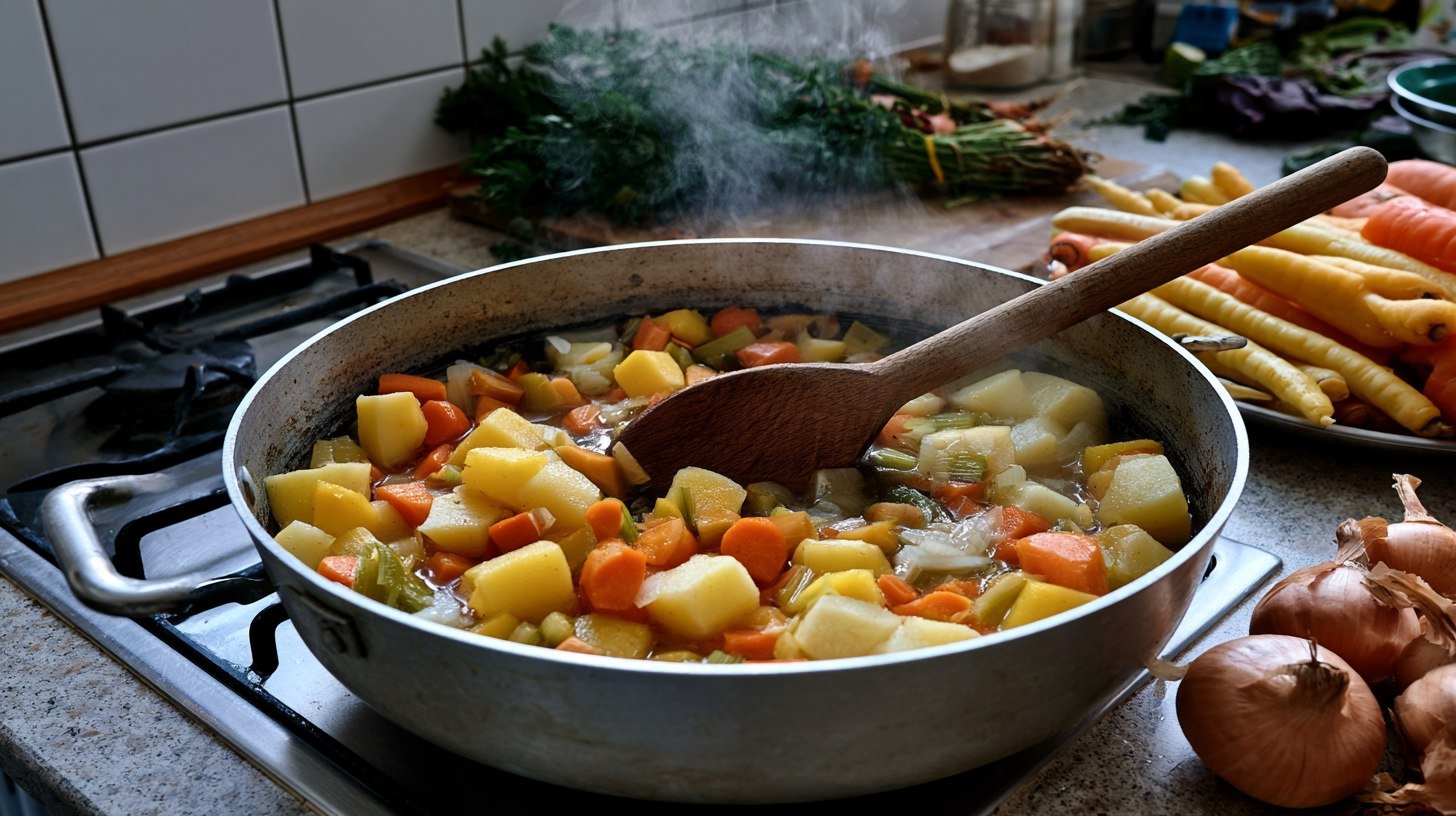
Add the potato cubes and carrots to the pot. Stir them into the onion and garlic mixture and cook for 2 to 3 minutes over medium heat.
This brief sauté coats the vegetables in the aromatics, jumpstarts their cooking, and starts building a subtle depth that carries all the way through to the finished stew.
Step 4: Build the Tomato-Based Broth
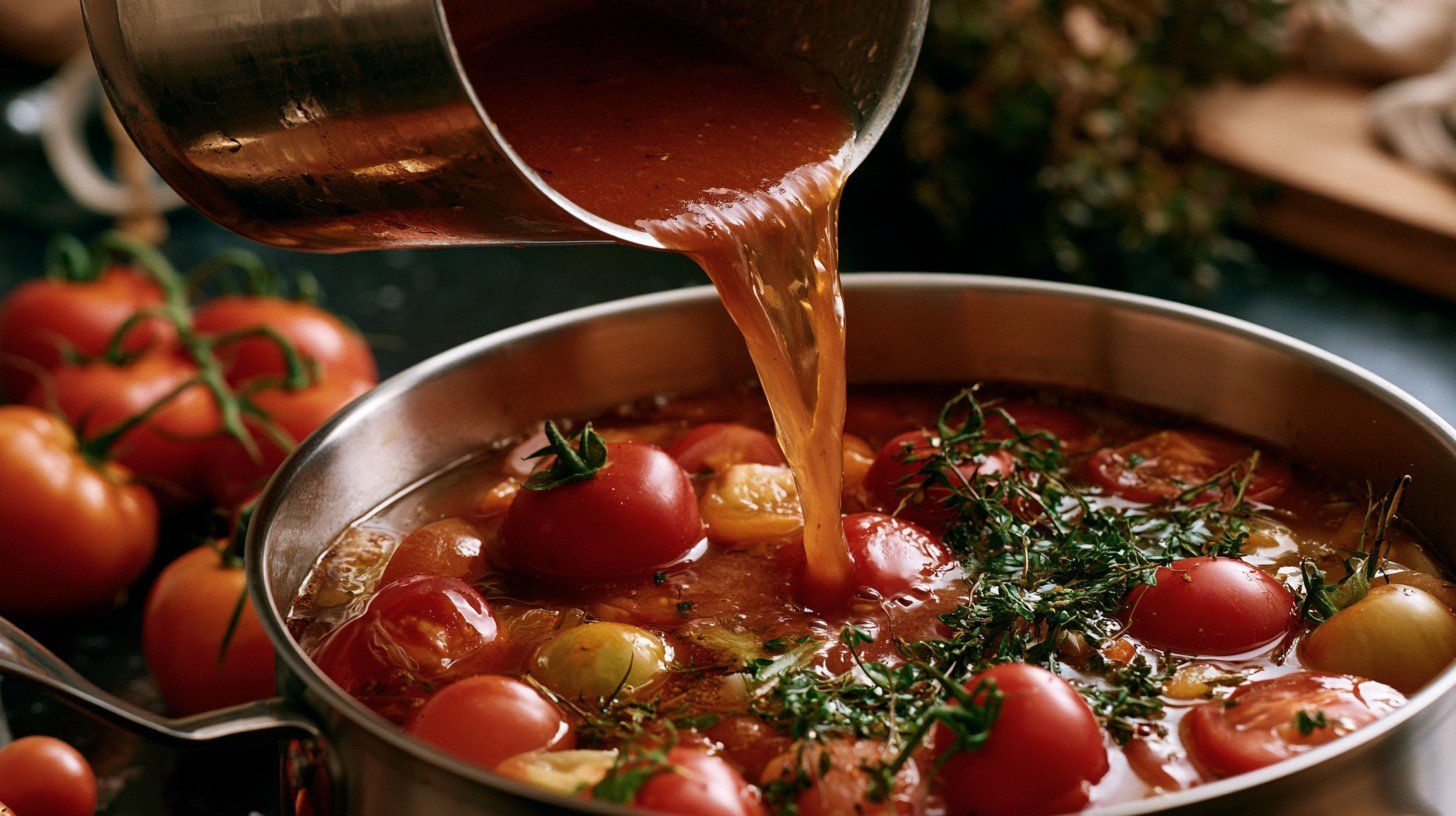
Add the crushed tomatoes, broth, smoked paprika, thyme, and a generous pinch of salt. Stir everything together and bring the pot to a gentle boil.
Reduce heat to medium-low and simmer uncovered for 15 to 18 minutes, until the potatoes are just fork-tender but still holding their shape.
Taste the broth at this point. It should be well-seasoned and slightly tangy. If the tomatoes make it too acidic, add a small pinch of sugar or a splash more broth.
Step 5: Add Salmon and Simmer Gently
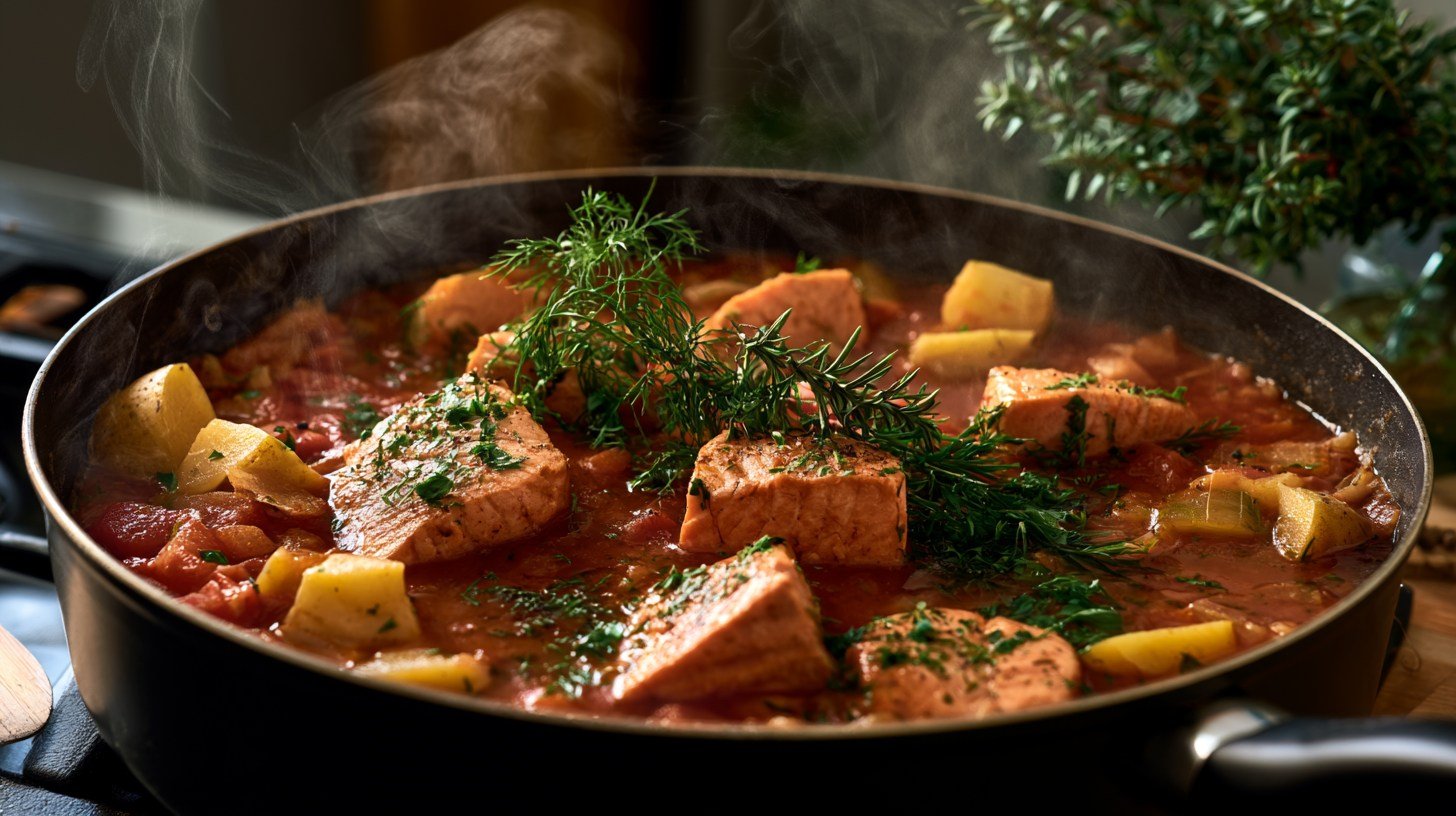
Nestle the fresh salmon chunks into the broth in a single layer. Reduce the heat to low and simmer gently for 8 to 10 minutes. Resist the urge to stir.
Salmon is delicate and breaks apart easily, so use a spoon to occasionally ladle broth over the top of the pieces instead.
The salmon is done when it turns opaque throughout and flakes with gentle pressure from a fork. Internal temperature should reach 125 to 130°F for moist, perfectly cooked fish. Going beyond 145°F will dry it out.
Step 6: Finish with Herbs, Lemon, and Optional Toppings
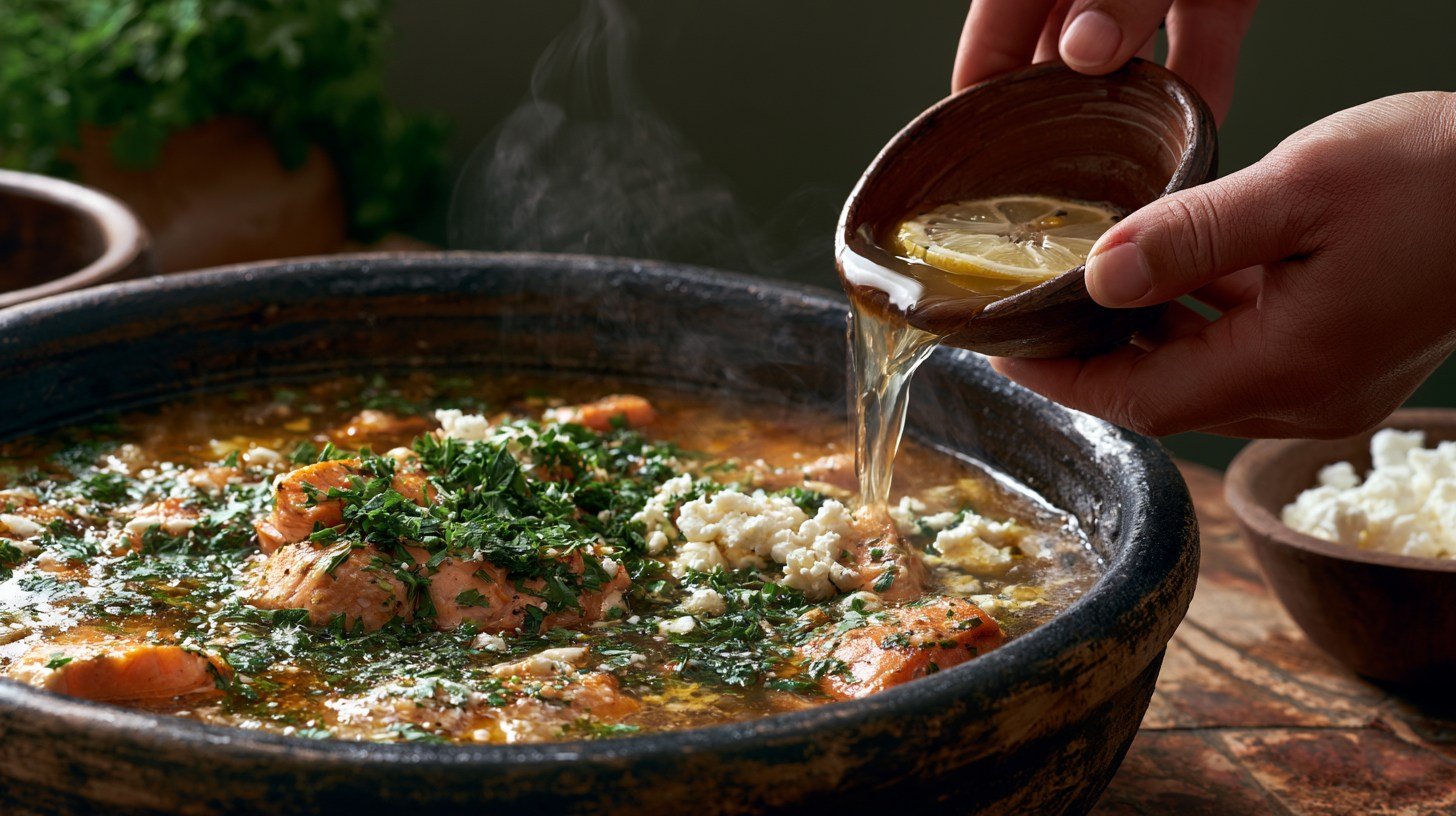
Turn off the heat. Squeeze in the juice of one full lemon and stir in the fresh parsley. If you're making the creamy version, stir in the coconut milk or cream now and let it sit for 2 minutes off the heat. This prevents the dairy from breaking.
Lemon juice does more than add brightness. It cuts through the richness of the salmon and balances the acidity of the tomatoes, bringing all the flavors into focus.
Step 7: Serve Hot and Enjoy
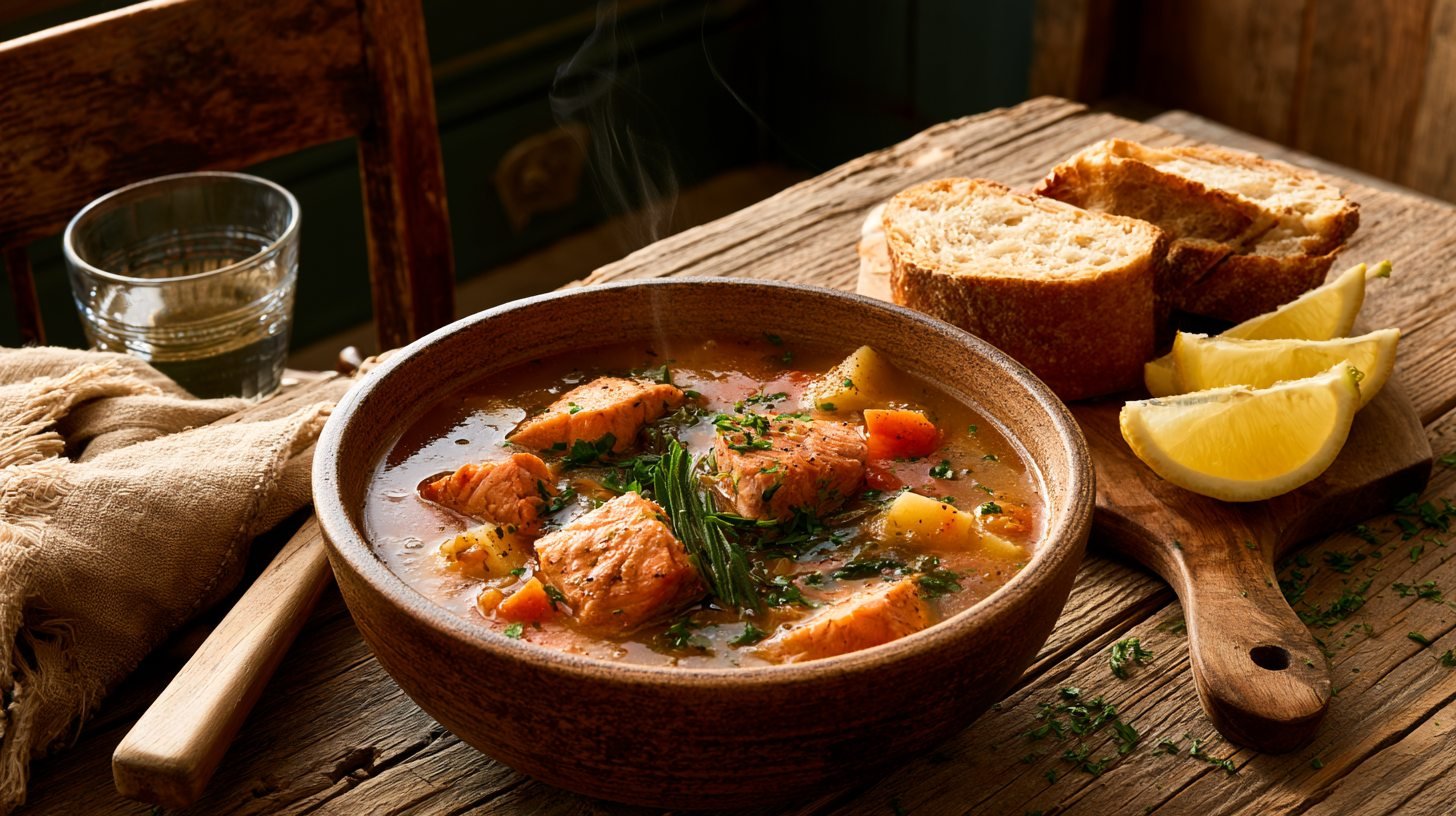
Ladle into bowls immediately while the stew is still hot. Add crumbled feta, extra parsley, or a lemon wedge on the side if desired. A drizzle of good olive oil over the top is a simple finishing touch worth trying.
The stew is best eaten fresh, but it reheats beautifully, see the storage tips below for how to do it without drying out the salmon.
Popular Salmon Stew Variations
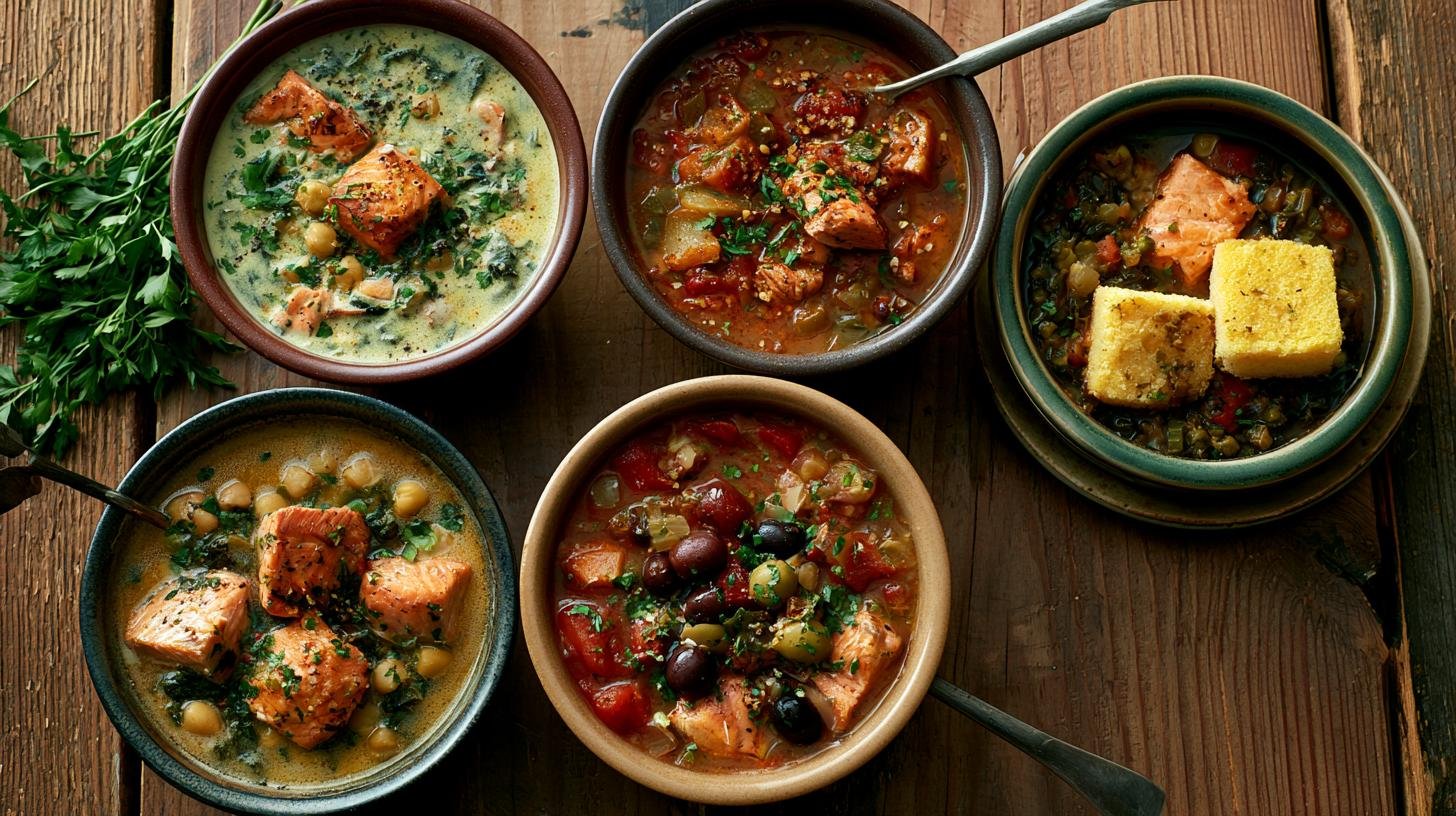
Five tasty twists to match any mood or craving, from smoky Southern-style to dairy-free, Mediterranean, spicy, and creamy versions you can build from the same base recipe. Each one only changes a handful of ingredients, so you can switch between them without needing a different shopping list every time.
Creamy Salmon Stew
Stir in 1 cup of full-fat coconut milk or heavy cream after removing the pot from heat. The fat emulsifies with the tomato broth to create a silky, rose-colored base.
For extra richness, sauté 1 tablespoon of butter with the onions at the start.
Coconut milk keeps the stew dairy-free with a subtle sweetness that complements the salmon. Heavy cream gives a more neutral, restaurant-style finish.
Southern Salmon Stew Recipe
This version uses bacon fat instead of olive oil for sautéing, which adds a smoky backbone from the start. Season with 1 teaspoon Cajun spice blend, 1/2 teaspoon cayenne, and a dash of hot sauce in the broth.
Skip the lemon and finish with a splash of apple cider vinegar instead for a different kind of tang.
Serve with warm cornbread or buttery drop biscuits to soak up the deeply seasoned broth.
Mediterranean-Style Salmon Stew
Replace half the crushed tomatoes with diced fresh tomatoes and add 1/4 cup of Kalamata olives and 1 tablespoon of capers.
Use oregano and dill instead of thyme, and stir in 1 teaspoon of lemon zest along with the juice at the end.
Finish with a drizzle of good extra-virgin olive oil and crumbled feta. The olives and capers provide enough salt, so taste before adding more.
Spicy Salmon Stew
Add 1 to 2 sliced jalapeños (seeds in for more heat) when sautéing the onions. Stir in 1 teaspoon of red pepper flakes and 1/2 teaspoon of cayenne when building the broth.
A tablespoon of harissa paste stirred in at the end adds both heat and a complex, smoky depth that red pepper flakes alone can't deliver.
Finish with a squeeze of lime instead of lemon for a brighter, sharper contrast to the heat.
Dairy-Free and Paleo-Friendly Version
Skip the cream entirely and build a richer broth by adding 1 tablespoon of tomato paste in addition to the crushed tomatoes.
A cup of light coconut milk stirred in at the end adds body without dairy. Use arrowroot starch (1/2 teaspoon dissolved in 1 tablespoon cold water) if you want a slightly thicker texture.
This version is naturally gluten-free, Whole30-compatible, and lower in saturated fat than the creamy variation.
What to Serve with Salmon Stew
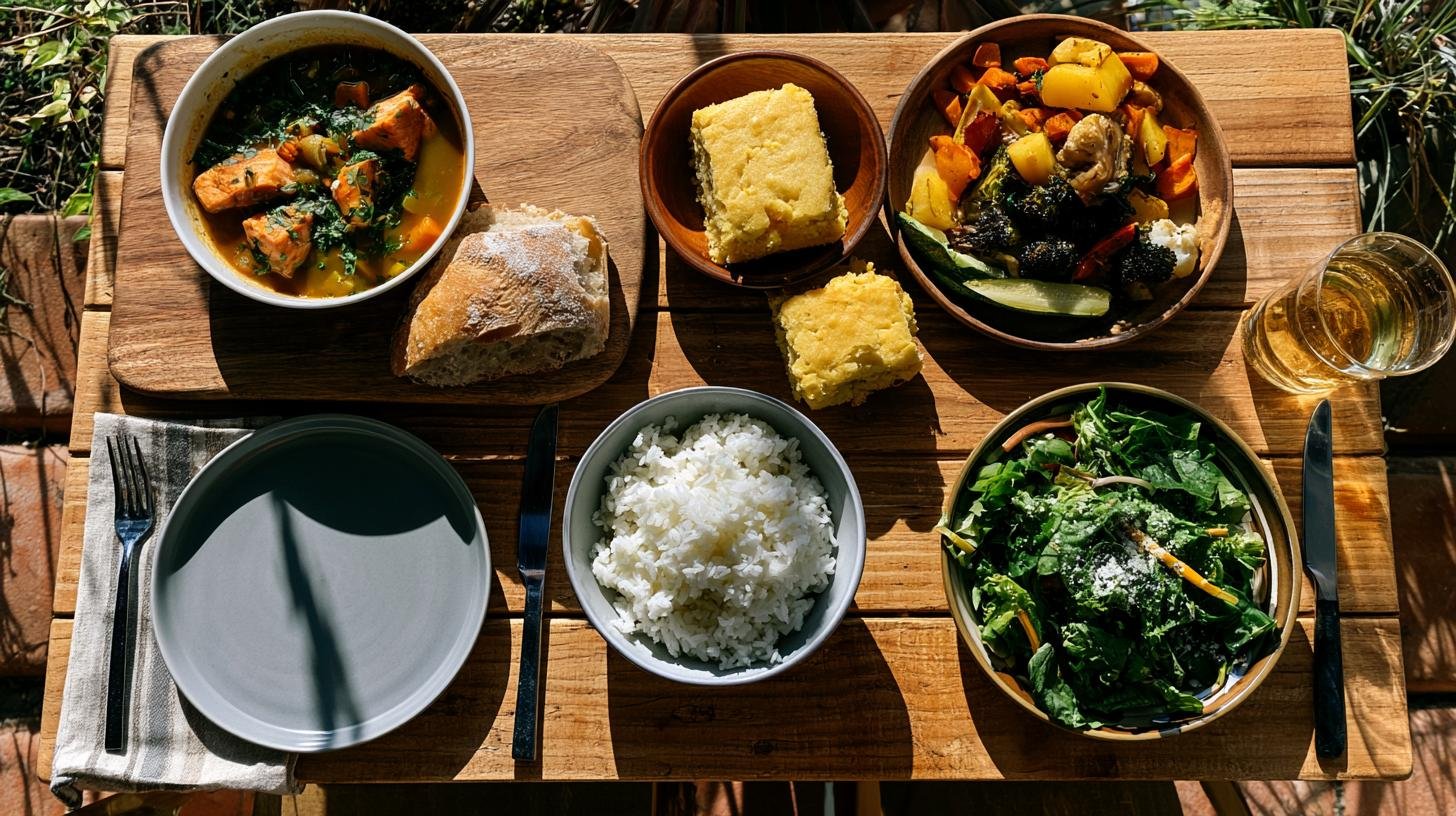
The best sides to round out your cozy meal, from crusty bread that soaks up every drop of broth to crisp greens that balance the richness. Each pairing works with the base recipe or any of the variations above, so feel free to mix and match based on what you're already craving that night.
Crusty Bread
A thick slice of sourdough or a baguette is the classic pairing for this stew. The open crumb structure soaks up broth efficiently, and the mild tang of sourdough complements the tomato base without competing with it.
Warm the bread in a 350°F oven for 5 minutes before serving so it stays crisp on the outside and soft in the middle.
Steamed Rice
Plain white or brown rice turns this stew into an even more filling meal. Keep it unseasoned so the broth does all the flavor work. A neutral base lets it shine without pulling attention away from the salmon.
Long-grain white rice or jasmine rice absorbs the tomato broth particularly well and makes every spoonful more satisfying.
Green Salad
A simple arugula or mixed green salad with lemon vinaigrette works well alongside this stew.
The slight bitterness of arugula cuts through the richness of the broth, and the acidity in the dressing reinforces the lemon already in the dish without duplicating it.
Keep the salad lightly dressed so it stays crisp against the warmth of the stew.
Cornbread or Biscuits
Cornbread is particularly well-suited to the Southern variation, where its slight sweetness balances the Cajun heat in the broth.
Buttermilk biscuits are a better match for the creamy version, where their richness feels at home.
Either one makes an effective scoop for the fish and vegetables and adds a satisfying contrast in texture to every bowl.
Roasted Vegetables
This homemade salmon stew stores well and reheats easily, making it a smart choice for meal prep and busy weeknights.
Refrigerator: Store leftover salmon stew in an airtight container for up to 3 days. The broth thickens as it chills, which is normal. Add a splash of broth or water when reheating.
Reheating: Warm on the stovetop over low heat, stirring gently. Avoid the microwave if possible since it can make the salmon rubbery. If you must microwave, use 60% power in 90-second intervals.
Freezing: The tomato-based version (without cream) freezes well for up to 2 months. Freeze the broth and vegetables separately from the salmon if possible, as cooked salmon can become grainy after freezing. Thaw overnight in the fridge before reheating.
Meal prep tip: Make the broth and vegetable base up to 2 days ahead. Store it separately, then poach fresh salmon directly in the reheated base when you're ready to eat. This gives you the texture of a freshly made stew with minimal weeknight effort.
Storage, Freezing, and Reheating
This homemade salmon stew stores well and reheats easily, making it a smart choice for meal prep and busy weeknights.
Refrigerator: Store leftover salmon stew in an airtight container for up to 3 days. The broth thickens as it chills, which is normal. Add a splash of broth or water when reheating.
Reheating: Warm on the stovetop over low heat, stirring gently. Avoid the microwave if possible since it can make the salmon rubbery. If you must microwave, use 60% power in 90-second intervals.
Freezing: The tomato-based version (without cream) freezes well for up to 2 months. Freeze the broth and vegetables separately from the salmon if possible, as cooked salmon can become grainy after freezing. Thaw overnight in the fridge before reheating.
Meal prep tip: Make the broth and vegetable base up to 2 days ahead. Store it separately, then poach fresh salmon directly in the reheated base when you're ready to eat. This gives you the texture of a freshly made stew with minimal weeknight effort.
Tips and Common Mistakes
Small habits make the difference between a good pot of stew and a great one.
- Don't rush the simmer. Letting the broth cook for the full time before adding the salmon lets the potatoes absorb flavor and the liquid concentrate slightly.
- Season in layers. Add salt when sautéing the onions, again when you add the broth, and once more after the salmon goes in.
- Rest the finished stew for 3 to 5 minutes before serving so the salmon finishes gently and the flavors settle.
- If using low sodium broth, taste and season throughout instead of waiting until the end.
Conclusion
This salmon stew recipe has a permanent spot in my dinner rotation, and I think it'll earn one in yours too.
It's the kind of dish that rewards simple technique: careful prep, patient simmering, and a squeeze of lemon at the end. It doesn't require skill or specialty ingredients.
I still remember the first time I made this for my family. It disappeared fast, and it's been a regular request every winter since.
Give it a try this week and let me know how it turns out. Leave a comment below with the variation you chose. I'd especially love to hear if you try the Mediterranean version.
If this recipe worked for you, share it with someone who could use a reliable weeknight dinner.
Frequently Asked Questions
Can I use frozen salmon for this stew?
Yes. Thaw it completely in the fridge overnight rather than on the counter, then pat it dry with paper towels before it goes into the stew.
Excess moisture from improperly thawed salmon can water down the broth, dilute the seasoning, and leave the fish with a softer, less pleasant texture than fresh or properly thawed fillets.
How long does salmon stew last in the fridge?
Up to 3 days in an airtight container. The broth will thicken as it chills, which is completely normal. Just add a small splash of broth or water when reheating to loosen it back up.
Reheat gently on the stovetop over low heat to preserve the salmon's texture and keep it from turning rubbery.
Can I make this stew ahead of time?
Yes, and it's actually the best way to get a freshly cooked result on a busy night. Prepare the broth and vegetable base up to 2 days ahead and store it in the fridge.
When you're ready to eat, reheat the base until it's gently simmering, then add salmon and cook for 8 to 10 minutes.