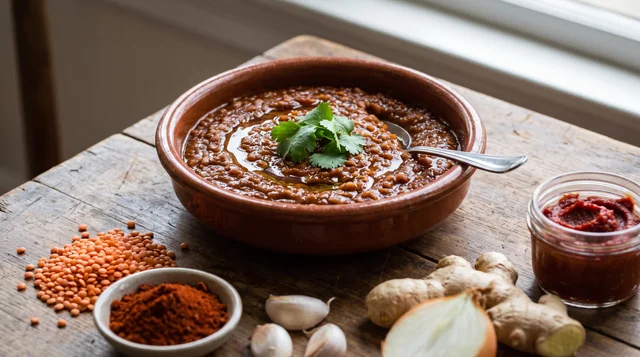
Red lentils, onions, and a few spoonfuls of berbere don’t sound like much, yet misir wot has a depth that most lentil stews never reach.
The catch is that many versions rush the two steps that create that depth, and the pot ends up tasting like a generic spiced lentil soup instead of this misir wot recipe’s slow, layered flavour.
My work centres on fully vegan meals built around legumes, and I tested this stew in my home kitchen for flavour, timing, and portion size before writing it down.
In this post, you will learn what misir wot is, the exact ingredients and amounts that serve four, how to build the onion base and bloom the berbere, an Instant Pot version for busy nights, and how to store it so it carries you through the week.
What Is Misir Wot?
Misir wot is an Ethiopian stew of red lentils simmered with slow-cooked onion, garlic, ginger, tomato paste, and berbere, a chili-based spice blend.
It cooks down to a thick, spoonable texture with steady heat and a savory sweetness from the onions, and it is traditionally scooped up with injera, Ethiopia’s soft, tangy flatbread.
The dish holds a steady place on Ethiopian tables partly because of Ethiopian Orthodox fasting traditions.
Members of the Ethiopian Orthodox Tewahedo Church avoid meat, milk, and eggs on fasting days, which include most Wednesdays and Fridays as well as longer periods such as the 55-day Lent fast.
On those days, misir wot is cooked with oil instead of spiced butter, so a fully plant-based version has deep roots in the cuisine and isn’t a modern swap.
What gives the stew its character is technique more than a long ingredient list.
The onions cook low until they turn deep golden and almost jammy, and the berbere fries briefly in oil before any liquid goes in.
Skip either step and you still get a decent pot of lentils, but you won’t get misir wot. Both steps depend on starting with the right ingredients, so that’s where we’ll begin.
Ingredients for This Misir Wot Recipe
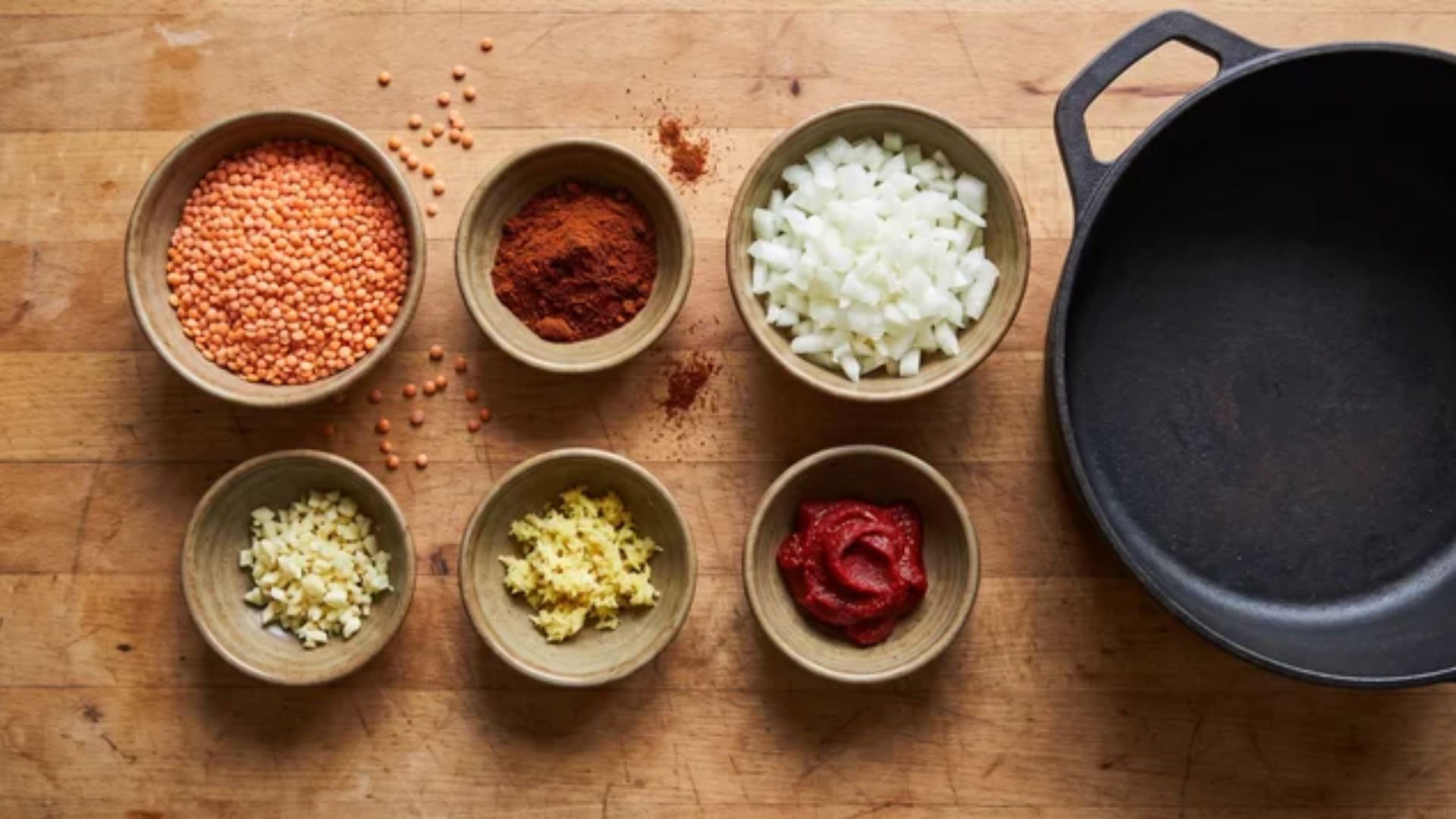
This Ethiopian lentils recipe makes four main-dish servings, and nearly everything on the list sits in a regular US grocery store.
Berbere is the one item you may need to find at a well-stocked store, a spice shop, or online.
- 1 1/2 cups (about 290 g) red lentils, rinsed
- 2 medium red or yellow onions, finely chopped (about 2 1/2 cups)
- 3 tablespoons olive oil or another neutral oil
- 4 garlic cloves, minced
- 1 tablespoon grated fresh ginger
- 2 tablespoons tomato paste
- 2 to 3 tablespoons berbere
- 4 cups (950 ml) water or low-sodium vegetable broth, plus more as needed
- 1 teaspoon fine salt, or to taste
Red lentils are the base for a reason. Most red lentils sold in the US are hulled and split, so they cook in about 20 minutes and collapse into a creamy stew.
Brown and green lentils hold their shape, which suits a dish like our creamy marry me lentils but leaves misir wot loose and chunky.
The onions build body and sweetness, the garlic and ginger sharpen the base, and the tomato paste adds acidity while helping the stew thicken.
The Spices That Make It Ethiopian
Berbere is a blend, not a single spice. Recipes vary by household and brand, but most combine dried chili peppers with fenugreek, coriander, ginger, black pepper, cardamom, cinnamon, and cloves.
That mix gives misir wot its heat and warmth, along with a faint bitterness from the fenugreek that keeps the sweet onion base from tasting flat.
Curry powder won’t get you to the same place, because it usually leans on turmeric and cumin and has a different balance altogether.
If you can’t find berbere, you can mix a stand-in from your spice rack: 2 tablespoons sweet paprika, 1 to 2 teaspoons cayenne, 1/2 teaspoon each of ground ginger, coriander, and fenugreek, and 1/4 teaspoon each of cardamom, cinnamon, cloves, and black pepper.
It won’t match a good berbere exactly, but it comes far closer than curry powder.
Heat levels also vary from brand to brand, so I start with 2 tablespoons and add more at the end once I’ve tasted the pot.
Niter Kibbeh vs. Oil: Which to Use
Niter kibbeh is Ethiopian clarified butter simmered with spices such as fenugreek and cardamom.
Cooks use it on non-fasting days for a rounder, richer finish, and it does add something oil can’t fully copy.
Since my recipes are fully vegan, I cook misir wot the fasting-day way, with oil.
Olive oil works well for everyday meals, and a neutral oil such as avocado or canola lets the berbere lead even more.
To echo some of niter kibbeh’s aroma, warm 1/4 teaspoon of ground fenugreek and a pinch of cardamom in the oil for about 30 seconds before the onions go in.
The berbere and onion base carry most of the flavor anyway, so the gap is smaller than you might expect.
How to Make Misir Wot Step by Step
To make misir wot, cook finely chopped onions in oil over medium-low heat for 15 to 20 minutes until deep golden, stir in the garlic, ginger, and tomato paste, bloom the berbere in the oil for about a minute, then add red lentils and water and simmer for 20 to 25 minutes until thick. Plan on about 50 minutes in total.
Step 1: Build the Onion Base
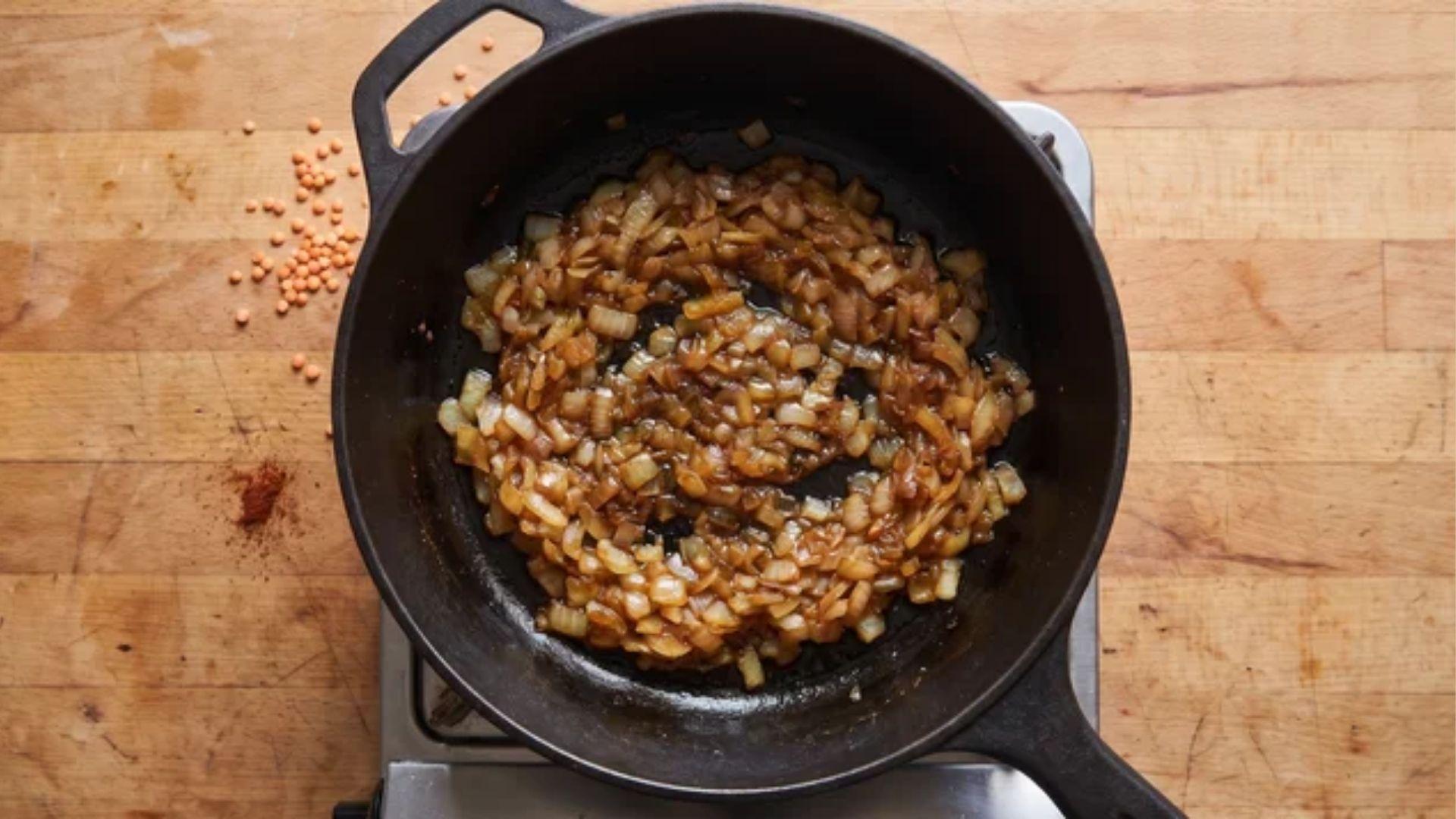
Heat the oil in a heavy pot over medium-low heat, add the onions with a pinch of the salt, and stir every couple of minutes.
The salt draws out moisture so the onions soften before they brown.
Chop them as finely as you can, because small pieces melt into the sauce instead of floating in it.
You’re not softening the onions here. You’re cooking them down until they turn deep golden and look almost jammy, which takes 15 to 20 minutes.
Most people stop around the 8-minute mark because the onions already look soft, but they aren’t ready yet.
If they start browning in spots before the rest catch up, add a tablespoon of water and keep going.
An undercooked onion base gives you a thin, flat stew, and extra spice won’t fix that later.
Step 2: Bloom the Berbere
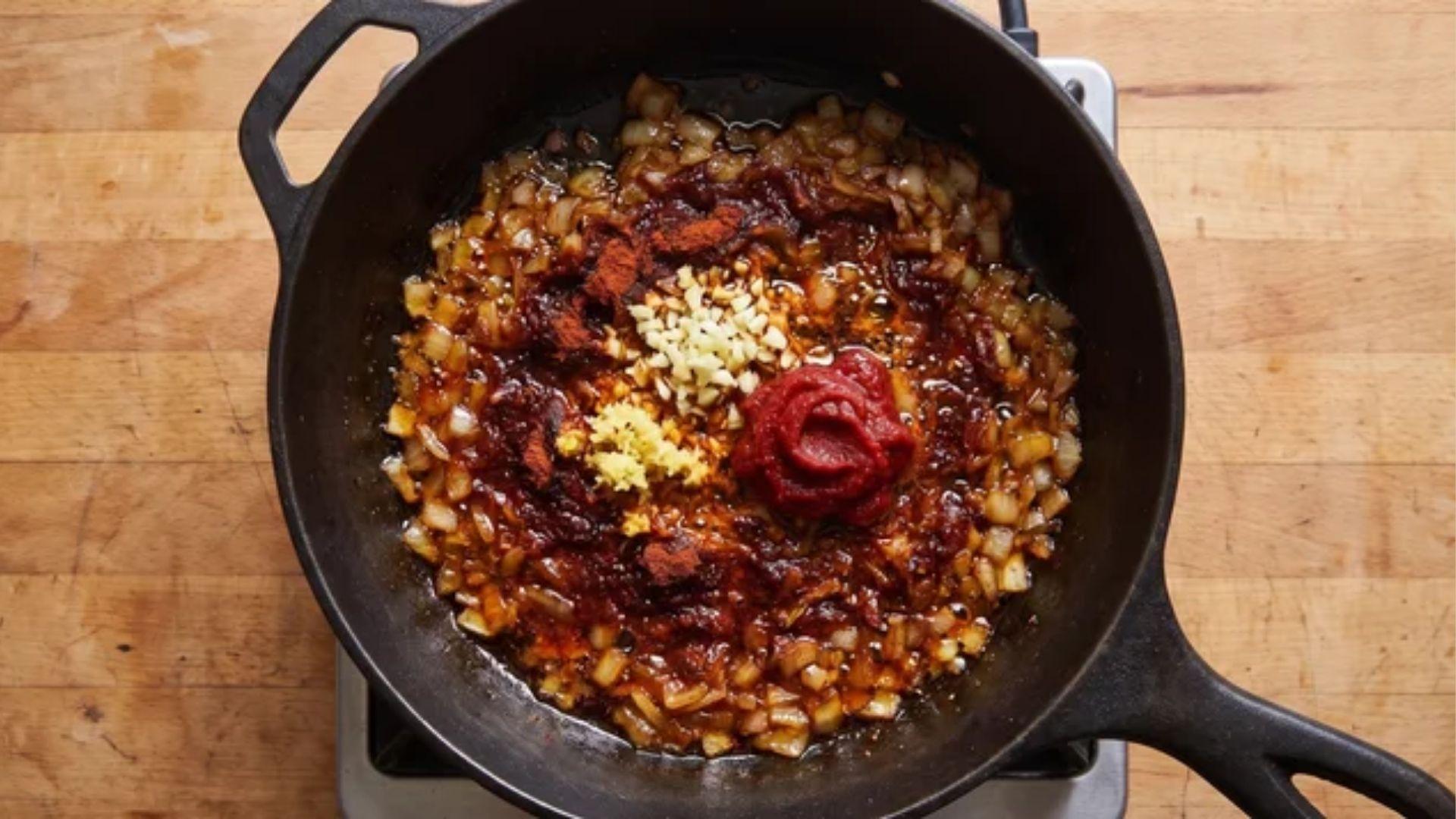
Then add the berbere directly to the pan and let it cook in the oil for 60 to 90 seconds, stirring constantly, before any liquid goes in.
This is called blooming. Several of the flavor and color compounds in chili peppers, including capsaicin, dissolve in fat rather than water, so frying the spice in oil carries more of its flavor into the stew.
If you stir the berbere into the water instead, the stew tastes dusty and one-dimensional. Watch the pan closely, though.
If the paste darkens fast or smells sharp, splash in 2 tablespoons of water and move straight to the next step.
Step 3: Add the Lentils and Simmer
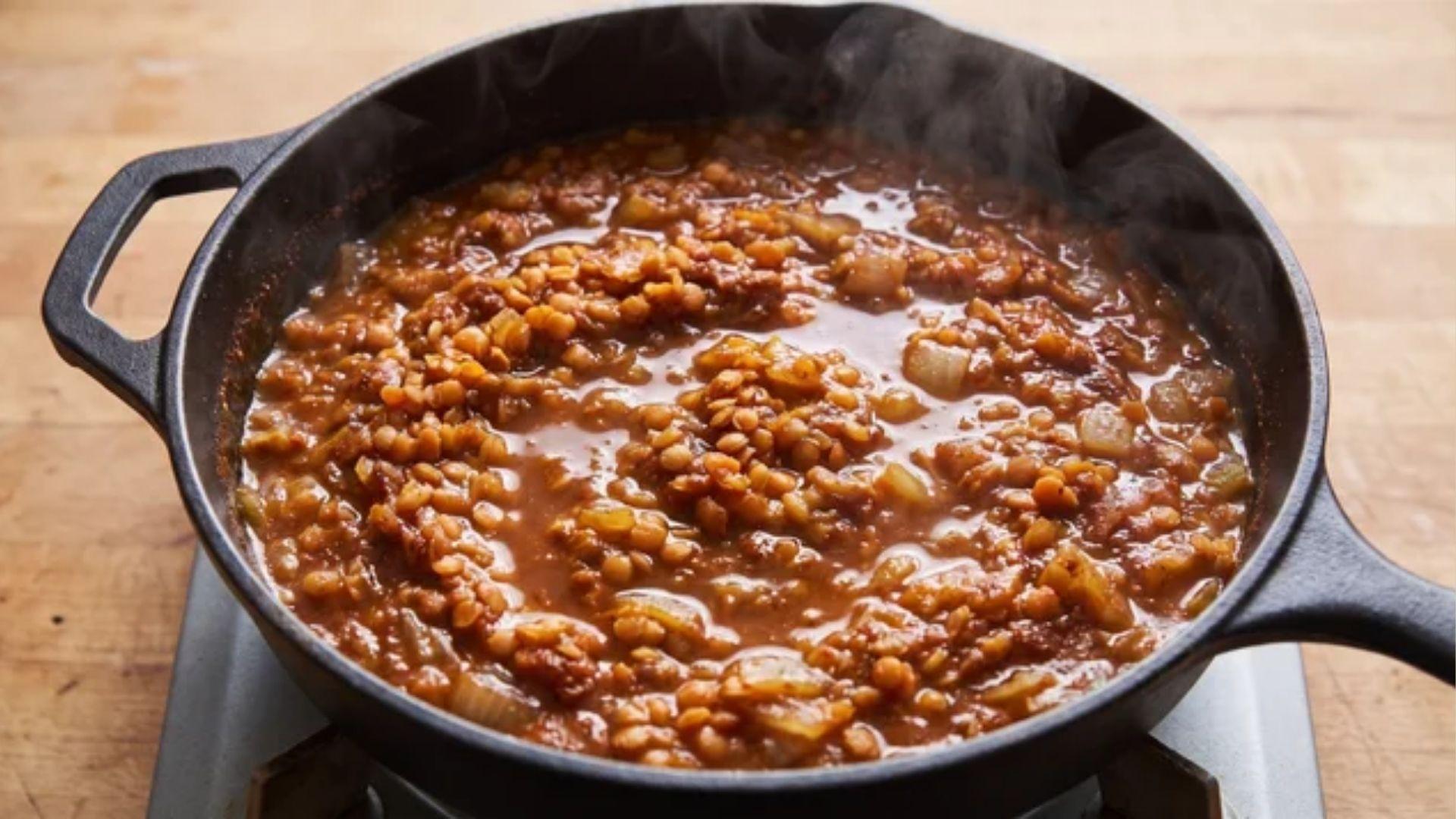
Add the rinsed lentils and 4 cups of water or broth, scrape up anything stuck to the bottom, and bring the pot to a boil.
Lower the heat to a steady simmer, partially cover, and stir every five minutes.
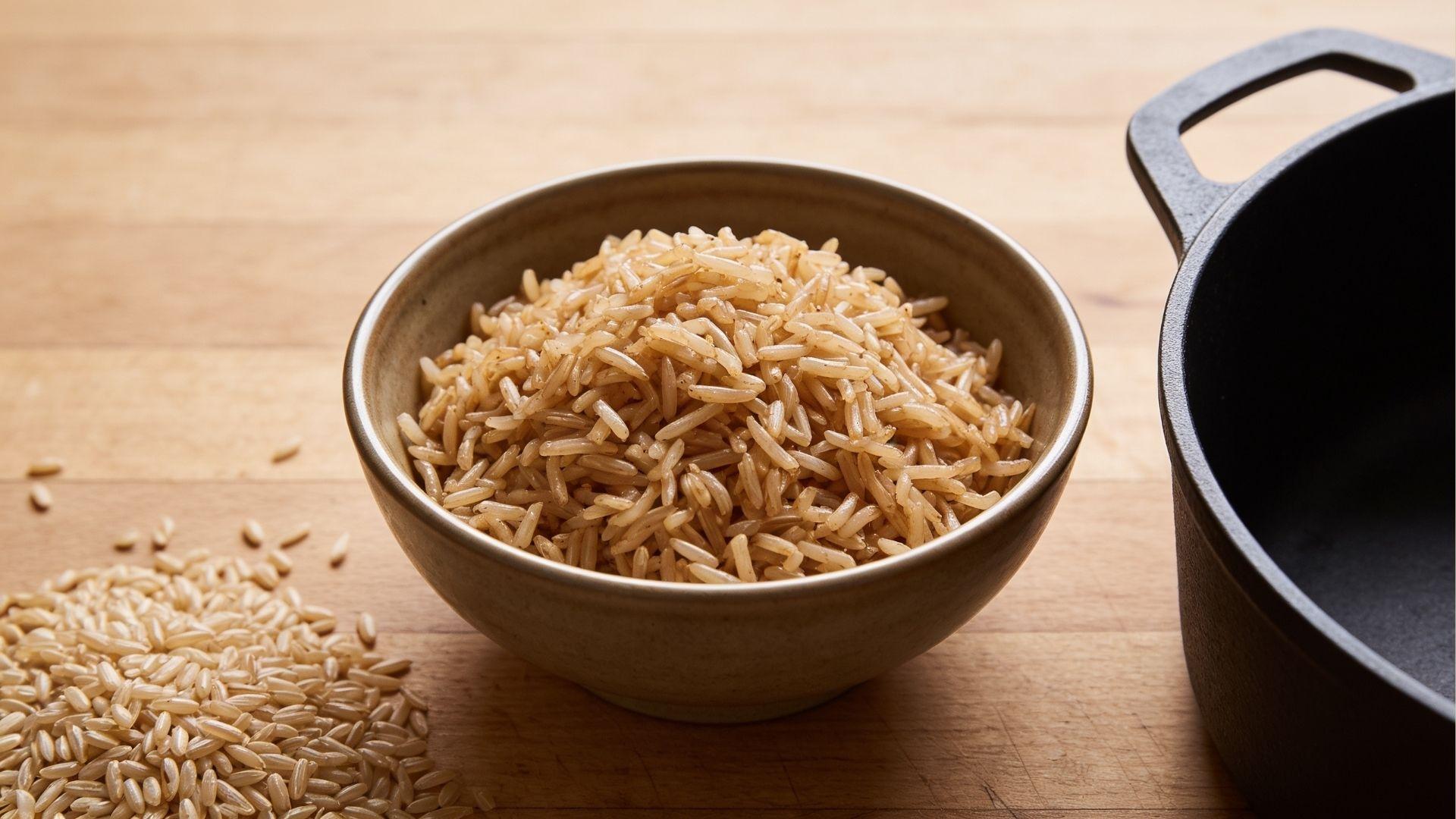
While the stew cooks, you can start a pot of grains, and this brown basmati rice recipe finishes in about the same time.
The lentils break down in 20 to 25 minutes and thicken the stew on their own. If it’s still thin at that point, uncover it and simmer five minutes more.
If it’s too thick, add water a few tablespoons at a time. Season with the remaining salt at the end, because some berbere blends already contain salt.
Stay close for the last ten minutes, since the bottom catches quickly once the stew thickens.
Tips for Getting Misir Wot Right
When a batch tastes flat, the cause is usually rushed onions or berbere that went in with the water, so those two steps deserve your patience.
Beyond that, rinse the lentils in a fine-mesh strainer until the water runs mostly clear.
This removes dust and loose surface starch, which keeps the stew from turning gummy and cuts down on the foam that rises as it comes to a boil. Skim off any foam that does appear.
Taste once more after the stew has rested for five minutes.
If the heat feels harsh, a squeeze of lemon softens it, and if it tastes dull, add salt before you add more berbere.
For meal prep, double the recipe in a wide pot so the onions have room to brown instead of steaming.
Misir Wot Instant Pot Method
Misir wot works well in an Instant Pot, as long as you still build the onion base and bloom the berbere on the sauté setting before pressure cooking.
Hands-on time drops to about 25 minutes, and the lentils turn out soft and creamy with almost no stirring.
Sauté the onions in the oil for 12 to 15 minutes, stirring often, since the sauté function runs hotter than a stovetop burner.
Add the garlic, ginger, and tomato paste for one minute, then the berbere for another minute.
Pour in 1 cup of the water and scrape the bottom completely clean, because browned bits left there can set off the pot’s burn warning.
Add the lentils and 2 1/2 more cups of liquid (pressure cooking loses less to evaporation), seal, and cook on high pressure for 8 minutes.
Let the pressure release naturally for 10 minutes, then release the rest. Stir, adjust the salt and berbere, and give it a few minutes to thicken as it stands.
Is Misir Wot Healthy?
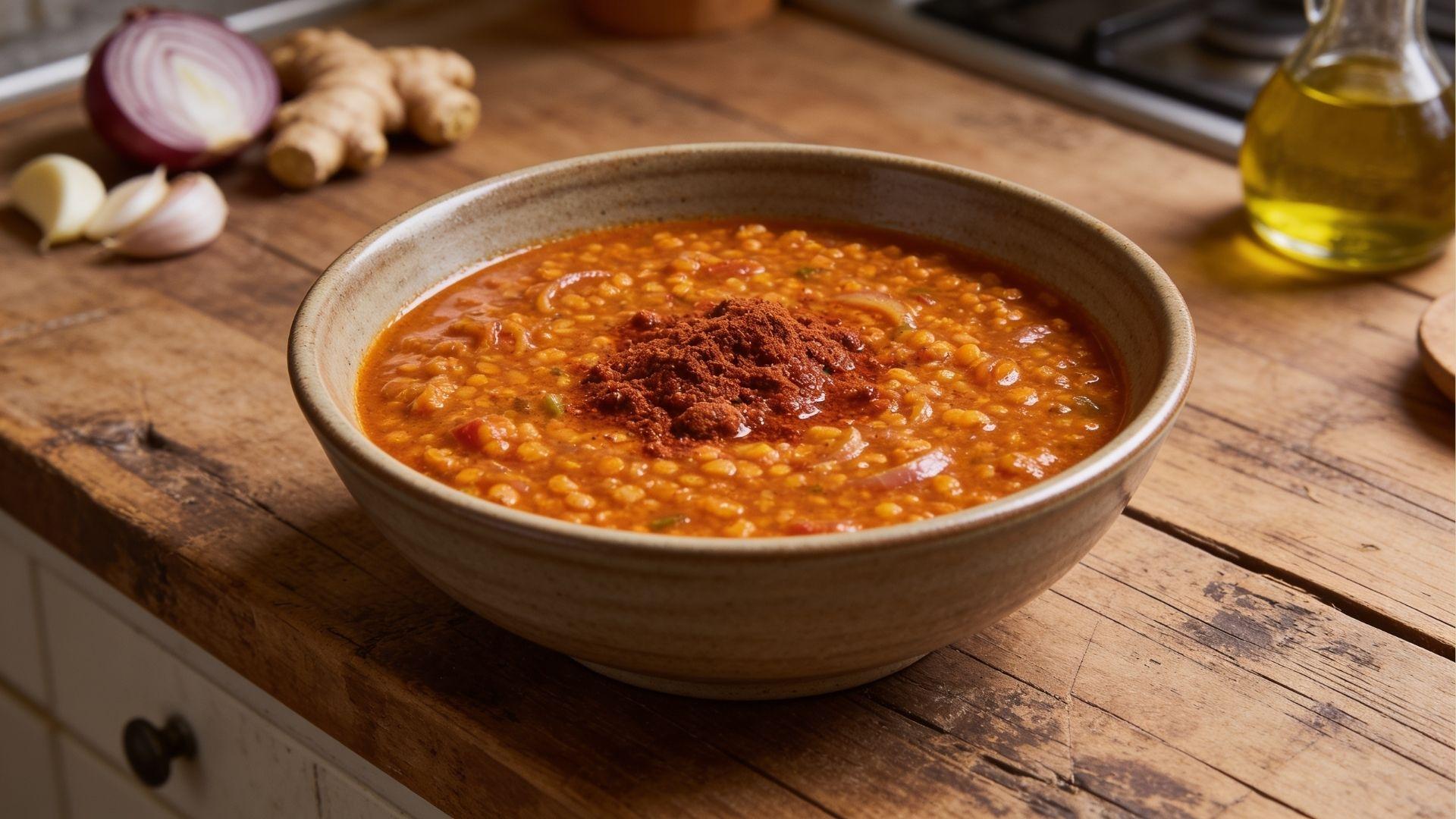
Misir wot can be a nourishing everyday meal. Lentils supply plant protein, fibre, iron, and folate, the stew is naturally vegan, and cooking it with olive oil keeps saturated fat low.
Sodium depends mostly on the salt and broth you add, and on your berbere, since some blends include salt.
USDA data for cooked lentils lists about 18 grams of protein, 16 grams of fibre, and 6.6 milligrams of iron per cup.
Each serving of this recipe holds close to a cup of cooked lentils, so treat those figures as a rough estimate per bowl before the onions, oil, and tomato paste are counted.
Lentils contain nonheme iron, which the body absorbs less readily than the iron in meat.
The NIH iron fact sheet notes that vitamin C improves nonheme iron absorption, which is one practical reason to squeeze lemon over the bowl or serve it with tomatoes or peppers.
If you’re managing low iron or another health condition, a doctor or registered dietitian can tell you how dishes like this fit your needs.
The lentils and spices are naturally gluten-free, but check the labels on your lentils and berbere for wheat cross-contact if you avoid gluten.
Many injera sold in the US also contain wheat or barley flour alongside teff.
What to Serve With Misir Wot
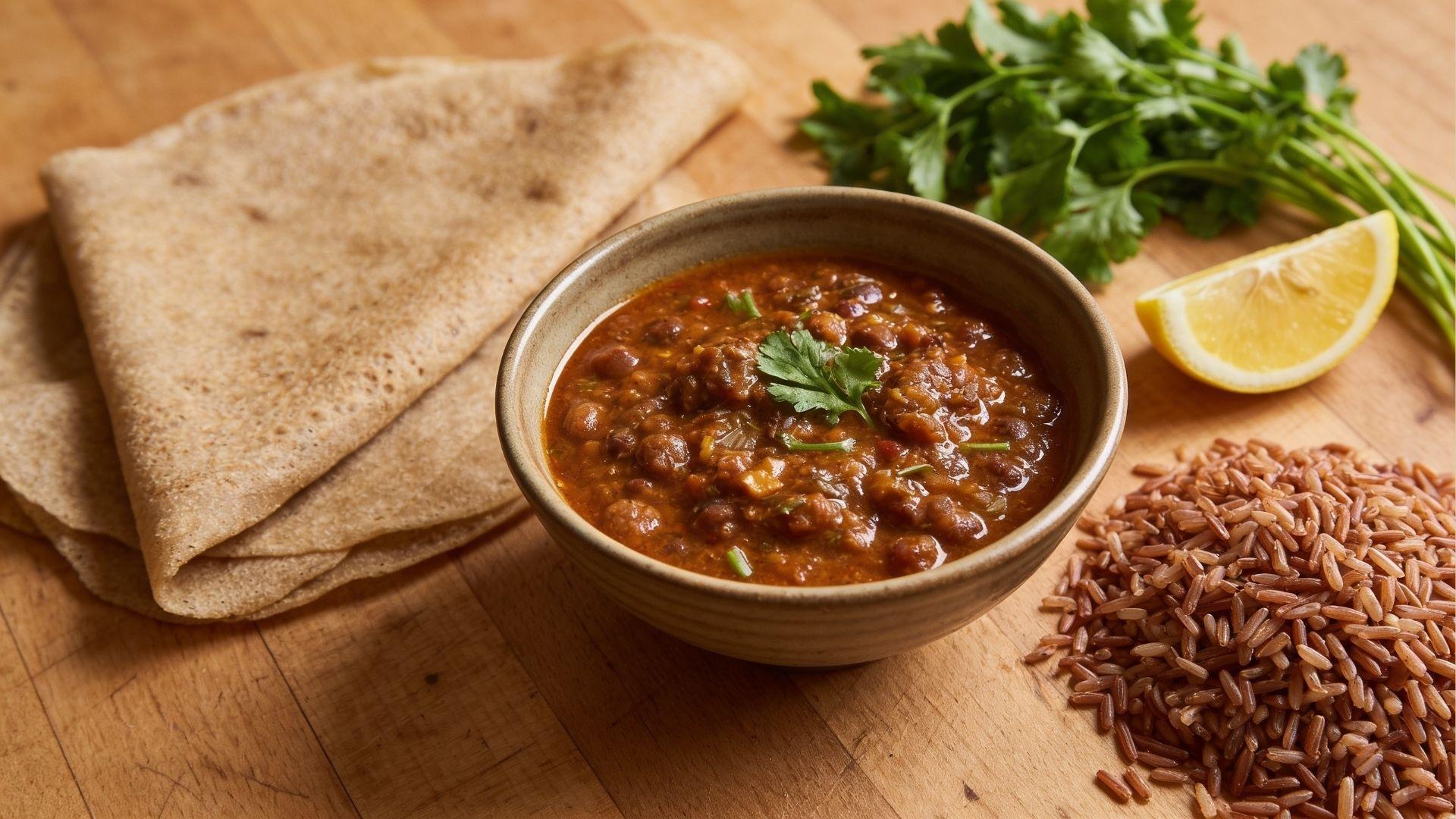
Injera is the classic partner. Its mild sourness balances the berbere, and you tear off pieces to scoop up the stew.
Ethiopian markets and some larger grocery stores sell it.
In Ethiopia, misir wot often shares the plate with other fasting dishes on a combination platter called beyaynetu, which may include collard greens (gomen), mild yellow split peas (kik alicha), and braised cabbage with potatoes and carrots (atkilt).
Any one of those turns a single pot of lentils into a fuller spread.
For weeknights, serve it over brown rice or another whole grain, which holds up well under a thick stew.
For extra protein, stir cubes of plain tofu into the pot for the last five minutes so they soak up the sauce.
For something lighter, skip the grain and serve the stew with sautéed seasonal greens, a squeeze of lemon, and a handful of fresh herbs.
How to Store and Reheat Misir Wot
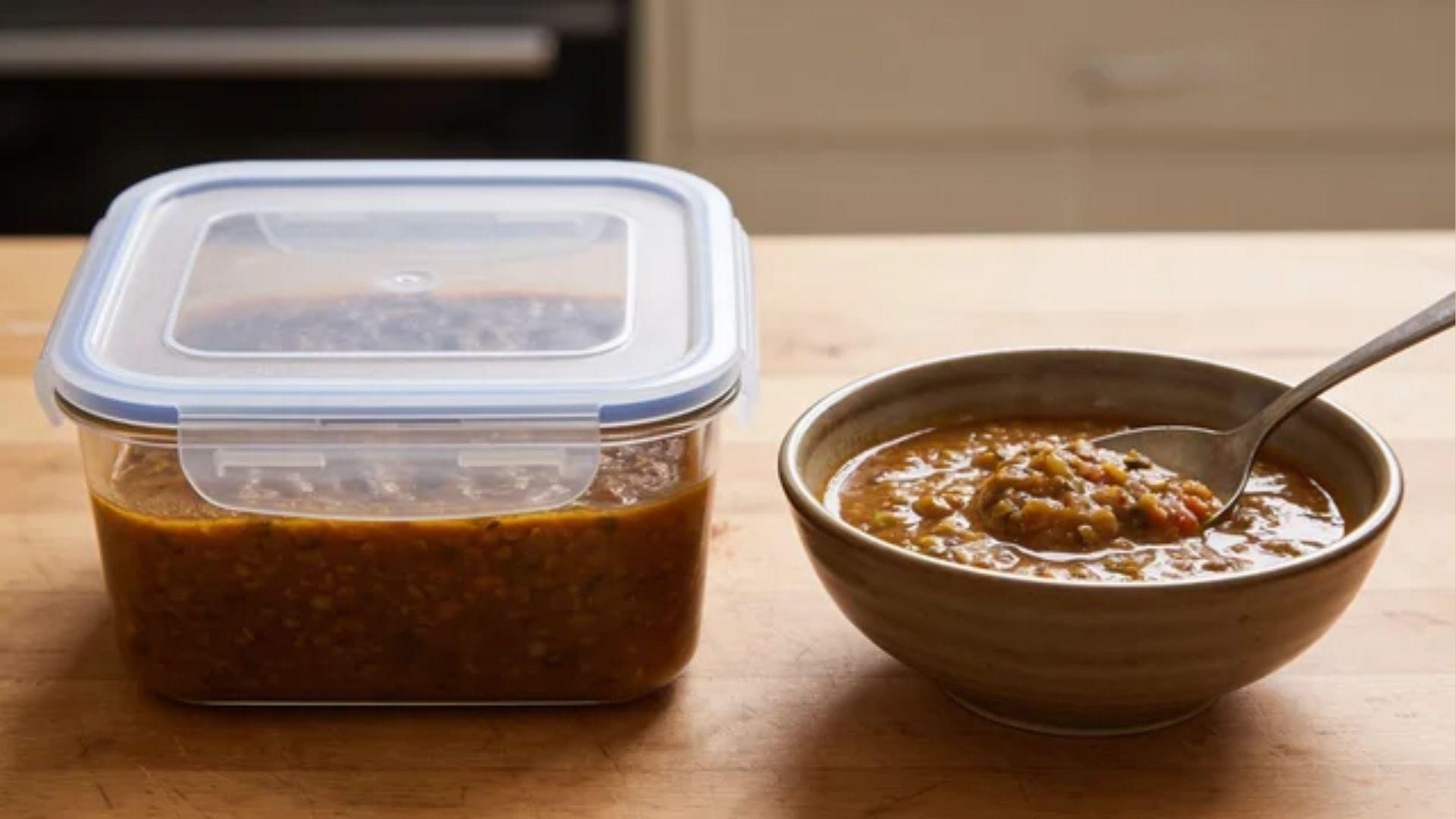
Misir wot keeps well, and the flavor rounds out by the next day once the spices settle. Divide it into shallow airtight containers and refrigerate within two hours of cooking.
It keeps for 3 to 4 days in the fridge and for 3 to 4 months in the freezer for the best quality, which follows USDA leftovers safety guidance. Thaw frozen portions overnight in the fridge.
The stew thickens as it chills, so add a splash of water when you reheat it over low heat on the stove, stirring as it warms. In the microwave, cover the bowl and stir between short bursts.
Either way, heat leftovers until they’re steaming hot all the way through, or 165°F (74°C) on a food thermometer.
For meal prep, I portion the stew next to a scoop of grains so lunches are ready to grab.
Slow Onions and Bloomed Berbere Make the Difference
Misir wot asks for patience at two points: onions cooked until deep golden and jammy, and berbere fried in oil before the lentils and water go in.
Everything else in this misir wot recipe comes from pantry staples, red lentils that cook in about 20 minutes, and a pot you barely need to watch.
The same habits carry over to other spiced legume stews, since building the base slowly and blooming the spices in fat does most of the work.
For your next step, make a double batch this weekend and freeze half in single portions, so a high-protein vegan dinner is ready on your busiest night.
Frequently Asked Questions
What Is the Authentic Recipe for Misir Wat?
No single authentic recipe exists, because misir wat varies by household and region. Many Ethiopian cooks soften very finely minced red onions in a dry pot before adding any fat, use niter kibbeh outside fasting periods and oil during them, and rely on a family berbere blend.
What Is Misir Wat Made Of?
Misir wat is made of red lentils, onions, berbere, garlic, ginger, and a cooking fat. The name describes the dish: misir is the Amharic word for lentils, and wat means stew. You’ll see it spelled wat, wot, or wet because Amharic is transliterated in different ways.
How Does Misir Wat Differ From Other Lentil Stews?
The closest relative is Indian masoor dal, which uses the same red lentils. Dal is usually thinner, leans on turmeric, and is often finished with a tempering of whole spices fried in hot fat and poured on at the end.