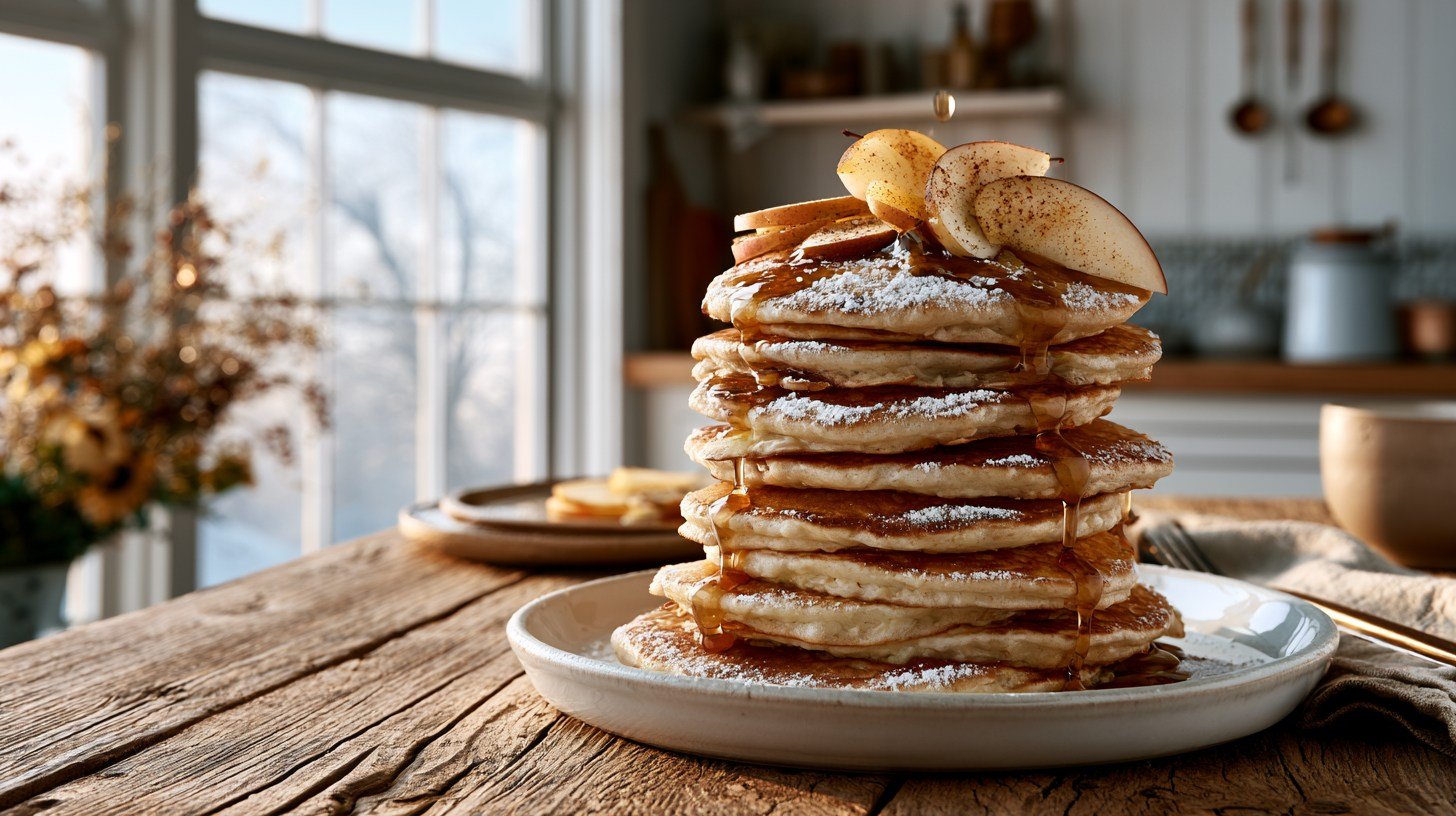
The first time I made a greek yogurt pancake recipe, I panicked. The batter looked far too thick.
So I added milk until it poured like regular batter. The pancakes came out flat and sad. I stood there flipping them, wondering what I did wrong.
Later I learned the thick batter was the point. Yogurt does the heavy lifting, and it changes how you mix and what you can swap.
Let's start with what goes in the bowl, because one choice matters more than the rest.
Why Greek Yogurt Works in Pancakes
Greek yogurt is thick, tangy, and strained of most of its whey. That makes it behave very differently from the milk or buttermilk in a classic batter.
One cup of buttermilk has about 100 calories and 8 g protein. One cup of 2% Greek yogurt has about 190 calories and 22 g protein.
You get a softer pancake that keeps you full longer. For another high-protein pancake built on the same idea but with a different dairy base, apple cottage cheese pancakes are worth a look.
What You Need for the Greek Yogurt Pancake Recipe
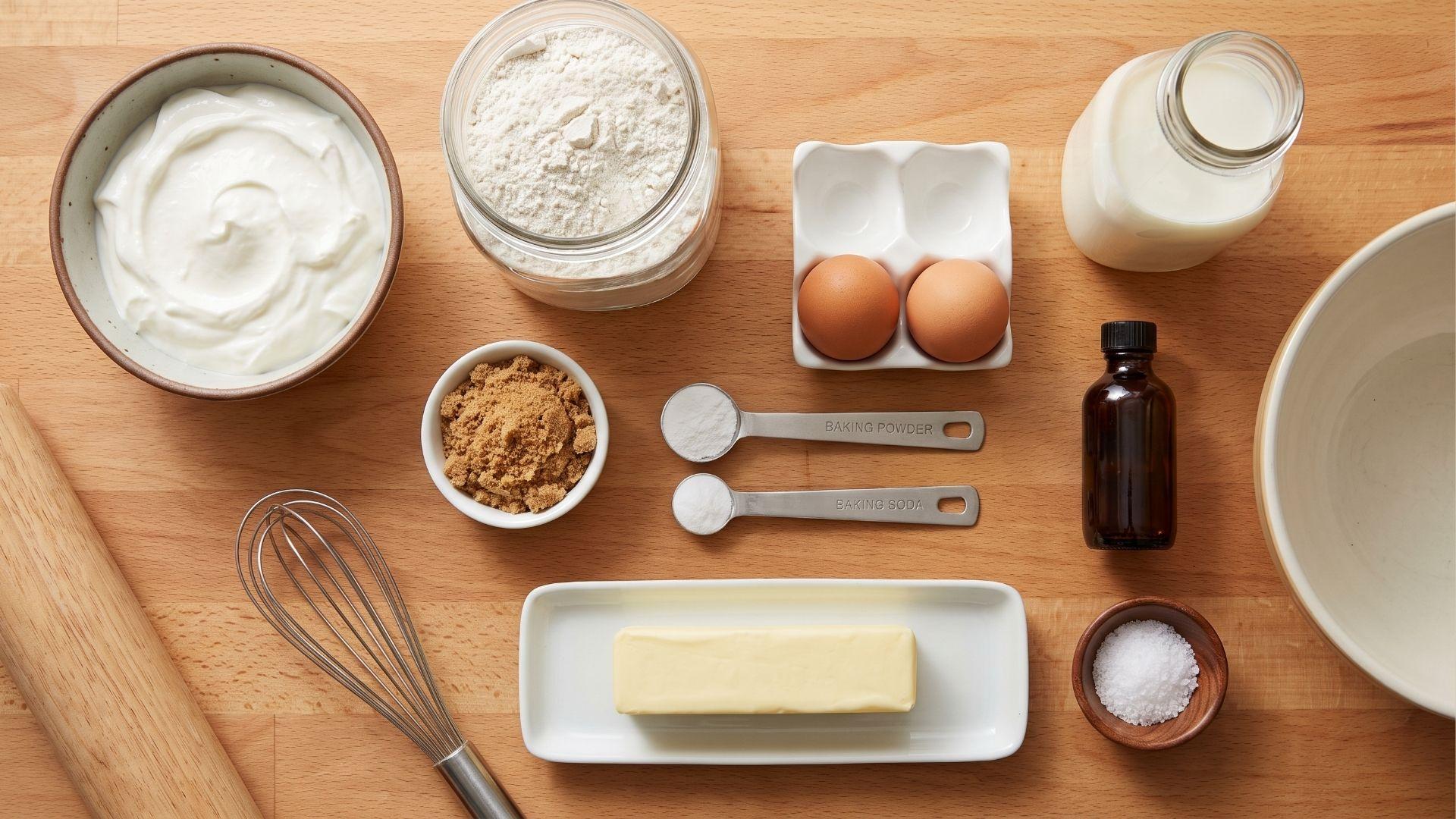
Greek yogurt pancakes need only pantry staples plus plain or vanilla Greek yogurt. The yogurt does the work, so everything else stays simple.
Below you'll find the full list with calories for each item, then a note on yogurt choice.
Ingredients with measurements
This makes about eight pancakes. Weigh the flour if you can, since a scooped cup often runs heavy.
Calories below are estimates, using 2% Greek yogurt and whole milk.
- 1 cup (120 g) all-purpose flour: 440 kcal, 12 g protein, 92 g carbs
- 2 tablespoons (25 g) brown sugar: 95 kcal, 25 g carbs
- 1 tablespoon (12 g) baking powder: 15 kcal, 4 g carbs
- ½ teaspoon baking soda: 0 kcal
- ¼ teaspoon salt: 0 kcal
- 2 large eggs: 140 kcal, 12 g protein, 10 g fat
- 1 cup (245 g) Greek yogurt: 190 kcal, 22 g protein, 6 g fat
- ¼ cup (60 ml) milk: 38 kcal, 2 g protein
- 1 teaspoon vanilla extract: 12 kcal
- 1 tablespoon butter for the pan: 100 kcal, 11 g fat
The whole batch comes to about 1,030 calories. That's roughly 130 calories per pancake, with about 6 g protein, 17 g carbs and 4 g fat.
Flour and sugar carry most of the calories. Yogurt and eggs carry most of the protein.
Plain, vanilla and fat level
Plain or vanilla both work. Plain tastes tangier, and vanilla tastes a little sweeter. Vanilla yogurt adds roughly 10 g of sugar per cup, so cut the brown sugar by a spoonful.
Pick full-fat or 2% if you can. The fat keeps the crumb soft. If you want full control over fat content and ingredients, making raw milk yogurt at home is more straightforward than it sounds.
The calorie gap is small. Fat-free saves about 50 calories across the whole batch, which is only 6 per pancake. Full-fat adds about 45.
Keep the milk small. Yogurt is the main liquid, and milk only loosens the batter. Swap them one-for-one, and you get flat pancakes.
Greek Yogurt Pancakes Step-by-Step Recipe
You whisk, fold until just combined, then cook 2 to 3 minutes per side over medium heat. The yogurt's acid reacts with baking soda, and that reaction makes these pancakes rise.
Each step protects that rise. Here's how it goes, start to finish.
Step 1: Mix the batter
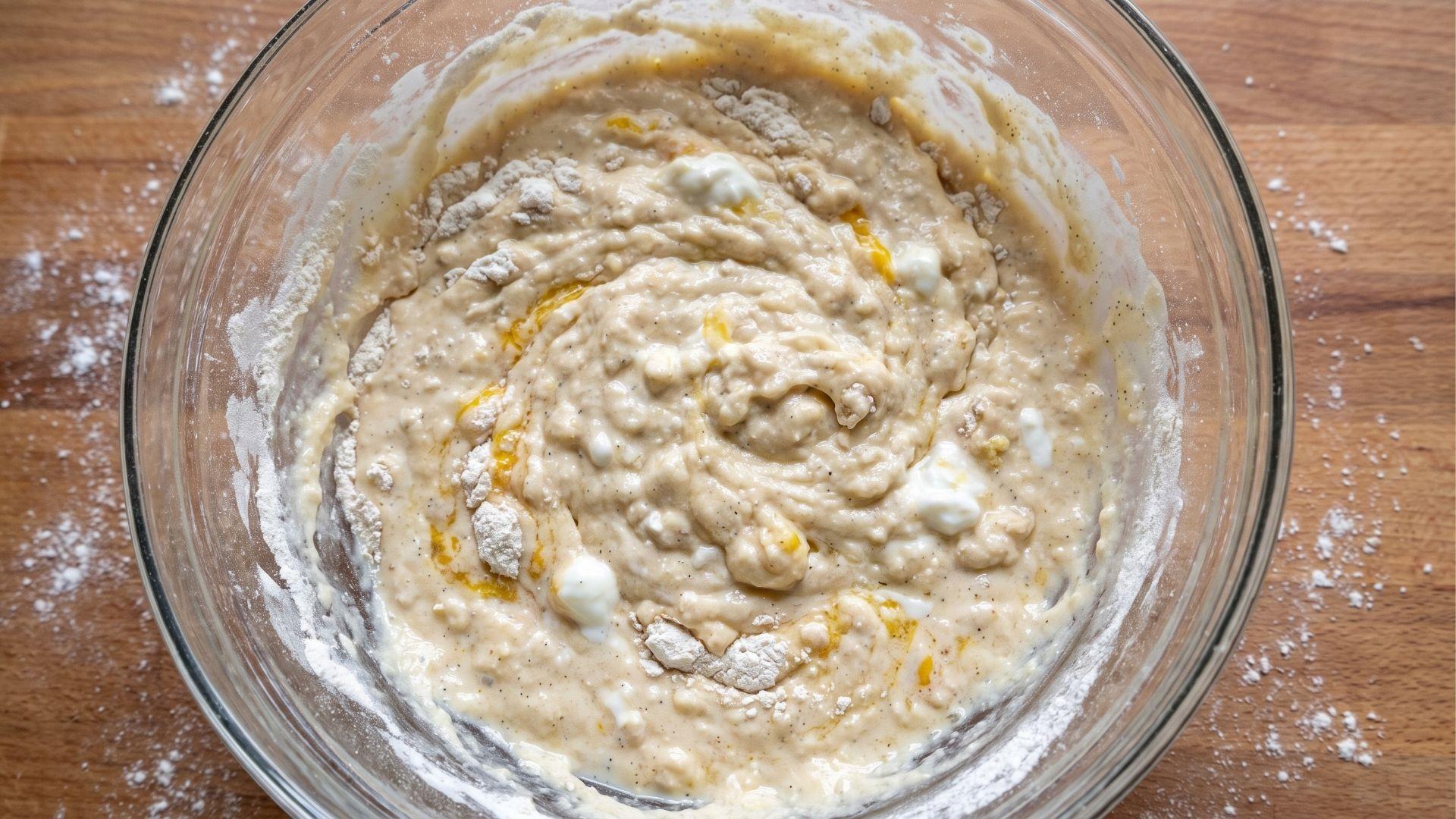
Whisk the flour, sugar, baking powder, baking soda, and salt in one bowl. In another, whisk the eggs, yogurt, milk, and vanilla.
Pour the dry mix into the wet. Fold with a spatula until no dry flour shows. Lumps are fine.
Here's why you stop early. Yogurt is acidic, and acid plus baking soda makes tiny gas bubbles. Those bubbles lift the thick batter.
Overmixing pops them and builds tough gluten. Folding gently keeps them.
Cold yogurt reacts a little slower. Let the batter sit for five minutes if it comes straight from the fridge. Old baking soda also weakens, so replace it every few months.
Step 2: Cook and flip
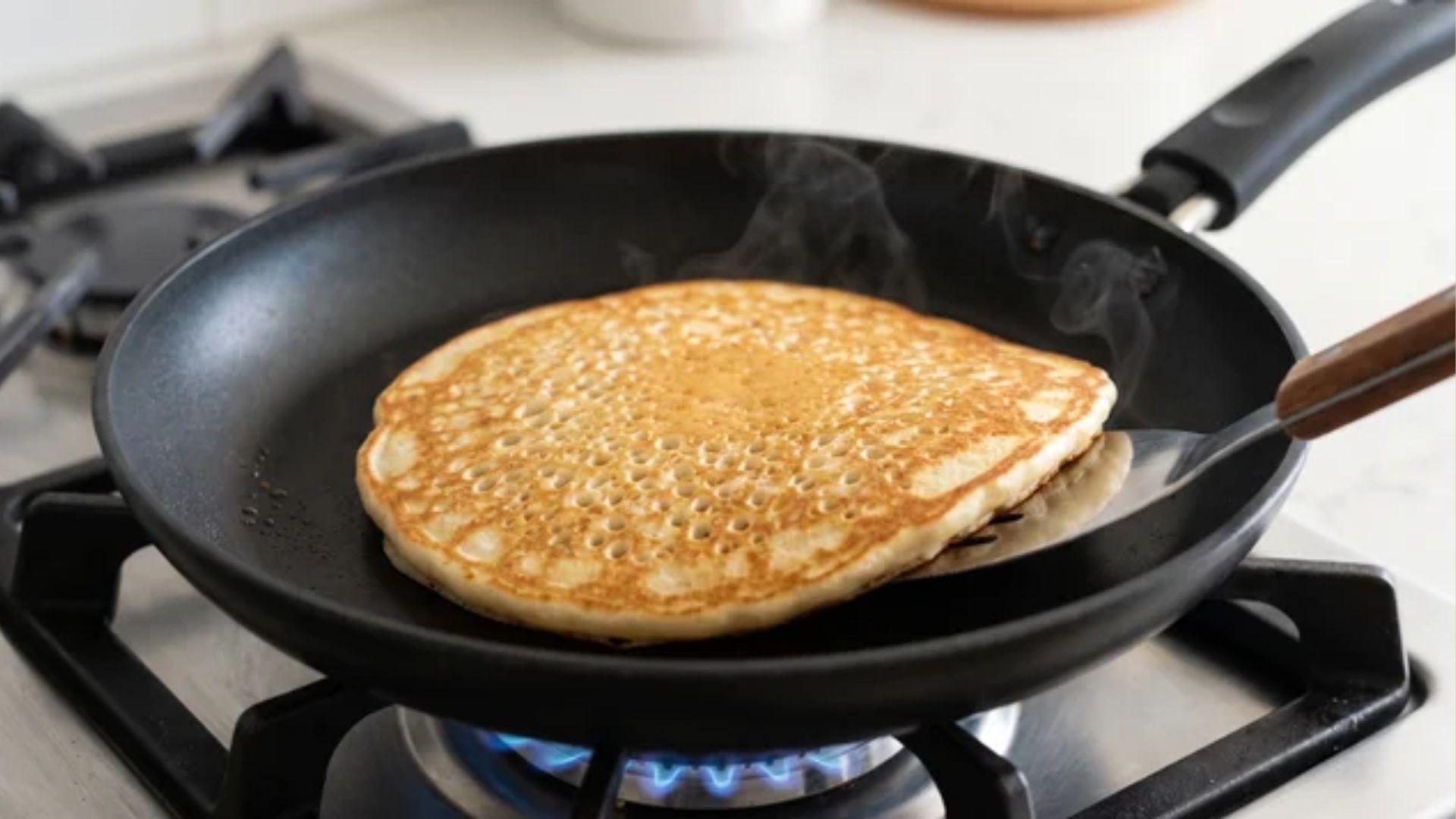
Heat a nonstick pan over medium heat. Rub in a little butter.
Pour about ⅓ cup of batter per pancake. Cook for 2 to 3 minutes, until bubbles form and the edges look set. Flip, then cook 1 to 2 minutes more.
Heat is where this recipe breaks. Thick batter needs more time than thin batter. If the outside browns in under two minutes, the center will stay raw.
Turn the heat down and sacrifice the first pancake as a test. Too low gives pale, dry pancakes. Medium gives golden ones.
Each pancake comes to about 130 calories.
Step 3: Serve
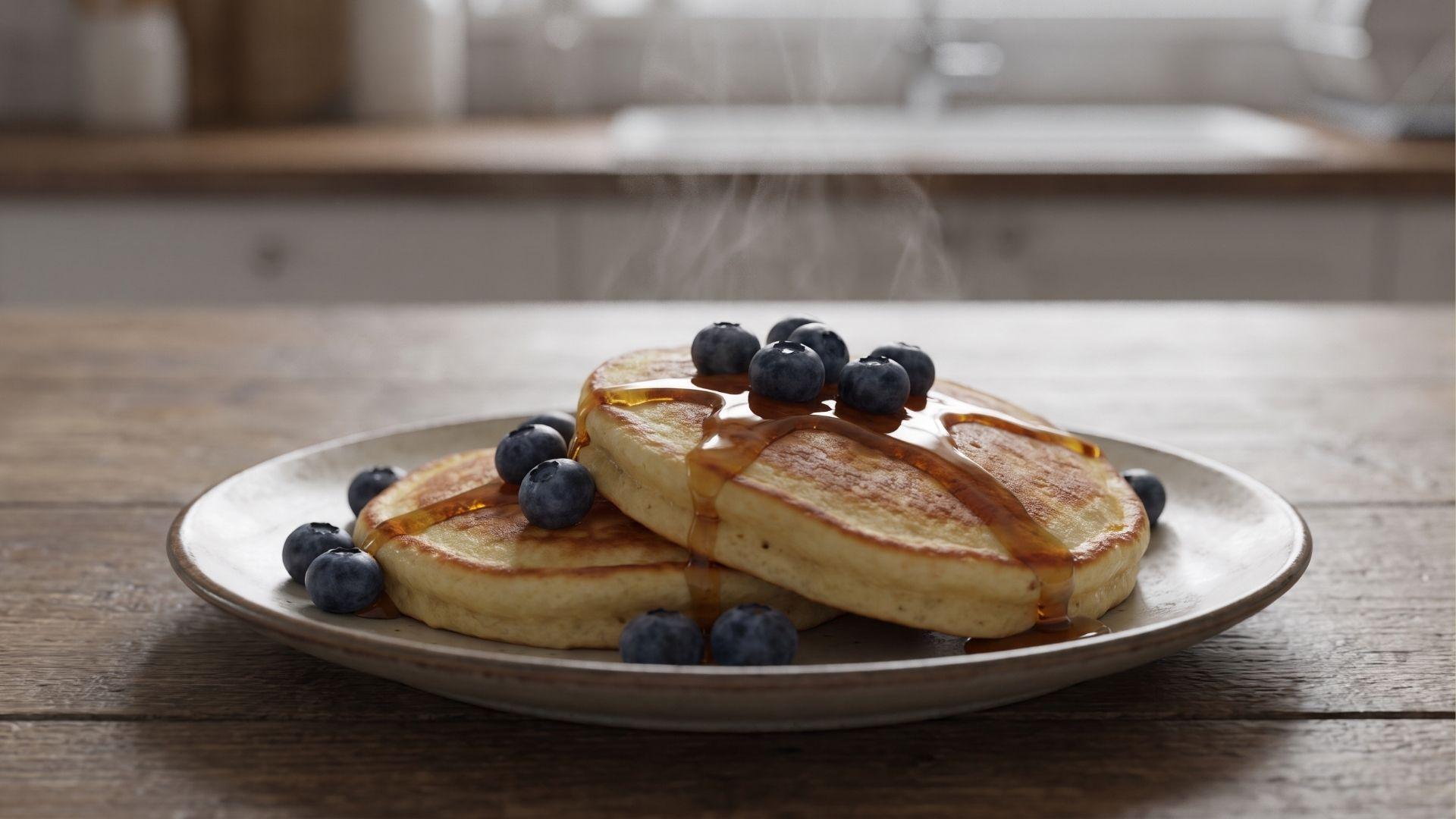
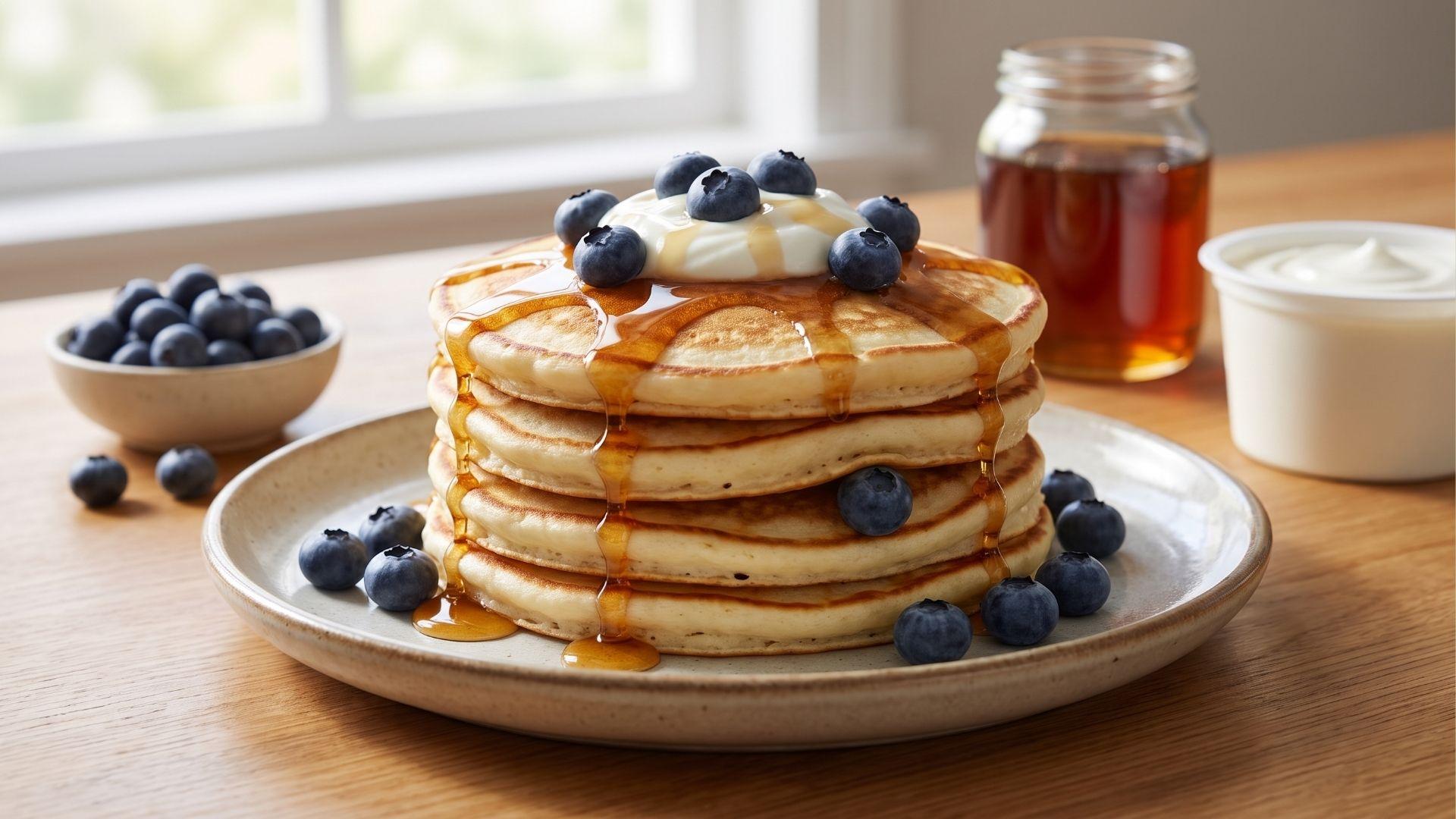
Serve them right away, while the centers are soft and steamy.
Two pancakes give you about 260 calories, 12 g protein, 34 g carbs and 8 g fat. That's before anything goes on top.
Why Are My Greek Yogurt Pancakes Dense?
Dense Greek yogurt pancakes usually come from overmixing, stale leavening, or batter that's too thick. Check these common problems first, then make the small fix that matches your batter.
- Overmixing: Stir just until the flour disappears. A few lumps are fine. Too much mixing develops gluten and makes the pancakes dense.
- Stale leavening: Baking powder and baking soda lose strength over time. Replace them every few months for a better rise.
- Thick batter: Your batter should plop off the spoon rather than sit like paste. If it's too thick, add 1–2 tablespoons of milk. Each tablespoon adds about 9 calories, or roughly 2 extra calories per pancake.
- Skipping the rest: Let the batter sit for five minutes after adjusting the liquid. The flour absorbs the milk, which helps the pancakes puff better in the pan.
- Fat-free yogurt: Fat-free Greek yogurt can give pancakes a tighter, rubbery crumb. It saves only about 6 calories per pancake, so regular Greek yogurt is usually worth it.
- Pan too hot: High heat browns the outside before the thick center cooks through. Lower the heat and give the pancakes an extra minute to cook.
Greek Yogurt Pancake Variations
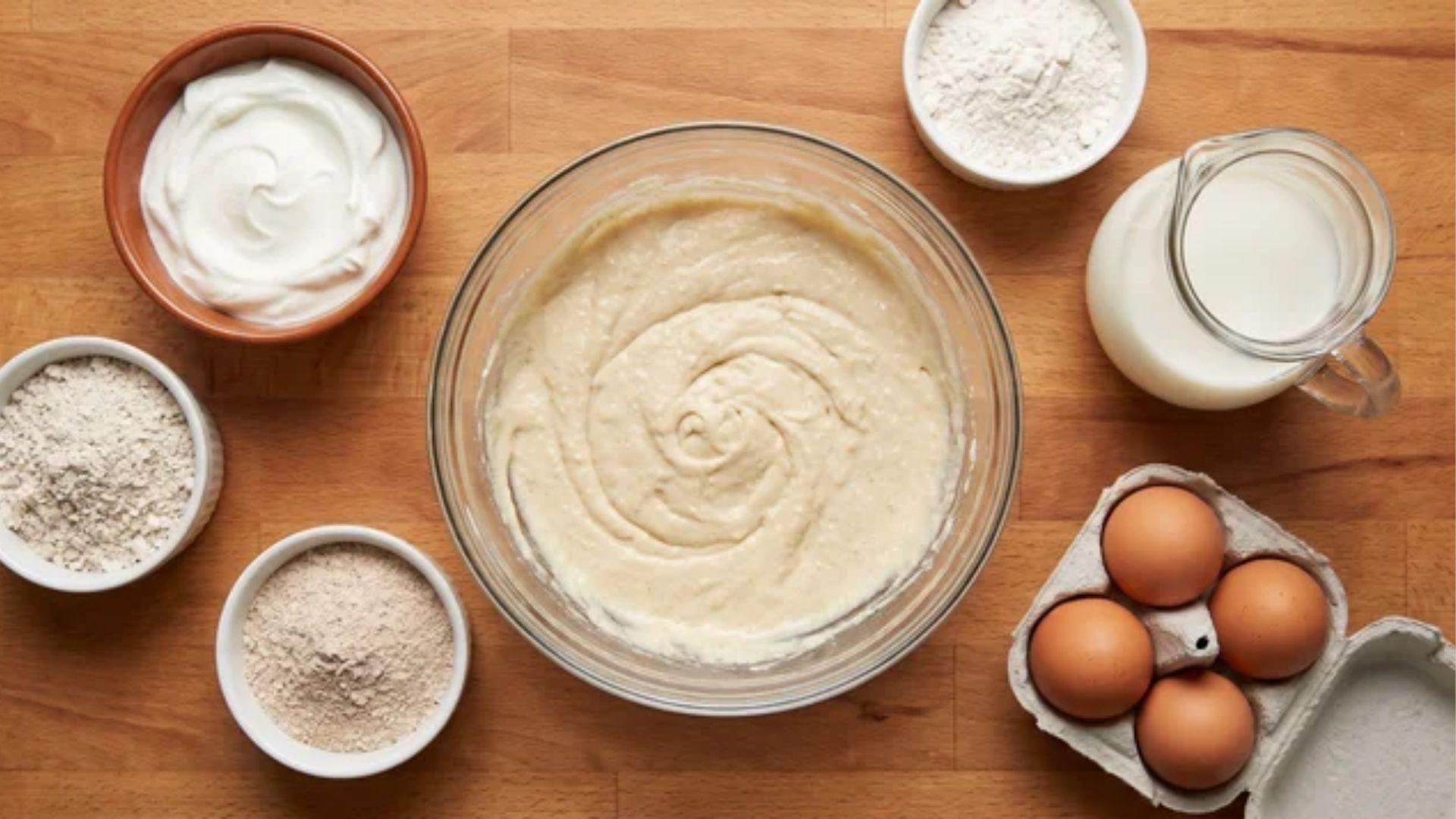
Greek yogurt can replace some of the milk, but removing all the milk makes the batter too stiff.You can also change the flour or skip the eggs, but each swap affects the pancakes' texture and structure.
Can Greek Yogurt Replace Milk?
Yes, but keep some milk for a looser batter and softer center.The recipe already uses Greek yogurt as the main liquid, so milk mainly helps the batter spread.
Drop the milk completely and the batter becomes stiff and won't spread well. Swapping the ¼ cup of milk for yogurt adds only about 10 calories to the whole batch.
Can You Use Oat or Whole Wheat Flour?
Yes. Oat flour and whole wheat flour can replace some or all of the all-purpose flour, but they make the pancakes slightly different in texture.
- Oat flour: About 120 calories and 1 g fiber per pancake. Use certified gluten-free oats for a gluten-free batch.
- Whole wheat flour: About 125 calories and 2 g fiber per pancake. Start by replacing half the flour for a less dense texture.
- All-purpose flour: About 130 calories and under 1 g fiber per pancake.
Oat batter needs a few extra minutes to thicken because oats absorb liquid differently. Whole wheat makes the pancakes denser, so a half-and-half swap is a good starting point.
Can You Make Them With Fewer Ingredients?
Yes. Two-ingredient, three-ingredient, and egg-free versions all work, but they produce denser, flatter pancakes than the main recipe.
- 2-ingredient: Mix 1 cup Greek yogurt with 1 cup self-rising flour. This makes about four pancakes at roughly 155 calories each.
- 3-ingredient: Add one egg to the 2-ingredient version. You get about five pancakes at roughly 140 calories each, with better structure.
- No-egg: Skip the eggs from the main recipe and save about 17 calories per pancake. Add a few extra spoonfuls of yogurt to replace some of the lost moisture.
Toppings, Storing and Freezing Greek Yogurt Pancakes
These pancakes keep well in the fridge for a few days and in the freezer for up to two months.Fresh fruit adds sweetness and fiber, while syrup or honey gives a quicker, richer topping.
Toppings That Suit the Tang
- Blueberries: ½ cup adds 42 calories, 11 g carbs, and 2 g fiber.
- Strawberries: ½ cup adds 25 calories, 6 g carbs, and 2 g fiber.
- Maple syrup: 1 tablespoon adds 52 calories and 13 g carbs.
- Honey: 1 tablespoon adds 64 calories and 17 g carbs.
- Easy tip: Fruit adds flavor and fiber with fewer calories. Measure syrup and honey because the calories add up quickly.
How to Store and Freeze Them
- Cool first: Let the pancakes cool completely before storing so trapped steam doesn't make them soggy.
- Stack properly: Place parchment paper between pancakes to keep them from sticking together.
- Fridge: Store in an airtight container for 3 to 4 days.
- Freezer: Place in a freezer bag and store for up to 2 months.
- Calories: Freezing doesn't change the calories. Each pancake stays at about 130 calories.
- Reheating: Use a toaster or skillet for crisp edges. A microwave works too, but the pancakes will be softer.
Fluffy Finish
Thick batter is the secret to this greek yogurt pancake recipe. The yogurt's acid reacts with baking soda for lift, so fold gently, keep a little milk, and cook on medium heat.
Choose 2% or full-fat yogurt for a softer crumb. Each pancake lands near 130 calories, and leftovers freeze for two months.
Try a batch this weekend, then tell me in the comments how they turned out and share this post with a pancake lover.
Frequently Asked Questions
Can I make pancakes with Greek yogurt instead of milk?
Yes. Thin the batter with water, adding one tablespoon at a time until it reaches a spoonable consistency. Water adds no calories, so you can save about 38 calories across the batch.
What are the ingredients in 3-ingredient Greek yogurt pancakes?
You need Greek yogurt, self-rising flour, and one egg. If needed, replace self-rising flour with all-purpose flour, baking powder, and a little salt.
How do you make a 2-ingredient pancake?
Stir the two ingredients into a soft, sticky dough, then spoon it into the pan and flatten it.Cook over medium-low heat for about 3 minutes per side until golden and cooked through.
How do you make a 3-ingredient pancake?
Whisk the egg into the yogurt, then fold in the flour and let the batter rest for five minutes.Cook over medium heat until bubbles form, then flip and cook until done.