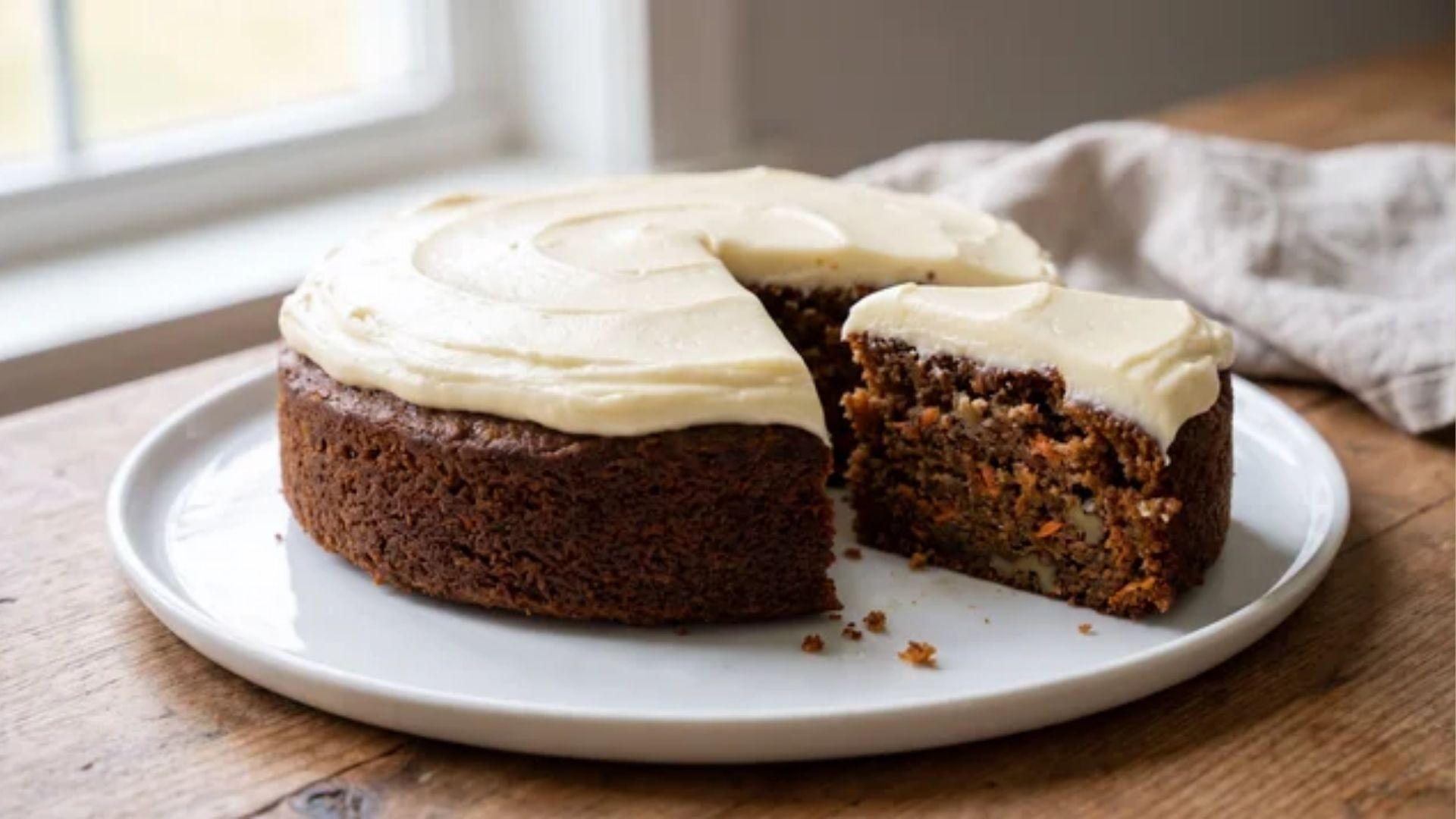
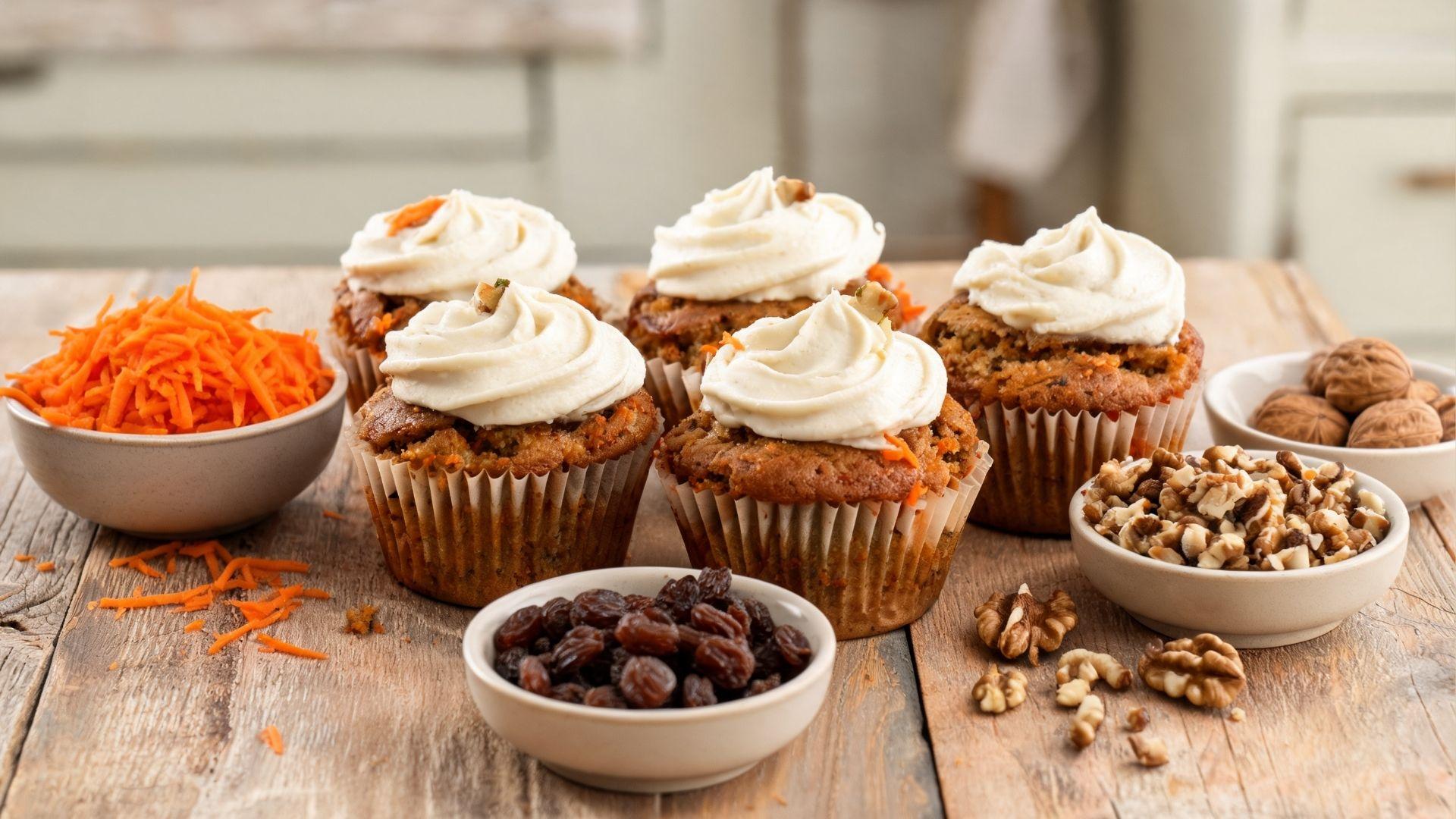
A carrot cake muffin recipe that bakes up tall and moist comes down to three choices: oil instead of butter, carrots you grate yourself, and a batter folded only until the flour disappears.
Get those right, start the oven hot, and a tray of 12 domed muffins comes out in about 40 minutes.
I started baking in a small-town bakery, and after more than nine years and more muffin batches than I can count, two habits still flatten good recipes most often.
Bagged carrots dry out the crumb, and a batter stirred until smooth bakes up short and tough.
Read on for the full ingredient list with measurements, the step-by-step bake, a lighter version, a frosting that isn’t too sweet, and fixes for the most common muffin problems.
Why Bake Carrot Cake Muffins From Scratch
Baking from scratch lets you set the sweetness, the spice level, and the amount of nuts or raisins, which a boxed mix or bakery muffin won’t let you do.
This simple carrot cake muffins recipe also skips the stand mixer and the creaming step, so all you need are two bowls, a whisk, and a spatula.
The muffins hold up through the week because oil keeps the crumb soft, so a Sunday batch still works for weekday breakfasts and lunchboxes.
If you like bakery-style treats made lighter at home, the same approach runs through this healthy cinnamon roll recipe.
With the reasons settled, the next question is which ingredients do the real work.
What Goes Into a Carrot Cake Muffins Recipe
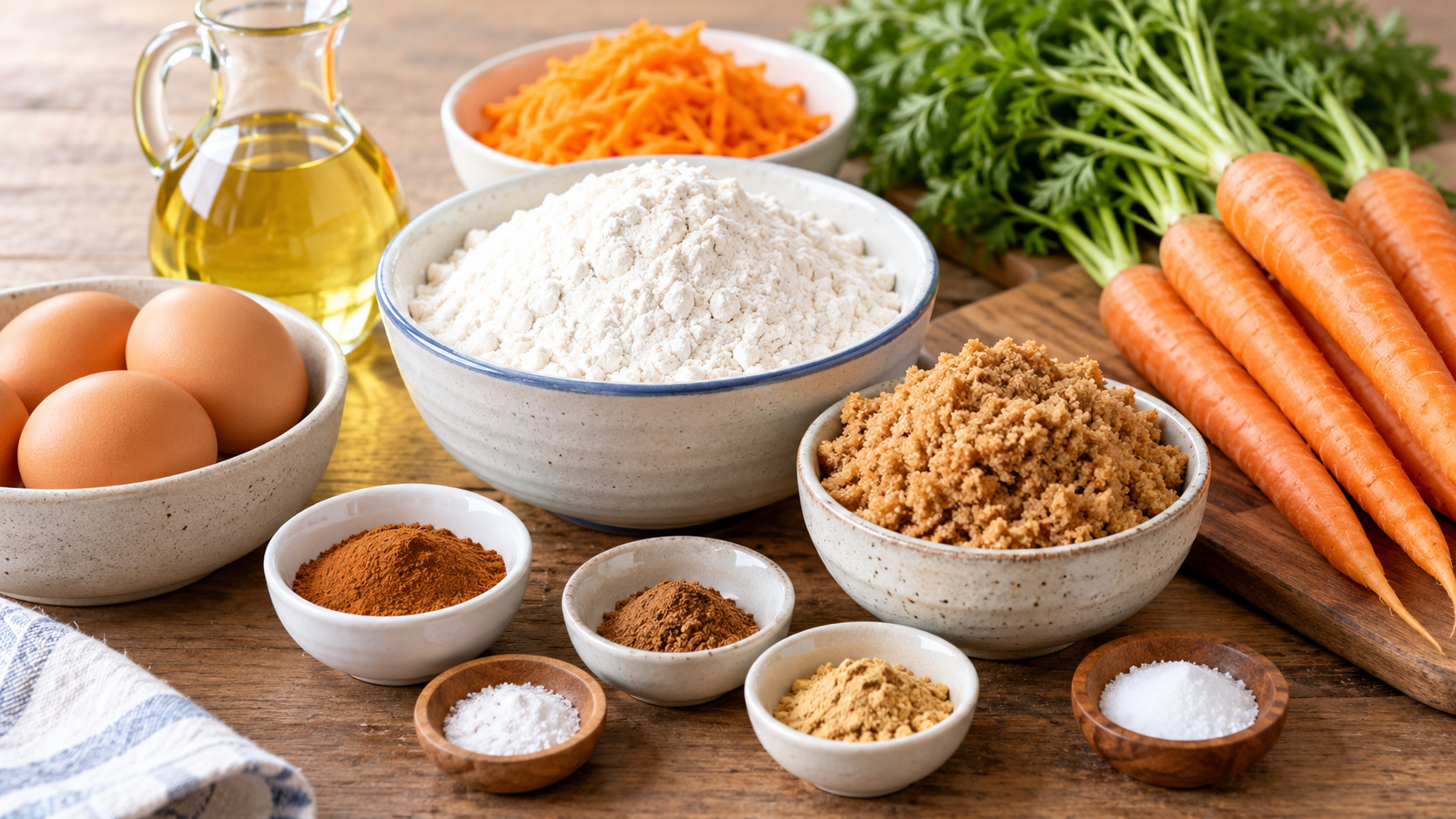
Oil and fresh carrots matter most, because together they decide whether the muffins bake up moist or dry.
Most ingredient lists don’t say which items you can swap and which ones carry the recipe, so the notes below cover both.
Dry Ingredients
The dry ingredients give these muffins their structure and the warm flavor people expect from carrot cake.
- 1 ¾ cups (220 g) all-purpose flour, spooned into the cup and leveled: the base that gives the muffin its body
- 1 teaspoon baking soda and 1 teaspoon baking powder: you need both, because baking soda reacts with the acidity in brown sugar while baking powder adds lift of its own
- 2 teaspoons ground cinnamon, ½ teaspoon ground ginger, and ¼ teaspoon ground nutmeg: cinnamon carries most of the carrot cake flavor, and the other two round it out
- ½ teaspoon salt: sharpens the spices and balances the sugar
Get the spice balance right and the muffins will taste like carrot cake before any frosting goes on.
Wet Ingredients
The wet ingredients keep these carrot cake muffins soft, and each one affects the final texture in a specific way.
- 2 large eggs, at room temperature: bind the batter and add structure
- ¾ cup (150 g) packed light brown sugar: holds moisture and adds a molasses note that white sugar can’t match
- ½ cup (120 ml) neutral oil, such as canola or vegetable: stays liquid as the muffins cool, which keeps the crumb soft for days, while butter firms up and tightens the texture
- ¼ cup (60 ml) milk, any kind: loosens the batter so it scoops cleanly
- 1 teaspoon vanilla extract
- 2 cups (about 7 ounces or 200 g) finely grated carrots, from about 4 medium carrots: release moisture into the crumb as the muffins bake
Oil is the reason this works as a simple carrot cake muffins recipe with oil, since there’s no butter to soften or cream.
For a lighter batch, replace half the oil with unsweetened applesauce, the same swap that keeps the healthy apple bread soft.
Why Freshly Grated Carrots Matter
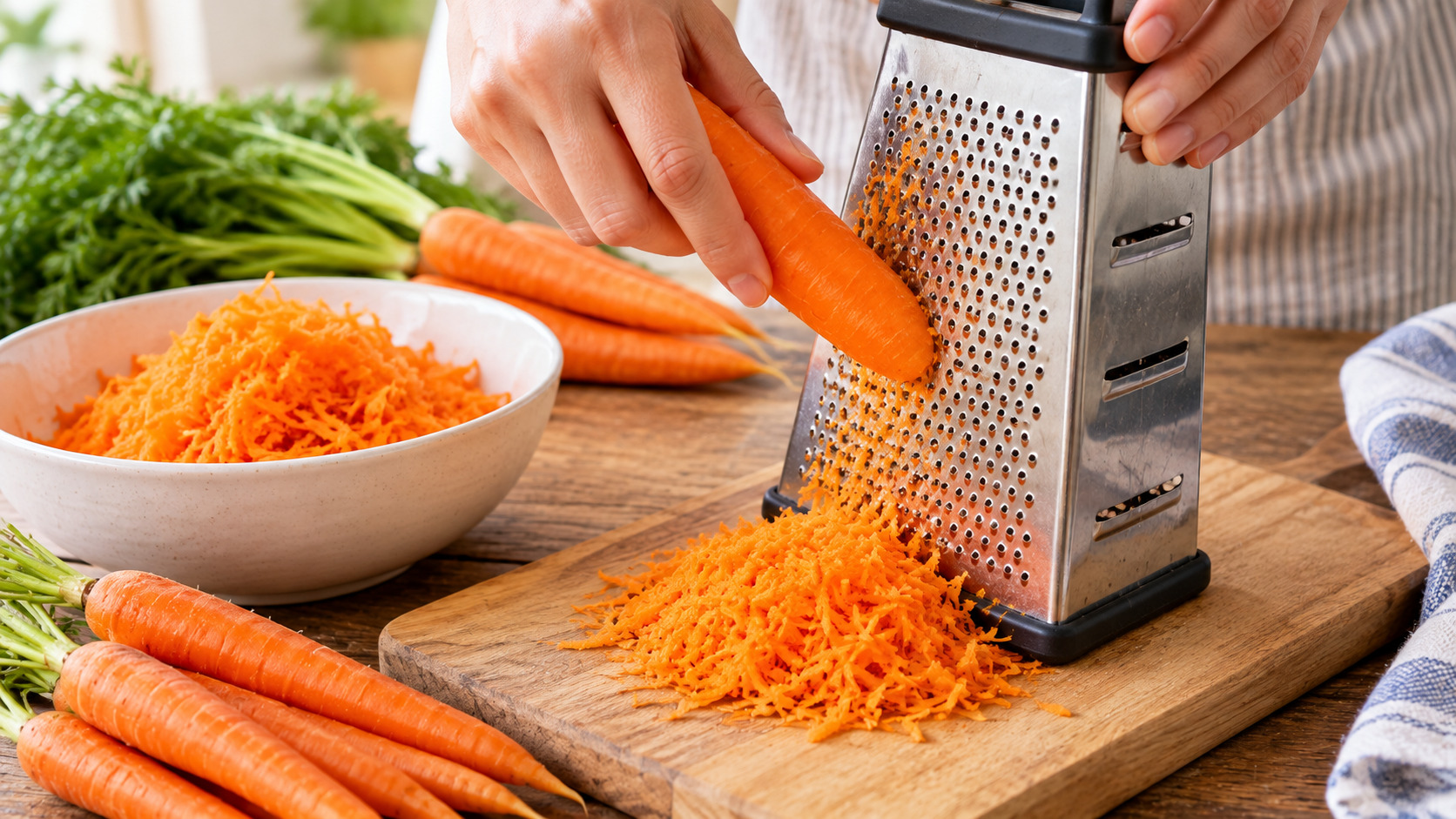
Whether you’re baking a classic or an eggless carrot cake, use the fine side of a box grater, because thin shreds soften and blend into the crumb while coarse shreds stay chewy.
Grate the carrots right before mixing and measure them lightly packed, since a cup of finely grated carrot weighs more than a cup of coarse shreds.
Sandy Folsom, school director at the Wilton Sweet Studio, advises against pre-shredded carrots, noting they hold less moisture than freshly grated ones and can leave a carrot cake drier.
Bagged shreds also tend to be thicker, which adds chew where you want a tender bite.
How to Make Carrot Cake Muffins: Step by Step Method
To make carrot cake muffins, whisk the dry ingredients, whisk the wet ingredients with the grated carrots, then fold the two together only until no dry flour shows.
Fill 12 lined cups three-quarters full and bake at 400°F (200°C) for 5 minutes, then at 350°F (175°C) for 15 to 18 minutes.
The whole recipe takes about 40 minutes, with roughly 15 minutes of grating and mixing and about 23 minutes in the oven.
Step 1: Prepare Your Tin and Preheat
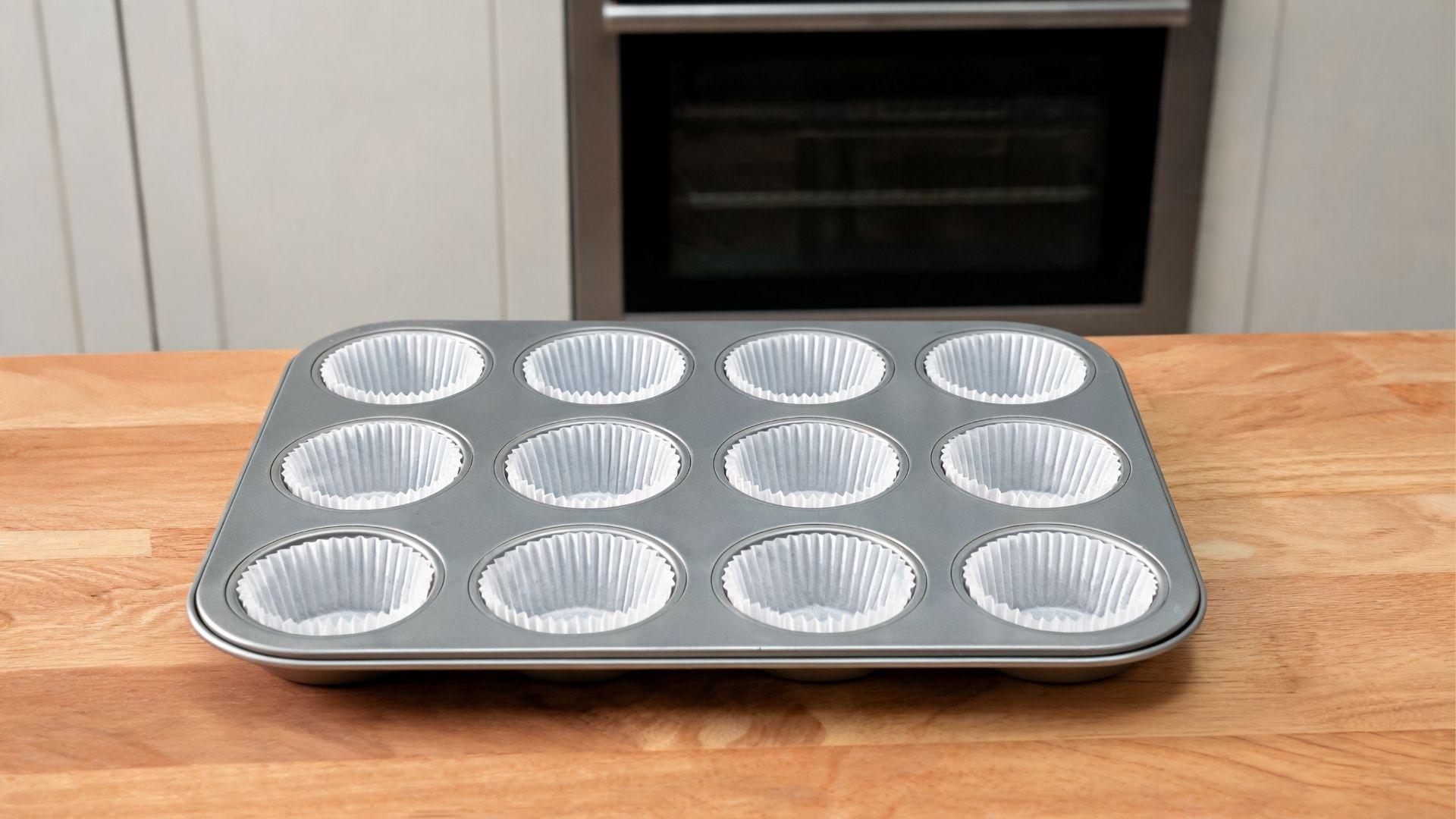
Set the oven to 400°F (200°C) and place the rack in the center so heat circulates evenly around the tin.
Line a 12-cup muffin tin with paper liners, or grease every cup, including the sides, if you’re skipping liners.
Let the oven reach full temperature before the batter goes in, because the first 5 minutes at high heat set up the domed tops.
Step 2: Mix the Batter
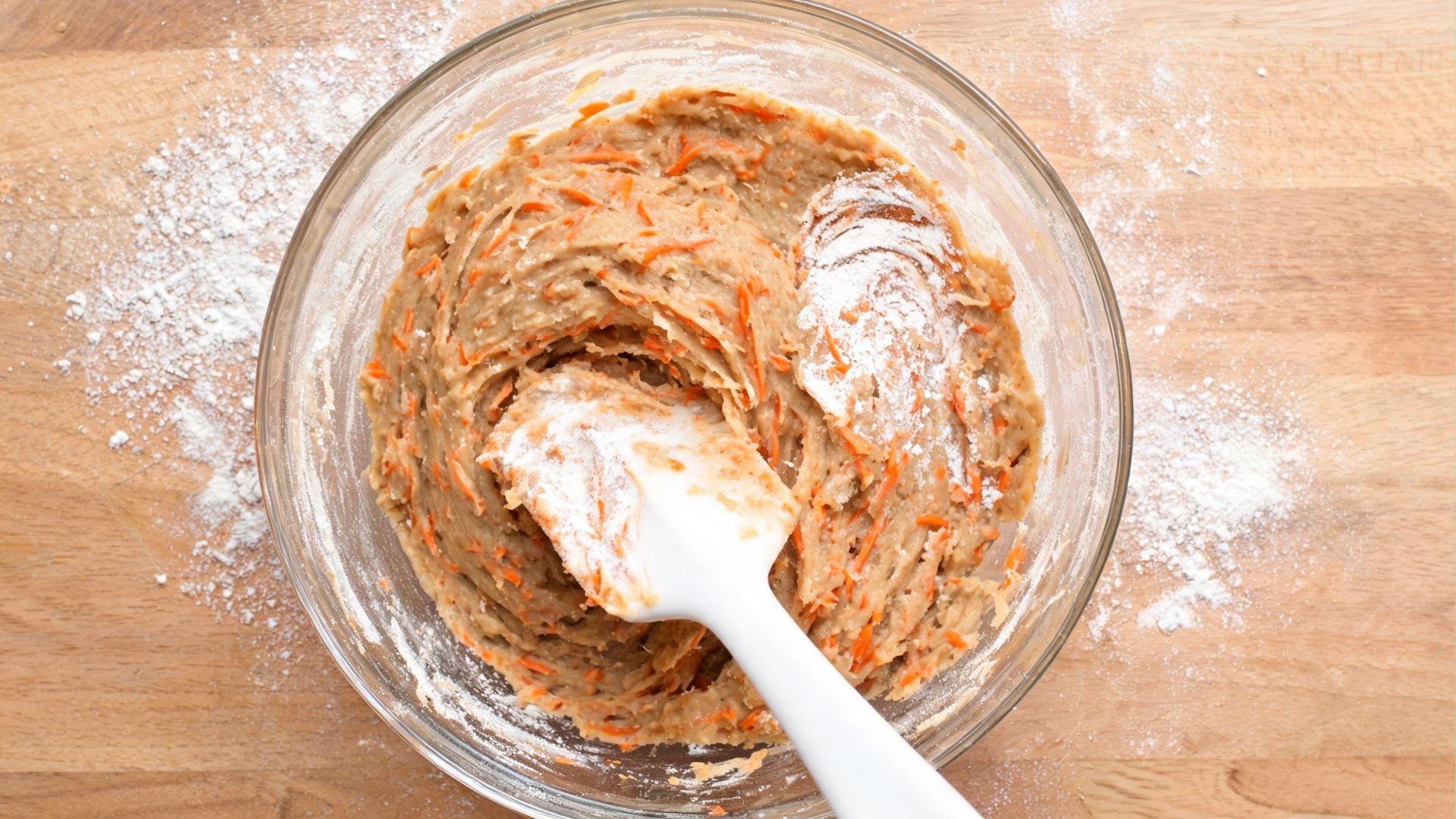
Whisk the flour, baking soda, baking powder, spices, and salt in a large bowl.
In a second bowl, whisk the eggs and brown sugar until no lumps remain, then whisk in the oil, milk, and vanilla and stir in the carrots.
Pour the wet mixture into the dry ingredients and fold with a spatula, turning the batter over itself and stopping as soon as the last flour streaks disappear.
The batter will look thick and a little lumpy, and that’s the texture you want.
Toss any raisins or nuts with 1 teaspoon of flour and fold them in last so they stay suspended in the batter.
Skip tasting the raw batter, since CDC guidance on raw batter explains that uncooked flour and raw eggs can carry germs that cause food poisoning.
Step 3: Fill and Bake
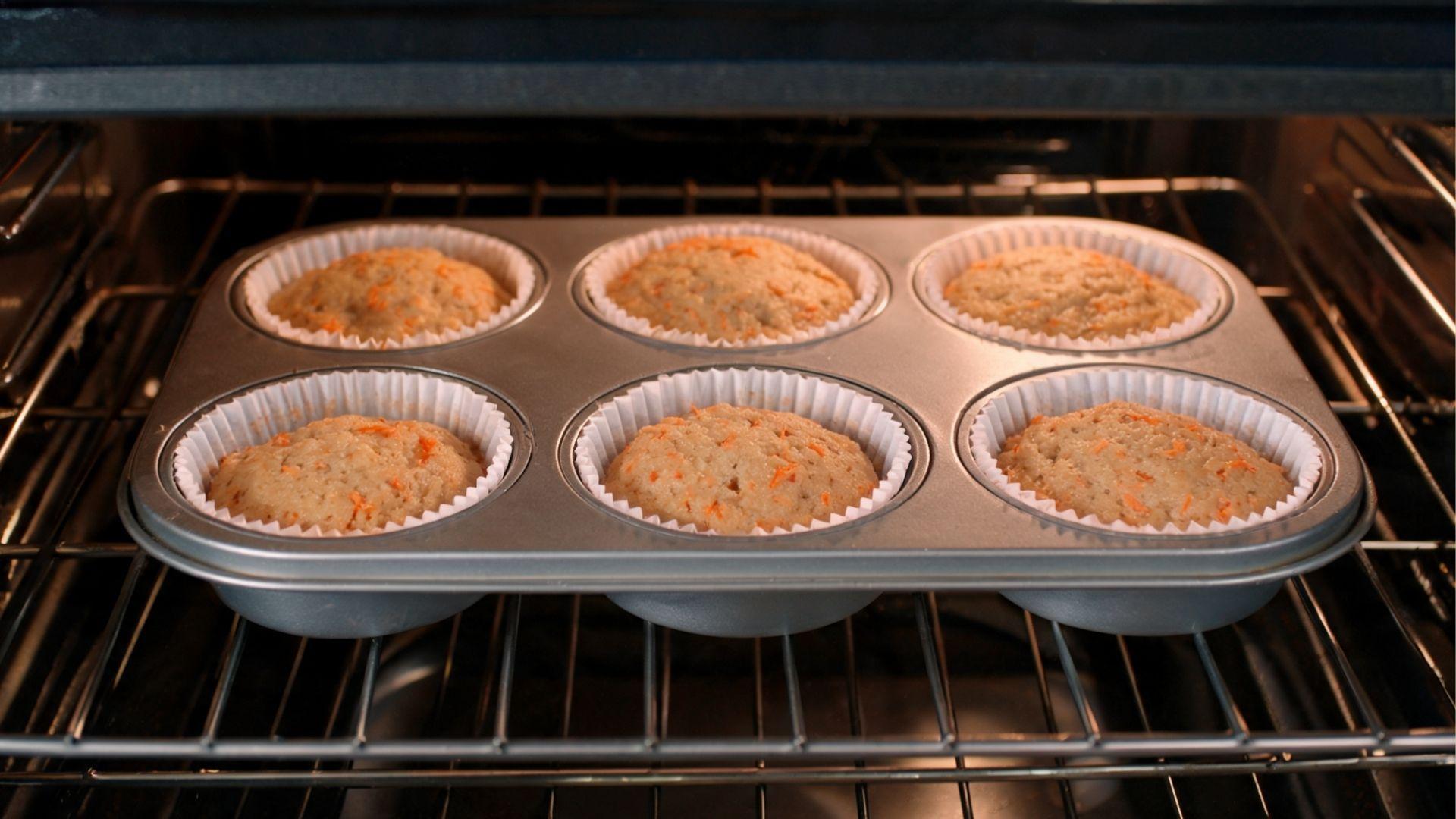
Spoon the batter into the liners until each is about three-quarters full, and leave the mounds unleveled, because that extra height becomes the dome.
Bake at 400°F for 5 minutes, then lower the oven to 350°F without opening the door and bake for another 15 to 18 minutes.
The hot start gives the batter a fast burst of steam and leavening that pushes the tops up before the crust sets.
The muffins are done when a toothpick inserted in the center comes out clean and the tops spring back when pressed lightly.
Cool them in the tin for 5 minutes, then move them to a wire rack so the bottoms don’t steam and turn soggy.
Step 4: Bake a Small Carrot Cake or Change the Muffin Size
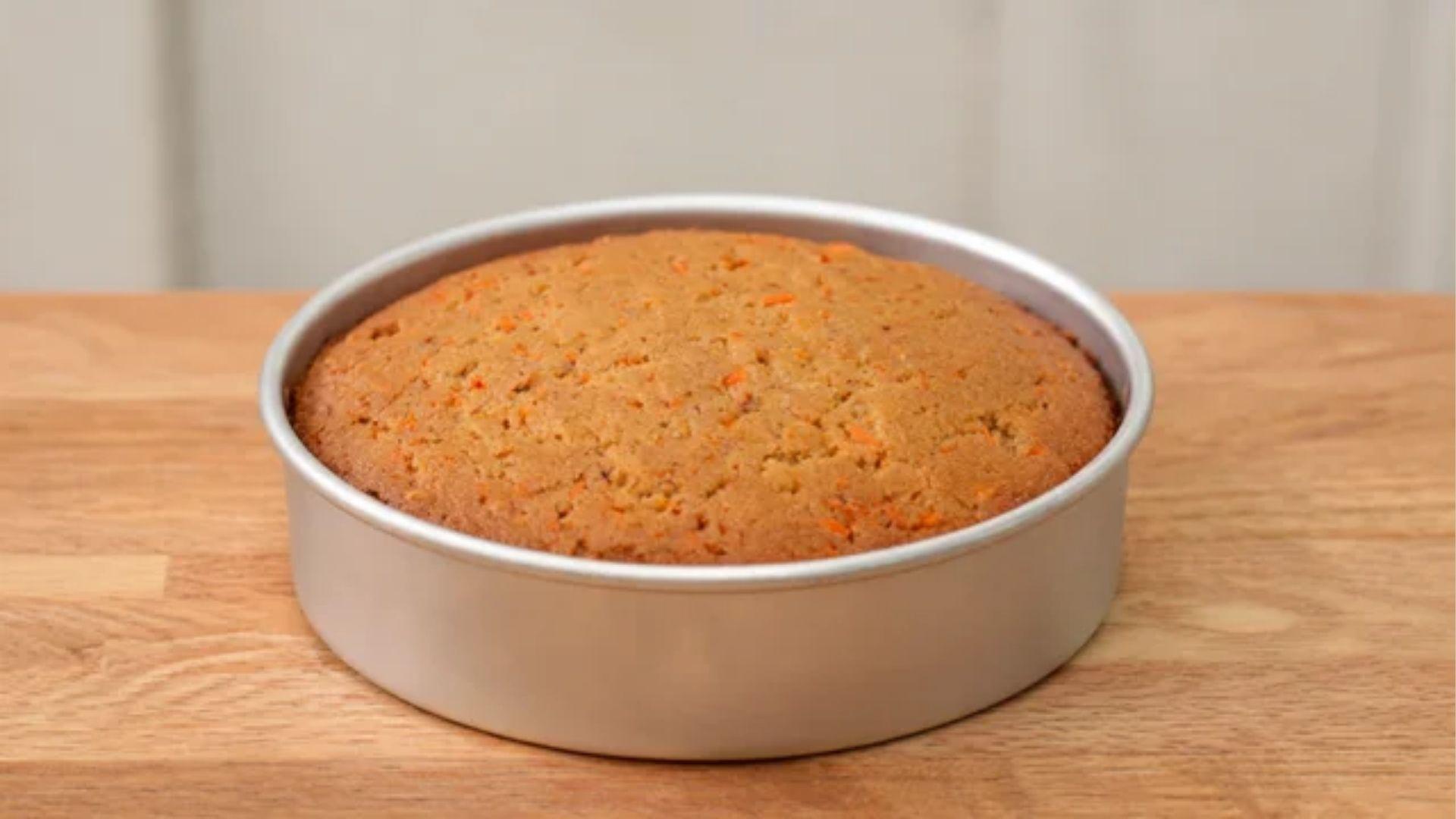
You don’t need a separate small carrot cake recipe, because a half batch of this batter, made with 1 egg, fits a 6-inch round pan.
Bake it at 350°F for 25 to 30 minutes, using the same toothpick and spring-back tests.
A full batch overfills a 6-inch pan, so pour it into an 8-inch square or 9-inch round pan instead and bake at 350°F for 30 to 35 minutes.
The texture turns slightly more cake-like, while the flavor and moisture stay the same.
For mini muffins, the batter fills about 30 to 36 mini cups, which bake at 350°F for 10 to 13 minutes with no high-heat start.
For five or six jumbo muffins, keep the 5-minute start at 400°F, then bake at 350°F for 20 to 25 minutes.
Even with a tested method, a batch can still come out heavy or flat, and the cause is usually easy to spot.
Fixes for Dense, Dry, or Flat Muffins
Most muffin problems trace back to mixing, carrot choice, or oven heat. Match what you see in your batch to the table below, and adjust one thing on the next bake.
| Problem | Likely Cause | Fix |
| Dense, tough crumb | Batter mixed until smooth | Fold only until the last flour streaks disappear |
| Dry crumb | Bagged carrots or overbaking | Grate carrots fresh and start checking 15 minutes after lowering the heat |
| Gummy layer near the bottom | Too much applesauce or underbaking | Replace no more than half the oil and bake until a toothpick comes out clean |
| Pale, flat tops | Oven not fully preheated or cups underfilled | Preheat to 400°F and fill each cup three-quarters full |
With the base method down, the batter adapts to a lighter or egg-free batch without any new steps.
Healthy Carrot Cake Muffins and Other Variations
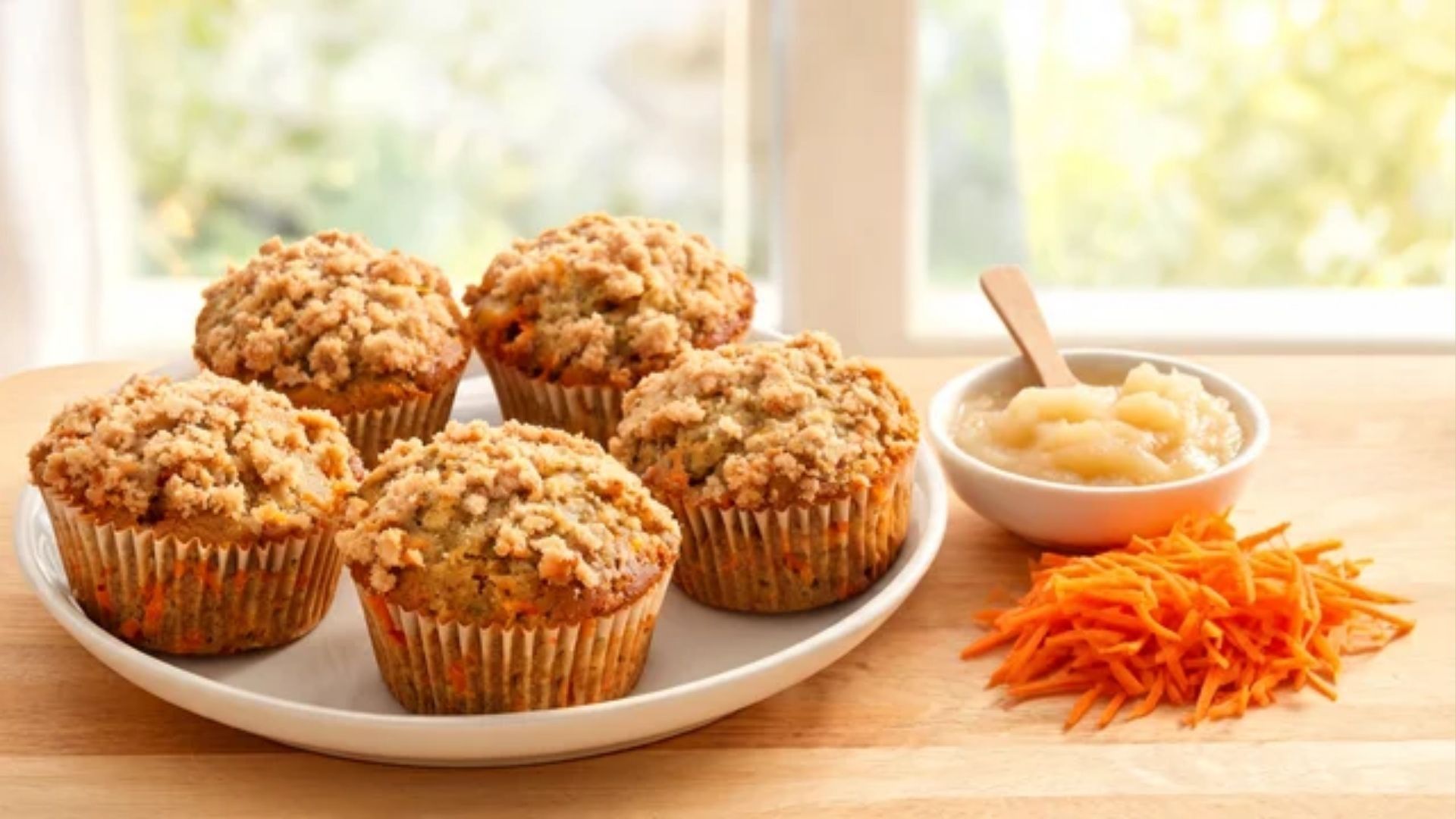
Every variation below uses the same mixing method, so the steps stay the same while the result changes.
- Healthier swap: Replace half the oil with unsweetened applesauce and cut the brown sugar to ½ cup for healthy carrot cake muffins with less fat and added sugar. Going past half the oil can turn the crumb gummy, so stop there.
- Eggless option: Replace each egg with a flax egg made from 1 tablespoon of ground flaxseed and 3 tablespoons of water, rested for 5 to 10 minutes until thick. Expect a slightly denser crumb and a flatter top than the egg version.
- Pineapple version: Replace ½ cup of the carrots with well-drained crushed pineapple for extra sweetness and moisture. Press the pineapple in a fine strainer first, because extra juice weighs the batter down.
- Streusel topping: Skip the frosting and rub together ¼ cup each of flour and brown sugar, 3 tablespoons of cold butter, and a pinch of cinnamon until crumbly. Sprinkle it over the filled cups right before baking.
Plain muffins are good on their own, but a thin layer of frosting turns them into dessert.
Carrot Cake Muffins With Cream Cheese Frosting That Isn’t Too Sweet
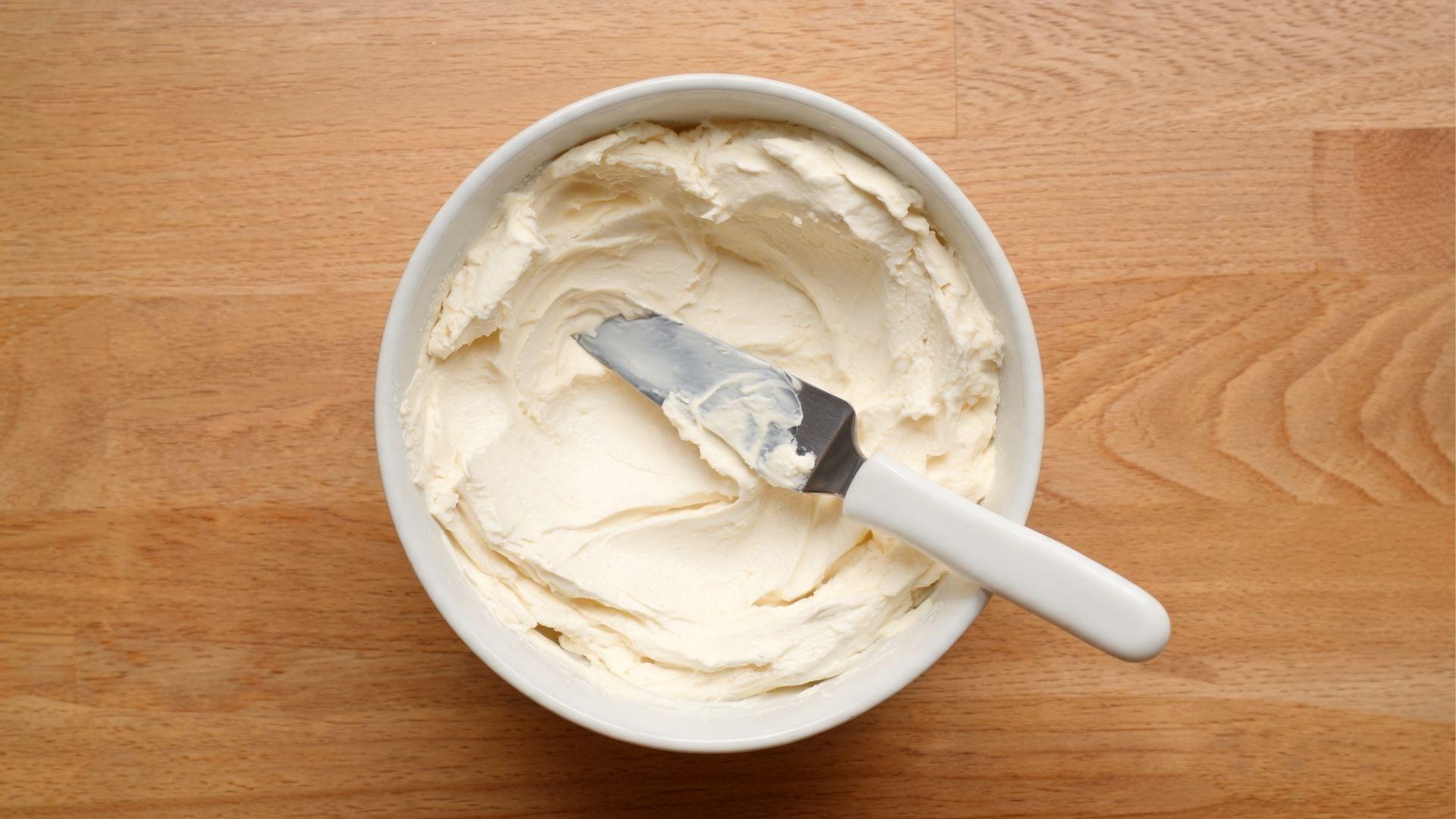
Carrot cake muffins with cream cheese frosting taste best when the frosting uses less powdered sugar than most recipes, so the tang of the cheese balances the spiced crumb.
The frosting also holds its shape when the cream cheese is softened but still cool, and when the muffins have cooled all the way to the center.
For a thin layer over 12 muffins, beat 4 ounces (113 g) of softened block cream cheese with 2 tablespoons of softened butter.
Add ½ to ¾ cup of powdered sugar gradually, then finish with ½ teaspoon of vanilla or 1 teaspoon of lemon juice.
Let the cream cheese sit out for about 30 minutes, until it gives when pressed but still feels cool, so it beats smooth by hand.
Stop mixing once the frosting tastes right and holds its shape on a spoon, because extra beating warms it and thins it out.
For tall piped swirls, double the batch: 8 ounces (227 g) of cream cheese, 4 tablespoons of butter, 1 to 1½ cups of powdered sugar, and 1 teaspoon of vanilla, beaten with a hand mixer on low.
Storage, Make-Ahead, and Freezing
Store unfrosted carrot cake muffins in an airtight container at room temperature for up to 3 days, or freeze them for up to 3 months.
Frosted muffins belong in the fridge, where they keep for up to 4 days, because cream cheese frosting is perishable.
- Room temperature: line an airtight container with a paper towel to absorb extra moisture
- Freezer: wrap unfrosted muffins individually and seal them in a freezer bag
- Thawing: leave them overnight in the fridge or 30 to 60 minutes on the counter
- Reheating: microwave a thawed muffin for 10 to 15 seconds if you like it warm
Don’t leave frosted muffins out on a party table for long, since USDA’s two-hour food safety rule limits perishable food to 2 hours at room temperature, or 1 hour when it’s above 90°F.
Freezing also works as a make-ahead plan, so you can bake on the weekend and pull out one muffin at a time.
Summing it Up
Fresh carrots on the fine grater, oil in place of butter, a fold that stops early, and a hot first 5 minutes are what separate a tall, tender muffin from a flat one.
Once those basics are in place, the batter adapts to a lighter swap, an egg-free version, or a small cake without losing its texture.
That’s the goal behind this moist carrot cake muffins recipe: a batch that comes out right the first time, even on a busy weeknight.
Grate your carrots, set the oven to 400°F, and tell us in the comments which add-in or swap made it into your batch.
Frequently Asked Questions
Can I Use Whole Wheat Flour in Carrot Cake Muffins?
Yes, swap up to half the all-purpose flour for whole wheat or white whole wheat flour. Whole wheat absorbs more liquid, so add 1 to 2 tablespoons of extra milk to keep the crumb tender.
Do Carrot Cake Muffins Need to Be Refrigerated?
Only frosted ones do. Unfrosted muffins stay softer on the counter, since cold air firms the crumb and dries it faster; if you refrigerate them, let them sit 15 minutes before eating.
Can I Make the Batter the Night Before?
It’s better not to, since the leaveners start reacting once wet meets dry. Instead, whisk the dry ingredients the night before, then grate the carrots and mix in the morning.
Why Did My Carrot Cake Muffins Sink in the Middle?
Sinking usually means underbaked centers, an oven door opened too early, or old baking powder or soda. Test baking powder in hot water and baking soda in vinegar; both should fizz.