Chinese noodles are healthy, but only some of them. That answer depends entirely on the type, and most people are eating the wrong one without knowing it.
The difference between the lightest and heaviest option on this list is not small. The type you pick determines the nutritional picture entirely: the base ingredient, how it is made, and what that means for your diet.
This breakdown covers every major Chinese noodle type with the actual numbers behind each one so you know exactly where they stand before you order or cook.
Which Chinese Noodle Is the Healthiest?
Glass noodles win on glycemic index and calorie count. If you are managing blood sugar or watching total calories, they are the best base to build a dish around.
Rice noodles win on digestibility. If gluten is a concern or your digestion is sensitive, rice noodles are the easier option.
Wheat and egg noodles are mid-range. They are not a bad choice but they are higher in refined carbs and calories than the two options above. Fine in a balanced dish, not the first pick for a low-carb or low-calorie goal.
Instant noodles are not in the same category as the others. The deep-frying and sodium load separate them regardless of portion size or toppings.
For most people, glass noodles or rice noodles are the smartest choice at a Chinese restaurant or when cooking at home.
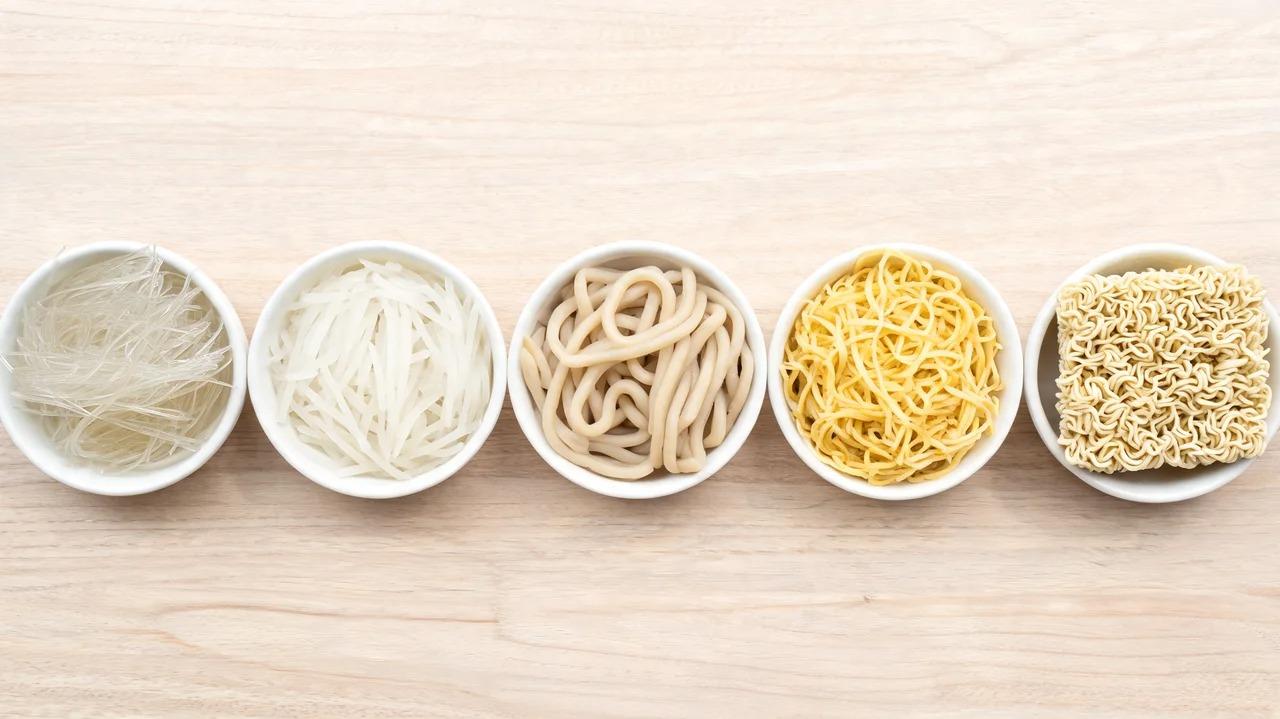
Chinese Noodle Types: How They Actually Differ
Not all Chinese noodles are made the same, and that difference is what determines how healthy they actually are.
1. Glass Noodles
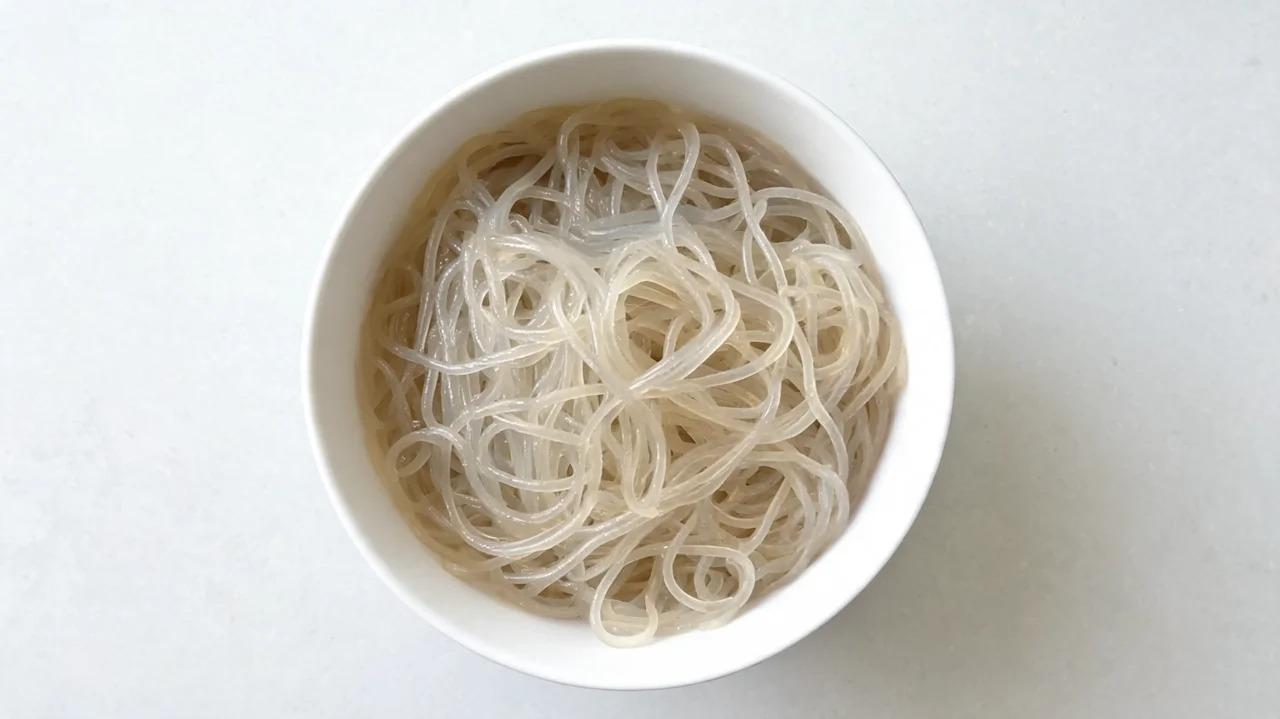
Glass noodles are made from mung bean, pea, or sweet potato starch. That base is what makes them different from every other noodle on this list.
They are naturally gluten-free and sit lower on the glycemic index than wheat-based noodles. That means slower blood sugar spikes after eating, which matters if you are watching carb impact.
Per 100g cooked:
- Calories: 70 to 80
- Carbs: 17to19g
- Protein: 0 to1g
- Fibre: 0.5 to 1g
Protein is low. If you are eating glass noodles as a main, pair them with a protein source or they will not keep you full for long.
2. Rice Noodles
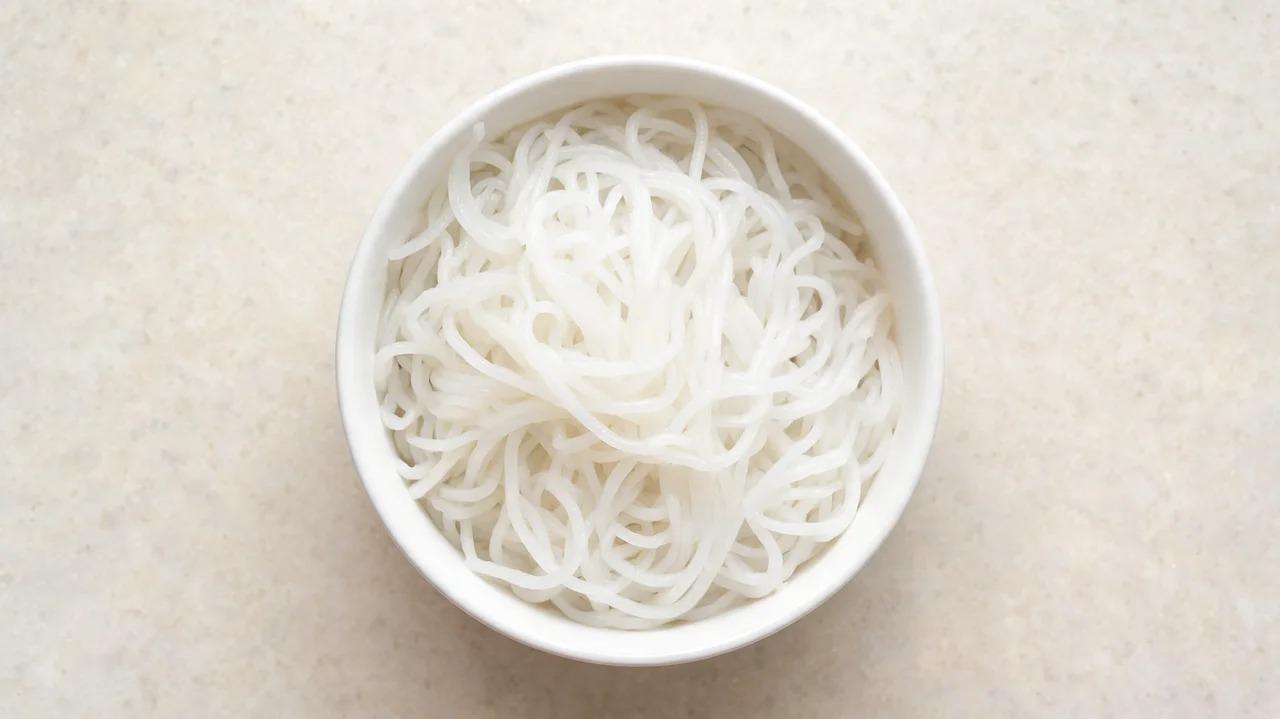
Rice noodles are made from rice flour and water. Nothing else. That keeps them light, easy to digest, and naturally gluten-free.
They are a good option for anyone with gluten sensitivity or a sensitive stomach. The calorie count is similar to glass noodles but the glycemic index sits slightly higher.
Per 100g cooked:
- Calories: 108 to 120
- Carbs: 24 to 26g
- Protein: 1.8 to 2.5g
- Fibre: 0.9 to 1g
Lower in protein than wheat noodles. Better for digestion than wheat. Not the most filling option on their own.
3. Wheat and Egg Noodles
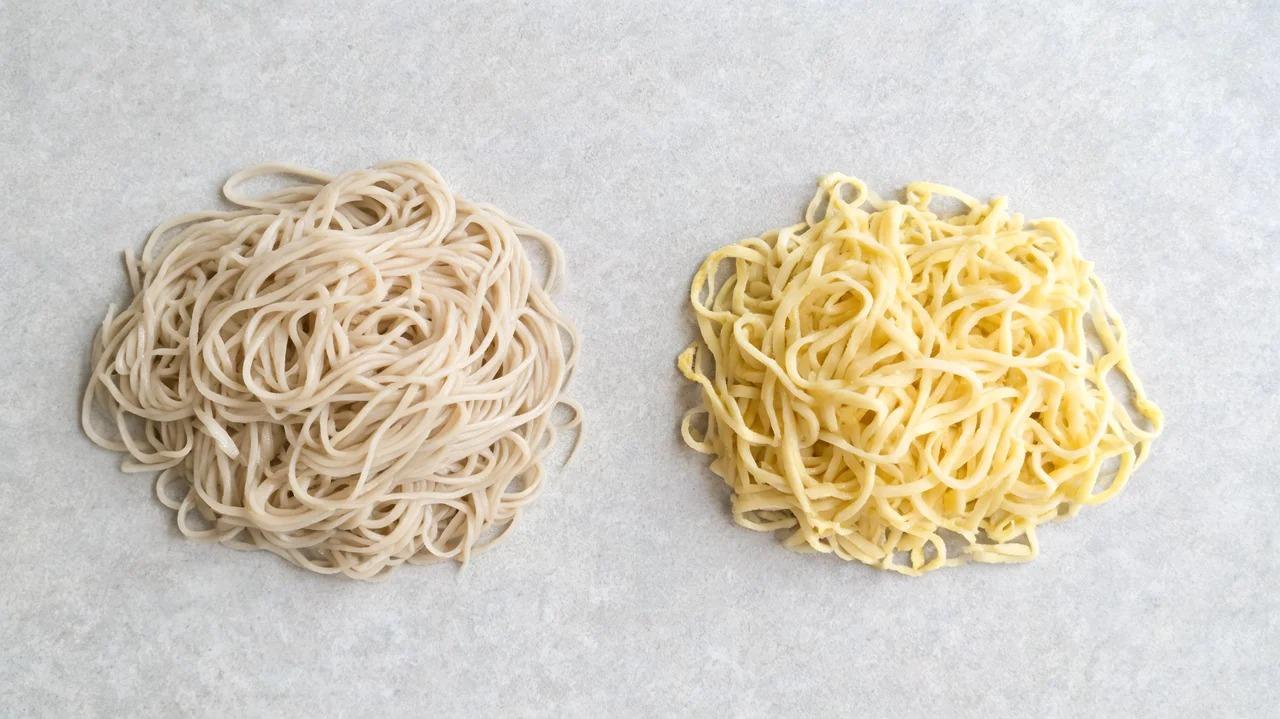
Plain wheat noodles are the most common Chinese noodle. Higher in refined carbohydrates than glass or rice noodles, which means a faster blood sugar response after eating.
Egg noodles are wheat noodles with egg added. That raises protein and fat slightly over plain wheat, which makes them more filling but also higher in calories.
Per 100g cooked:
- Wheat noodles: 130 to 140 calories, 25 to 28g carbs, 4 to 5g protein
- Egg noodles: 138 to 150 calories, 22 to 25g carbs, 5 to 7g protein, 2 to 3g fat
Not unhealthy. Just the heavier end of the Chinese noodle spectrum.
4. Instant Noodles
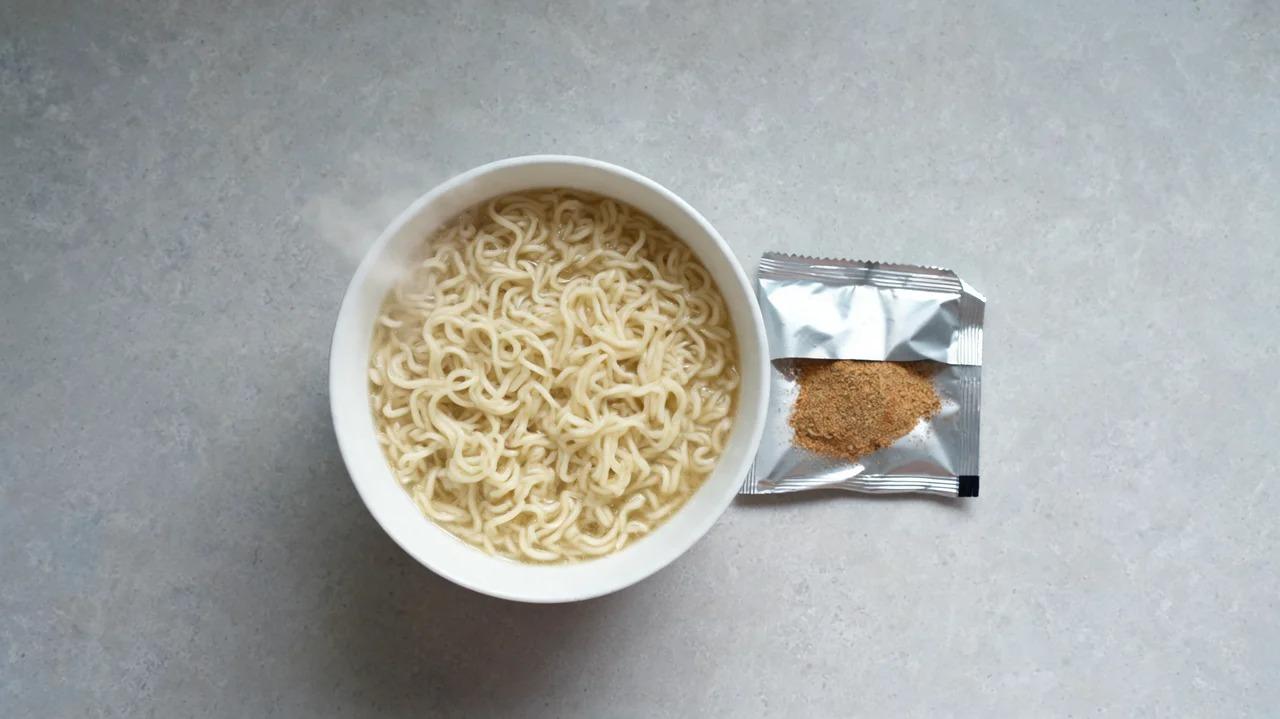
Instant noodles look like regular noodles but the manufacturing process puts them in a completely different category.
They are deep-fried during production to reduce moisture and extend shelf life. That frying step adds saturated fat before the flavour packet is even opened. The flavour packet then adds 800 to 1,500mg of sodium per serving on top of that.
Per 100g cooked (with flavour packet):
- Calories: 350 to 450
- Fat: 14 to 20g (of which saturated: 6 to 9g)
- Sodium: 800 to 1,500mg
- Protein: 7 to 9g
Regular consumption is linked to metabolic and cardiovascular health risks. The noodle block alone is not the problem. The combination of deep-frying and the sodium load in the packet is.
The Real Reason Chinese Noodles Get a Bad Reputation
Noodles are rarely the problem. The dish it ends up in usually is.
Take lo mein. Plain wheat noodles on their own are a mid-range carbohydrate. Put them in a restaurant wok with oil and soy sauce and the same serving jumps from 130 to 140 calories to 400 to 550, with sodium pushing past 1,000mg. The noodles did not change. Everything added to it did.
Instant noodles are a separate case. The bad reputation there starts before cooking even begins.
Deep-frying during manufacturing adds saturated fat to every block before the flavour packet which carries most of the sodium is even factored in.
Broth-based noodle dishes tell the opposite story. The same wheat or rice noodle cooked in stock rather than oil stays close to its baseline calorie and sodium count. The noodle type matters. What it is cooked in matters just as much.
The reputation Chinese noodles carry is not really about the noodle. It is about the heaviest preparations becoming the most visible ones.
Final Takeaway
Chinese noodles have a reputation they do not fully deserve. The concern is not the noodle itself, it is the category you pick and what gets added to it.
Glass noodles and rice noodles are worth ordering without a second thought. Instant noodles are the one exception.
Now you know the difference. For the full picture on what to order alongside them, our Chinese takeout guide covers proteins, sides, and starters.
Frequently Asked Questions
What is the unhealthiest instant noodle brand?
The brand matters less than the format. All instant noodles are deep-fried during production and carry high sodium in the flavour packet, making the category itself the concern.
Are rice noodles better than pasta?
Rice noodles are lower in calories and gluten-free compared to wheat pasta. They are lighter and easier to digest but lower in protein and fibre than most whole wheat pasta options.
Are Asian noodles healthier than Western pasta?
Asian noodles like glass and rice noodles are generally lower in calories than refined wheat pasta. The gap narrows with whole wheat pasta, which is higher in fibre than most Asian noodle varieties.