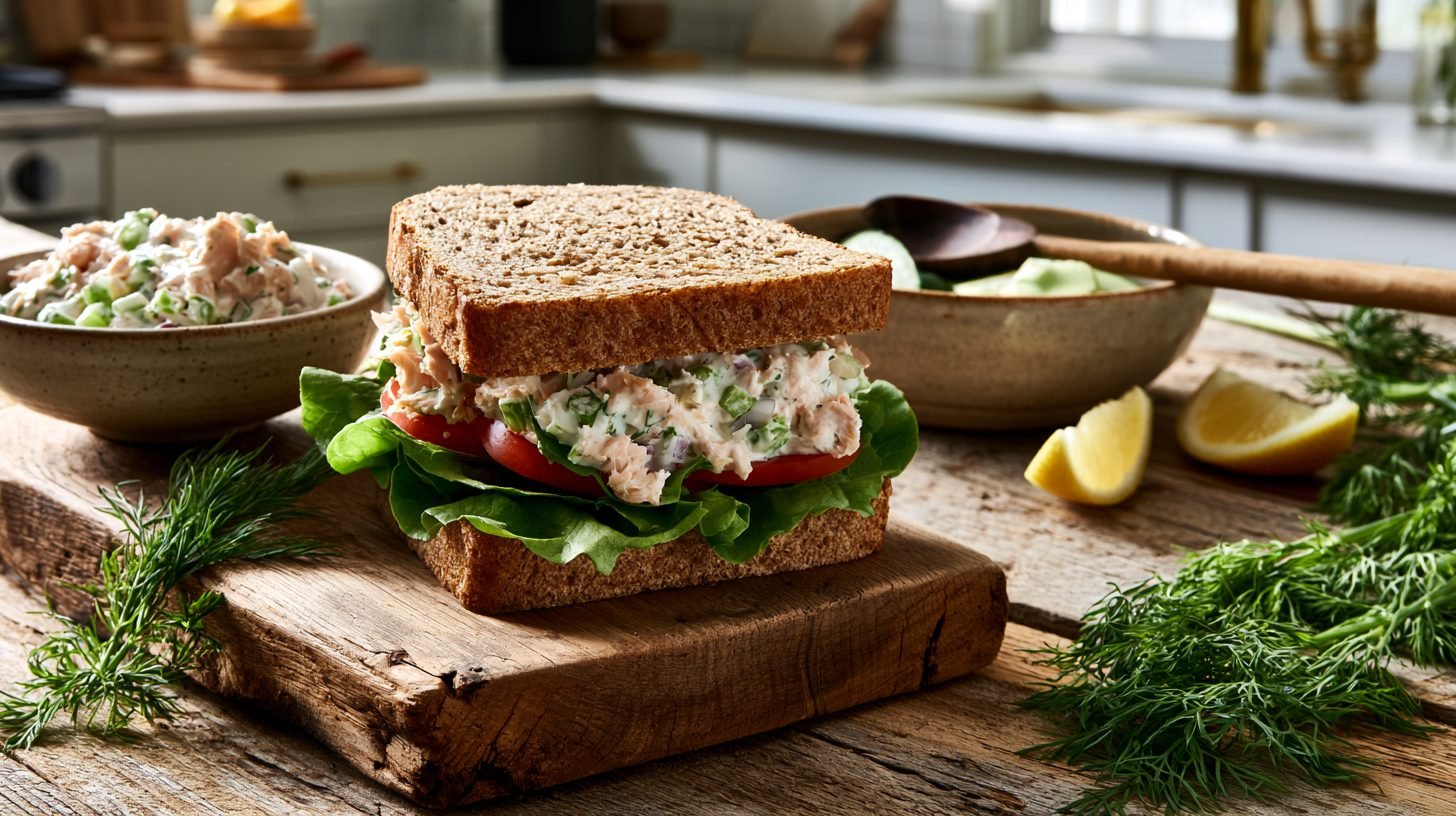
This salmon sandwich takes about 15 minutes to make and uses ingredients most people already have at home.
You mix canned or cooked salmon with mayonnaise, lemon juice, and a few fresh toppings, then layer everything onto your bread of choice. The result is a filling, protein-rich lunch that holds together well and tastes fresh.
This guide covers the right salmon to use, how to mix a creamy salad that stays thick rather than watery, and easy swaps like Greek yogurt or avocado.
You will also find tips for storing leftovers so the bread stays crisp and the salad keeps its texture for up to three days.
What Makes This Salmon Sandwich Worth Making?
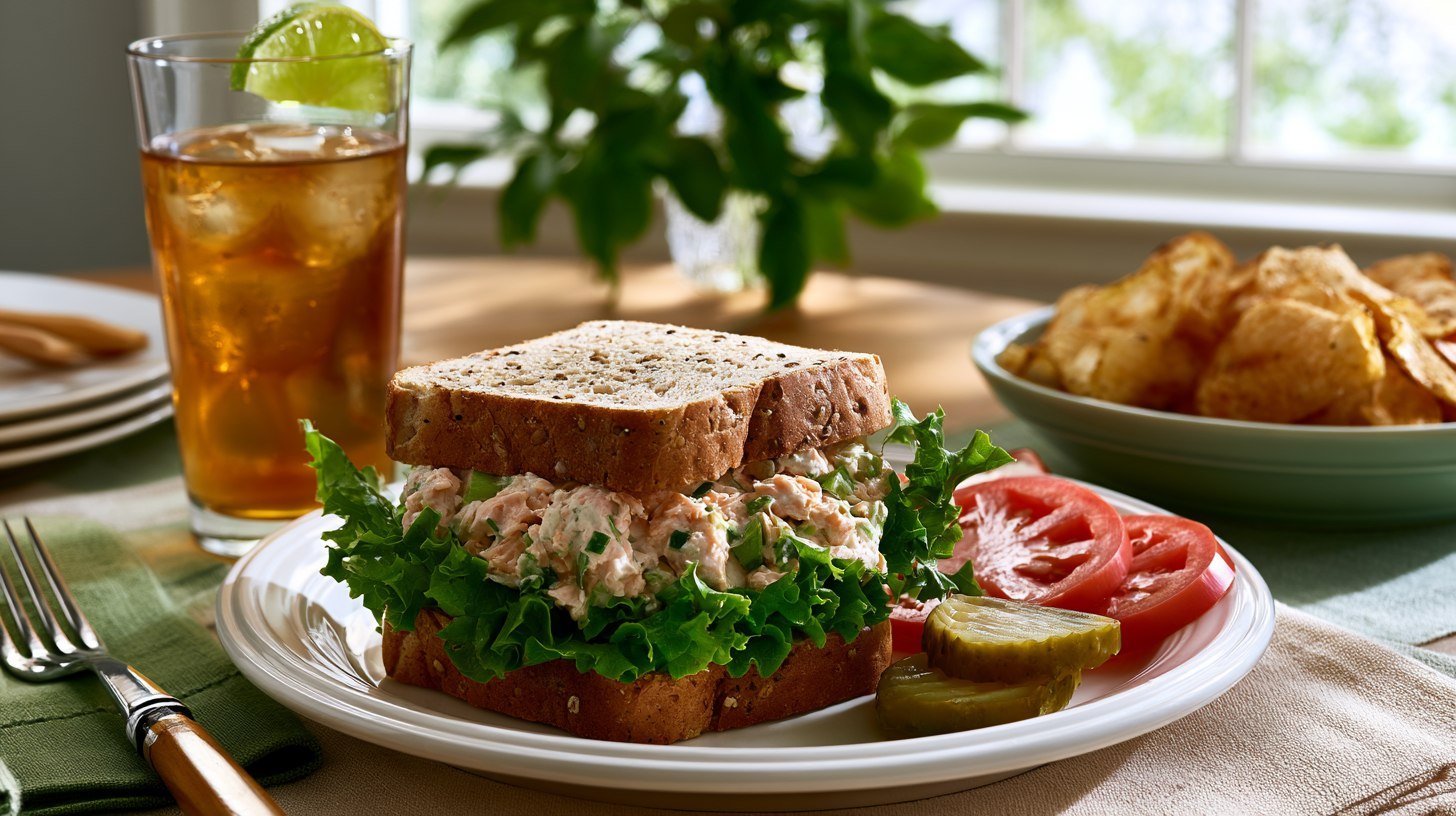
This sandwich works on days when you need lunch on the table fast. The salmon salad comes together in one bowl with no cooking required if you use canned fish, and the whole assembly takes under 15 minutes from start to finish.
Salmon gives the sandwich a rich, savory flavor that pairs naturally with crunchy celery, fresh lettuce, and a squeeze of lemon. Each bite has a mix of soft bread, tender fish, and cool crunch that feels balanced rather than heavy.
The protein and healthy fats in salmon also keep you full for several hours, which most quick lunches do not manage.
You can adjust the recipe without changing the basic steps. Swap the bread, replace mayo with Greek yogurt, or layer in avocado for extra richness.
This flexibility makes it a solid option for weekday lunches, light dinners, or casual gatherings where tastes vary across the table.
What Ingredients Do You Need?
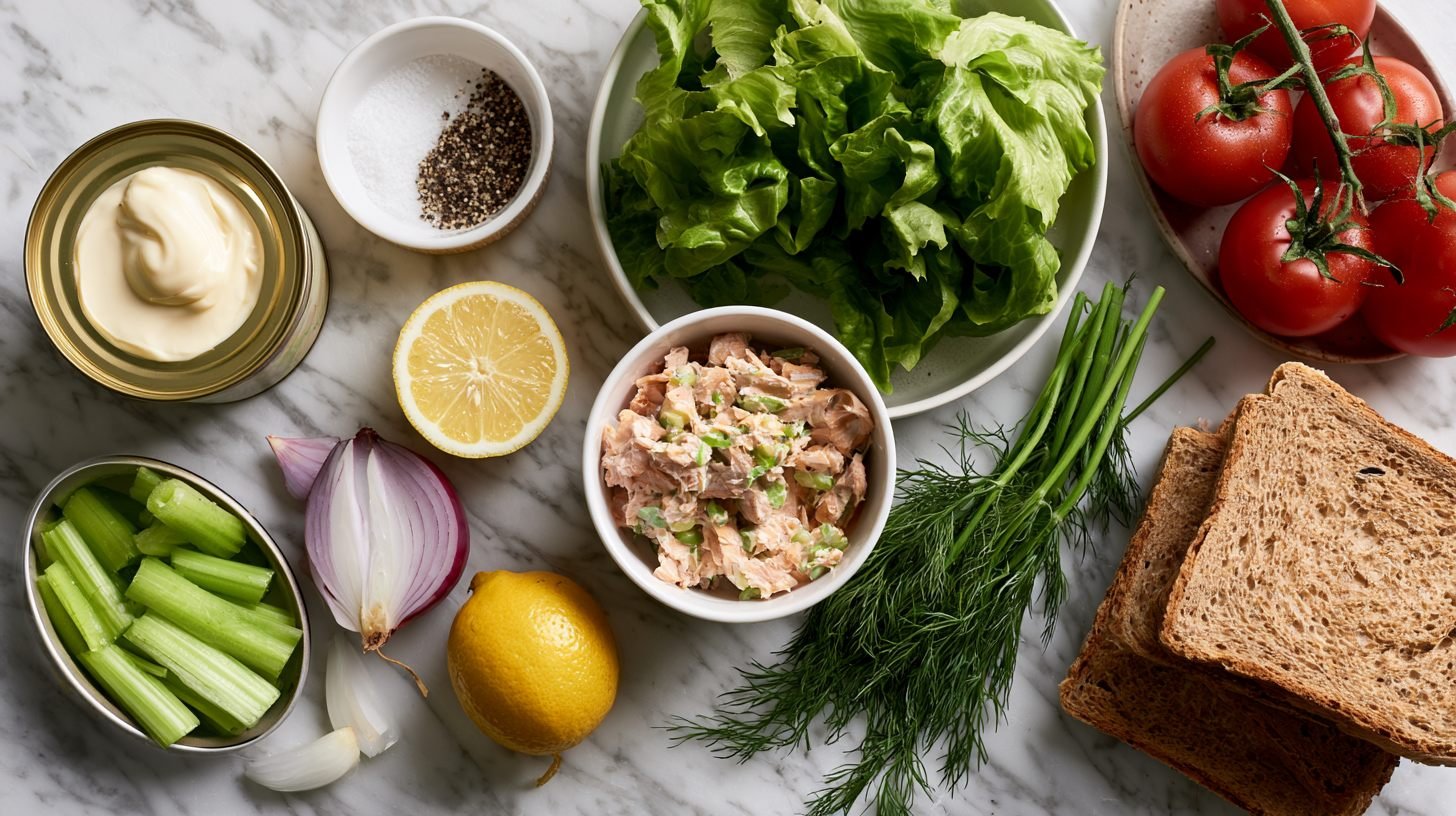
You need just a handful of items, and most are already in a standard kitchen. The list below covers one to two servings. Quantities scale up easily if you are making sandwiches for more than one person, and nothing here requires specialty stores or unusual ingredients.
- 1 can of salmon (14.75 oz) or 1 cup of cooked flaked salmon
- 3 tablespoons mayonnaise
- 1 tablespoon fresh lemon juice
- 2 stalks celery, finely chopped
- 2 tablespoons red onion, finely diced
- Salt and black pepper to taste
- 2 slices of bread, toasted or plain
- 2 leaves of romaine or butter lettuce
- 2 to 3 tomato slices
Which Salmon Works Best Canned or Fresh?
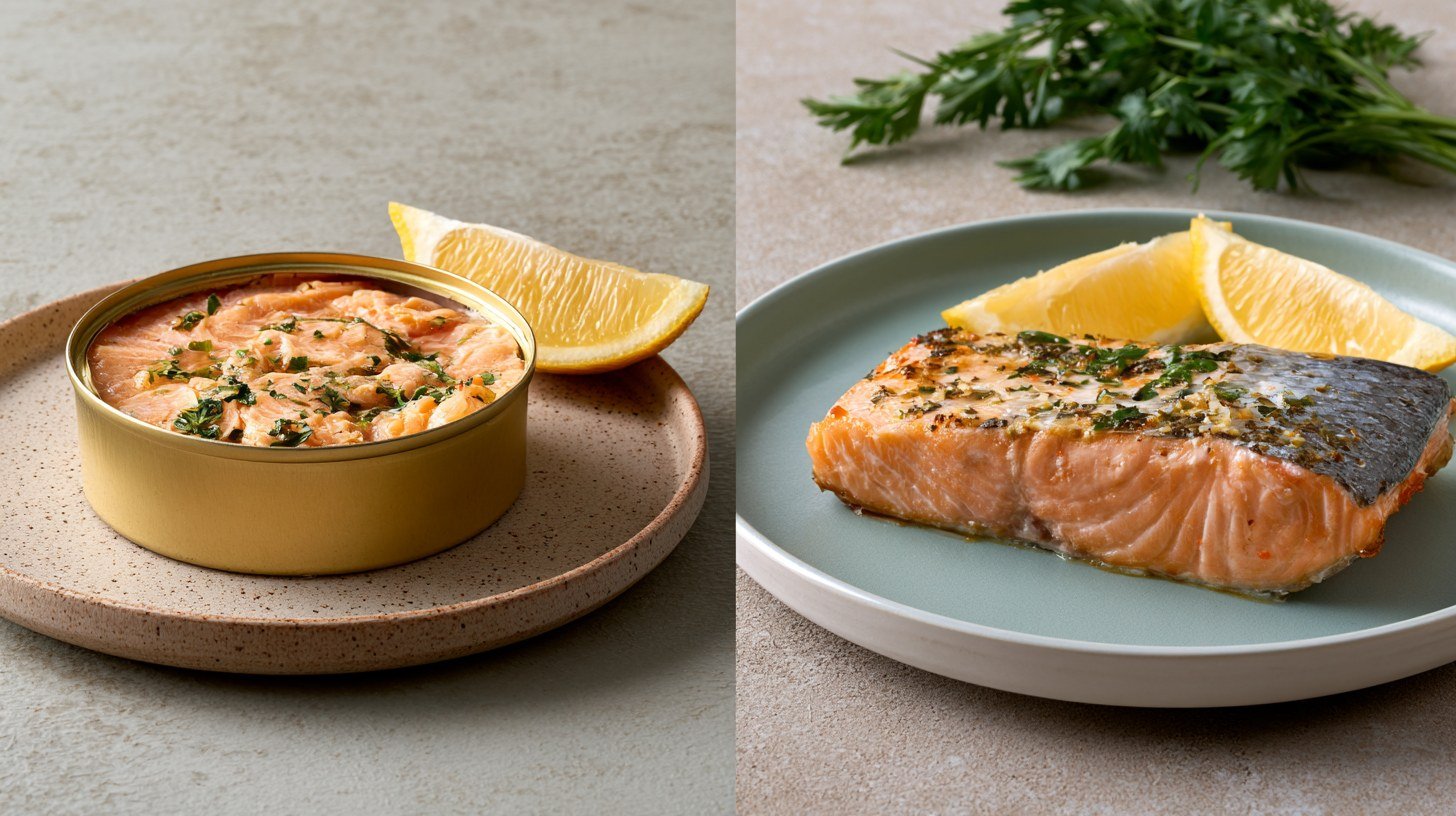
Both canned and cooked fresh salmon produce a good sandwich, but they behave differently in the salad mix.
Canned fish is softer and blends easily into a creamy salad, while leftover cooked salmon holds its shape and delivers a bolder, richer taste. The right pick depends on what you have in the kitchen and the texture you want in each bite.
| Type | Texture | Flavor | Best For |
| Canned pink salmon | Soft, easy to flake | Mild | Quick lunches, meal prep |
| Canned red salmon | Slightly firmer | Richer | When you want more depth |
| Leftover baked salmon | Firm, chunky | Bold, savory | Using up dinner leftovers |
| Leftover grilled salmon | Firm with char notes | Smoky | A more complex sandwich |
Canned Salmon
Canned salmon is the most budget-friendly and convenient option for this recipe. It needs no advance preparation and is ready to use straight from the can.
Pink and red varieties both work well; pink is milder and blends smoothly, while red has a stronger flavor and a slightly firmer bite. Always drain the can completely and check for any small bones or pieces of skin before flaking the fish with a fork.
Fresh or Leftover Cooked Salmon
Leftover baked or grilled salmon is an excellent way to use up fish from a previous meal without waste. The texture is firmer and chunkier than canned, which gives the salad more structure and a more pronounced salmon flavor.
Let the cooked fish cool fully before mixing so it does not warm the mayonnaise or make the salad runny. Flake it into pieces similar in size to canned salmon so the mix stays consistent.
How to Make a Creamy Salmon Sandwich
Follow these six steps in order. Each one builds on the last so the salad holds its texture and the sandwich stays together when you pick it up. The most important steps are draining the salmon thoroughly and chilling the salad before assembly.
Step 1: Drain and Flake the Salmon
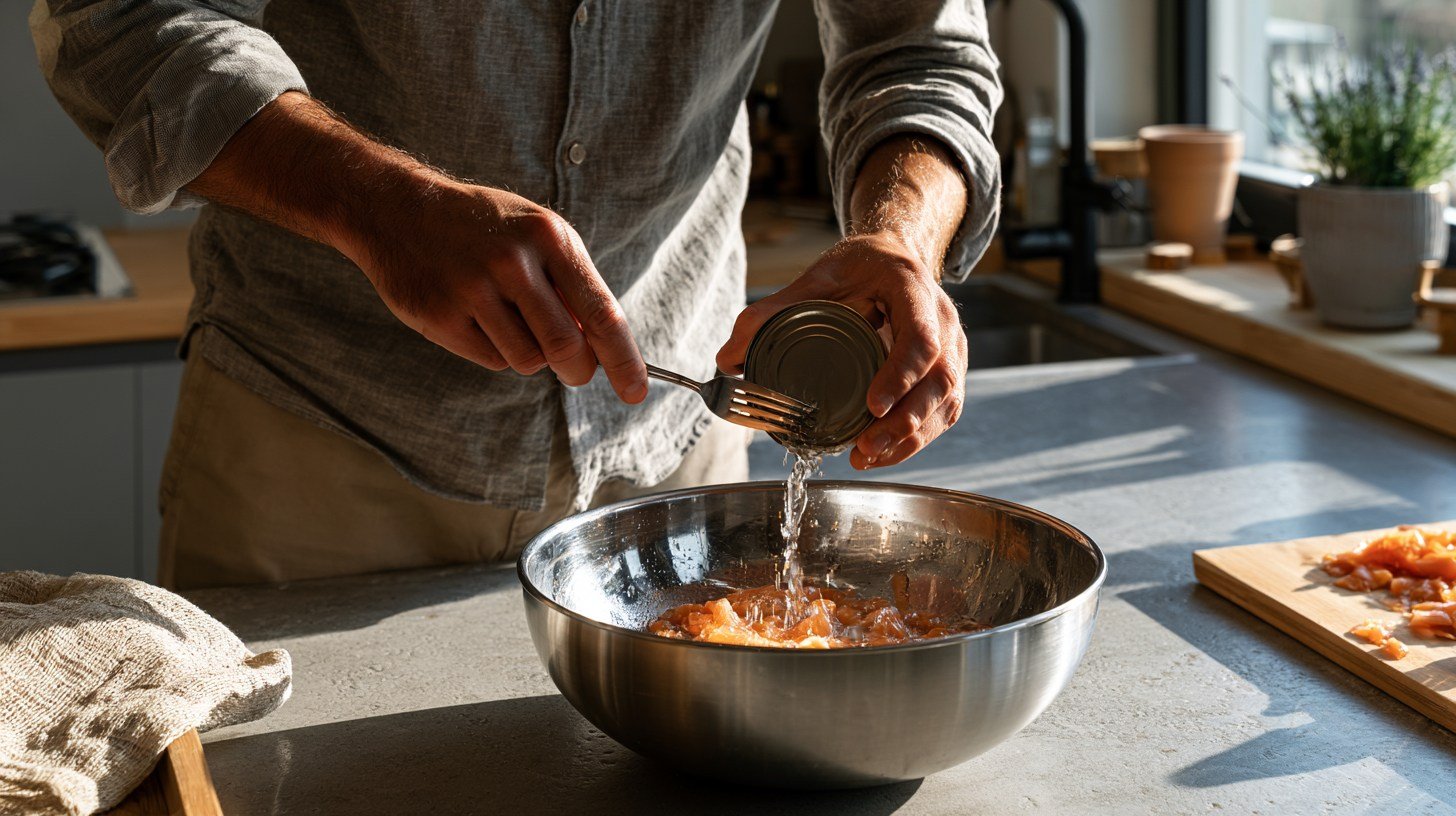
Open the can and press the lid firmly against the fish to squeeze out as much liquid as possible before removing the lid entirely. Watery salmon is the most common reason a salad turns loose and makes the bread go soggy.
Transfer the drained fish to a medium mixing bowl and break it apart with a fork into small, even pieces. Aim for flakes no larger than a thumbnail so the mix spreads cleanly across the bread without tearing it.
Step 2: Mix the Salmon Salad
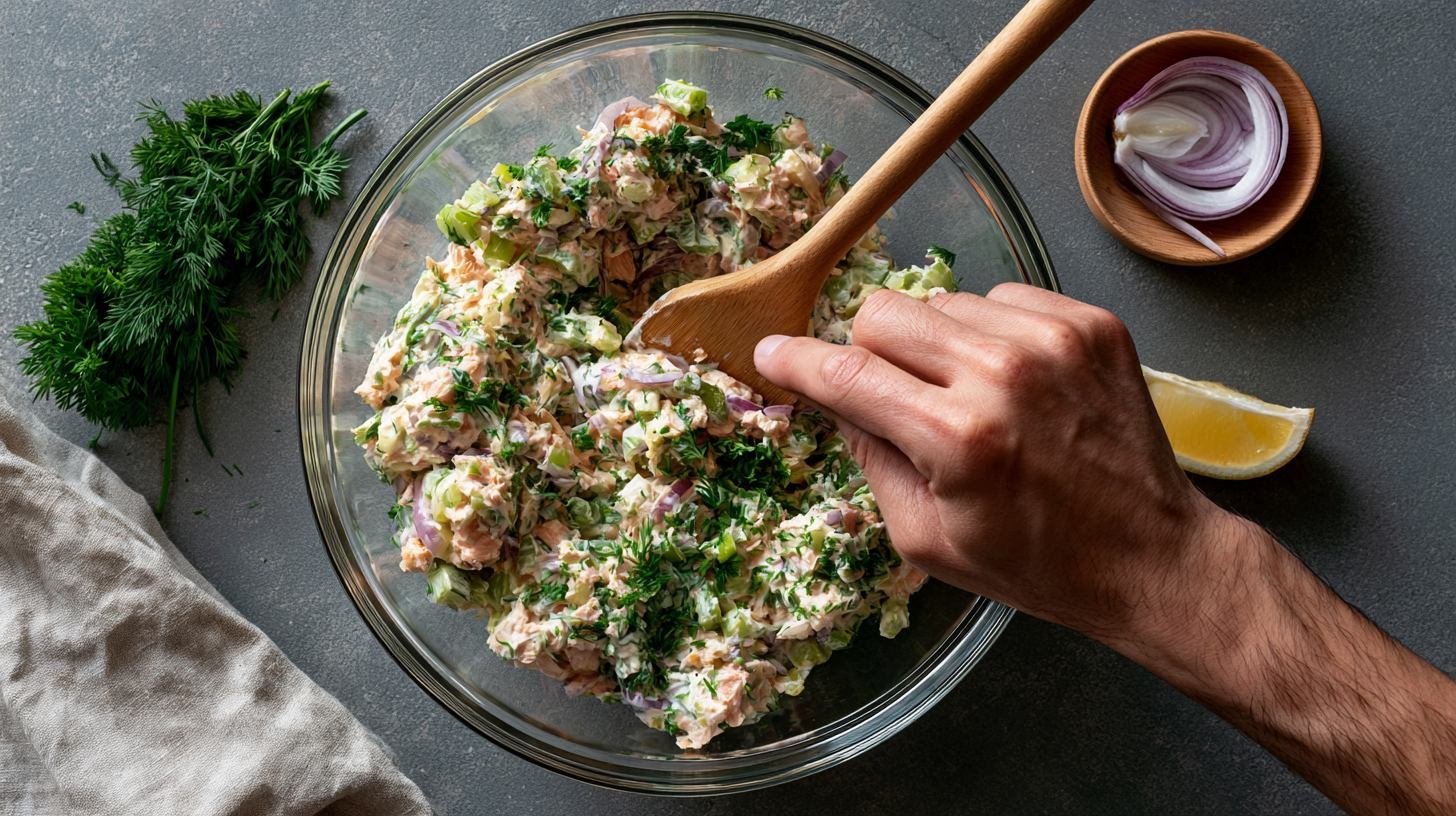
Add 3 tablespoons of mayonnaise, 1 tablespoon of lemon juice, 2 finely chopped celery stalks, and 2 tablespoons of finely diced red onion to the bowl with the salmon. Stir until every piece of fish is evenly coated and the mixture looks uniform throughout.
The celery adds crunch and keeps the salad from feeling too dense. Red onion adds a mild sharpness that lifts the flavor without overpowering the fish.
Step 3: Season to Taste
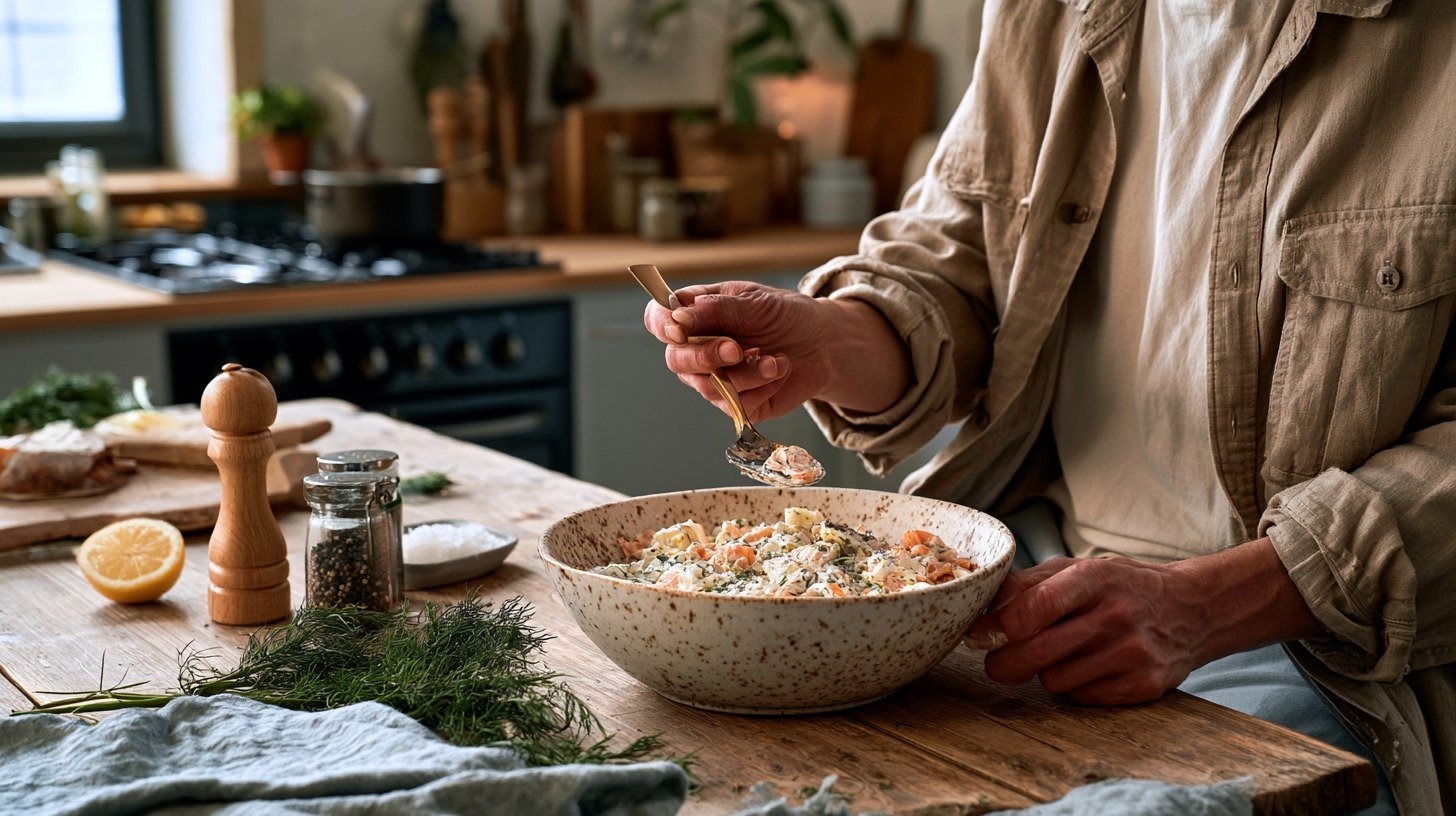
Add salt and black pepper in small amounts, stirring and tasting after each addition. A pinch of dried dill, a few drops of hot sauce, or a teaspoon of Dijon mustard all blend in cleanly without changing the texture.
Stop adjusting once the salad tastes bright and savory rather than flat. A little extra lemon juice can sharpen the flavor if the mix still feels muted.
Step 4: Toast the Bread
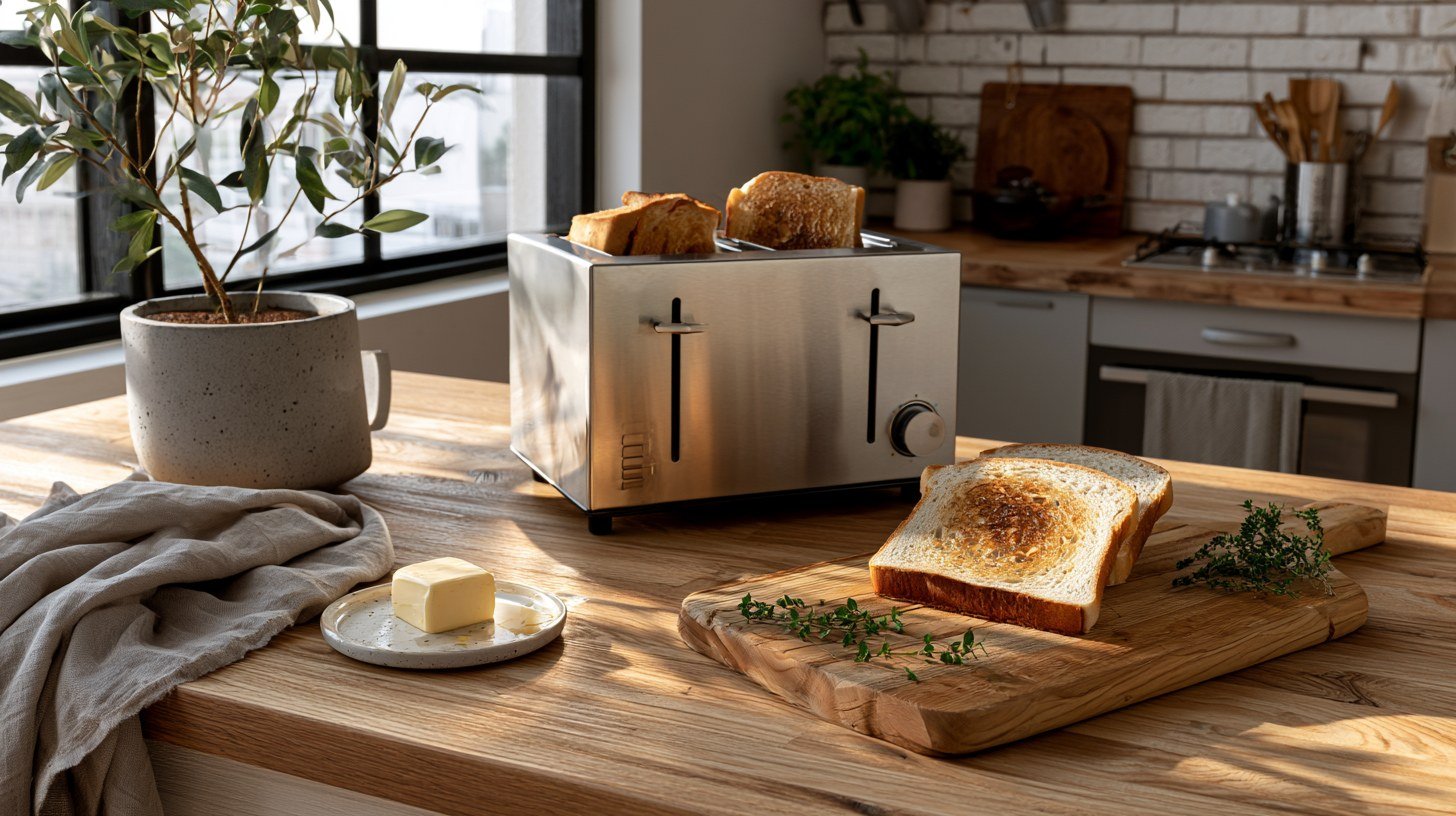
Toast your bread slices to a light golden color, just enough to create a firm surface without making the crust too hard. Toasted bread holds up better against the moist salmon filling and adds a satisfying crunch to each bite that untoasted bread cannot provide.
Sourdough, whole wheat, and soft dinner rolls all work well for this recipe. If you prefer a softer sandwich or are packing it for later, skip toasting and assemble just before eating.
Step 5: Assemble It
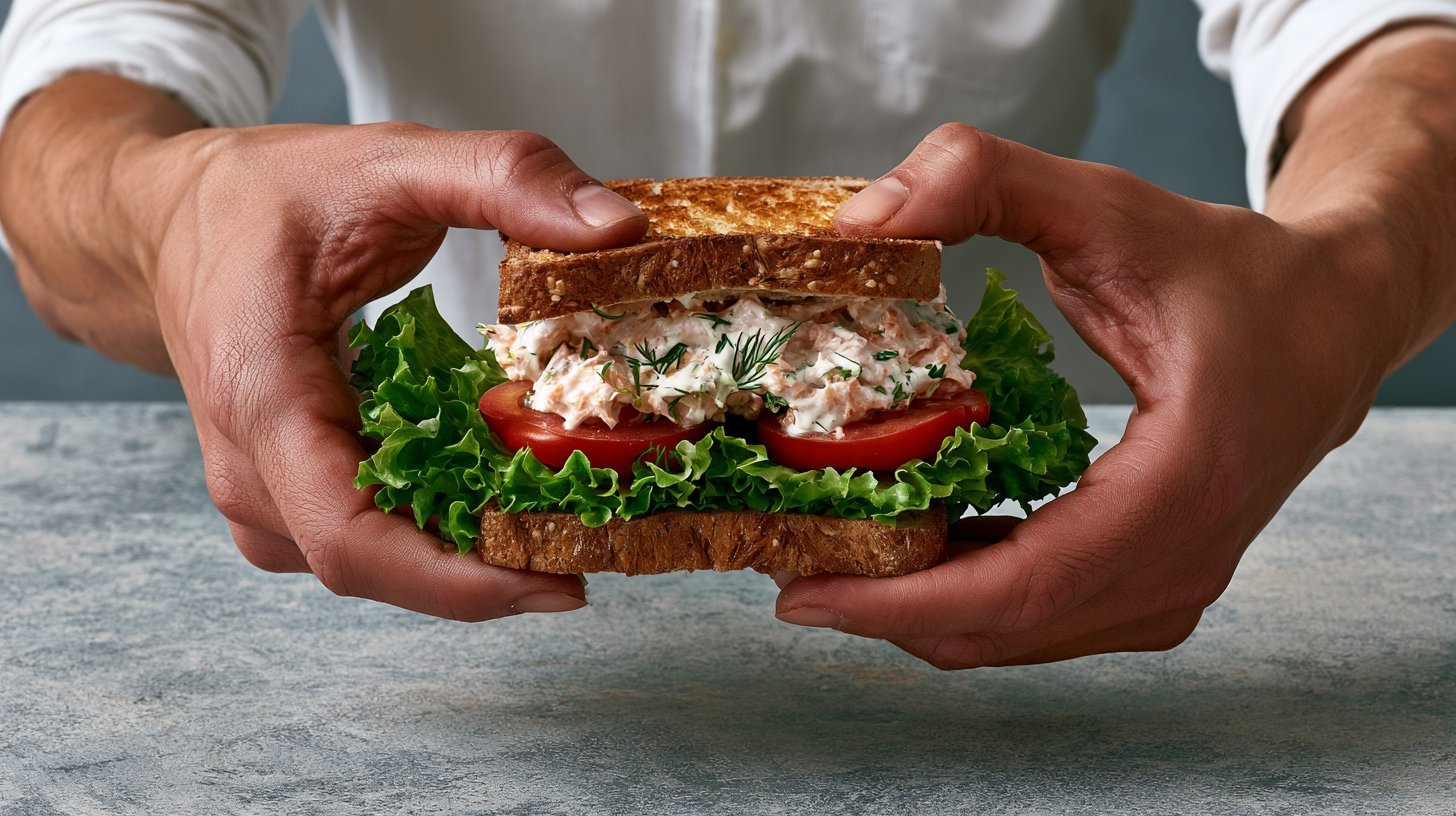
Lay the lettuce leaves flat on one slice of bread to act as a barrier between the bread and the wet filling. Add the tomato slices next, then spoon the chilled salmon salad on top and spread it into an even layer that reaches close to the edges.
Close the sandwich and press down gently so all layers hold their shape when you cut it. Slice diagonally and serve right away, or wrap tightly in parchment paper if you are taking it to go.
Step 6: Chill the Salad (Recommended)
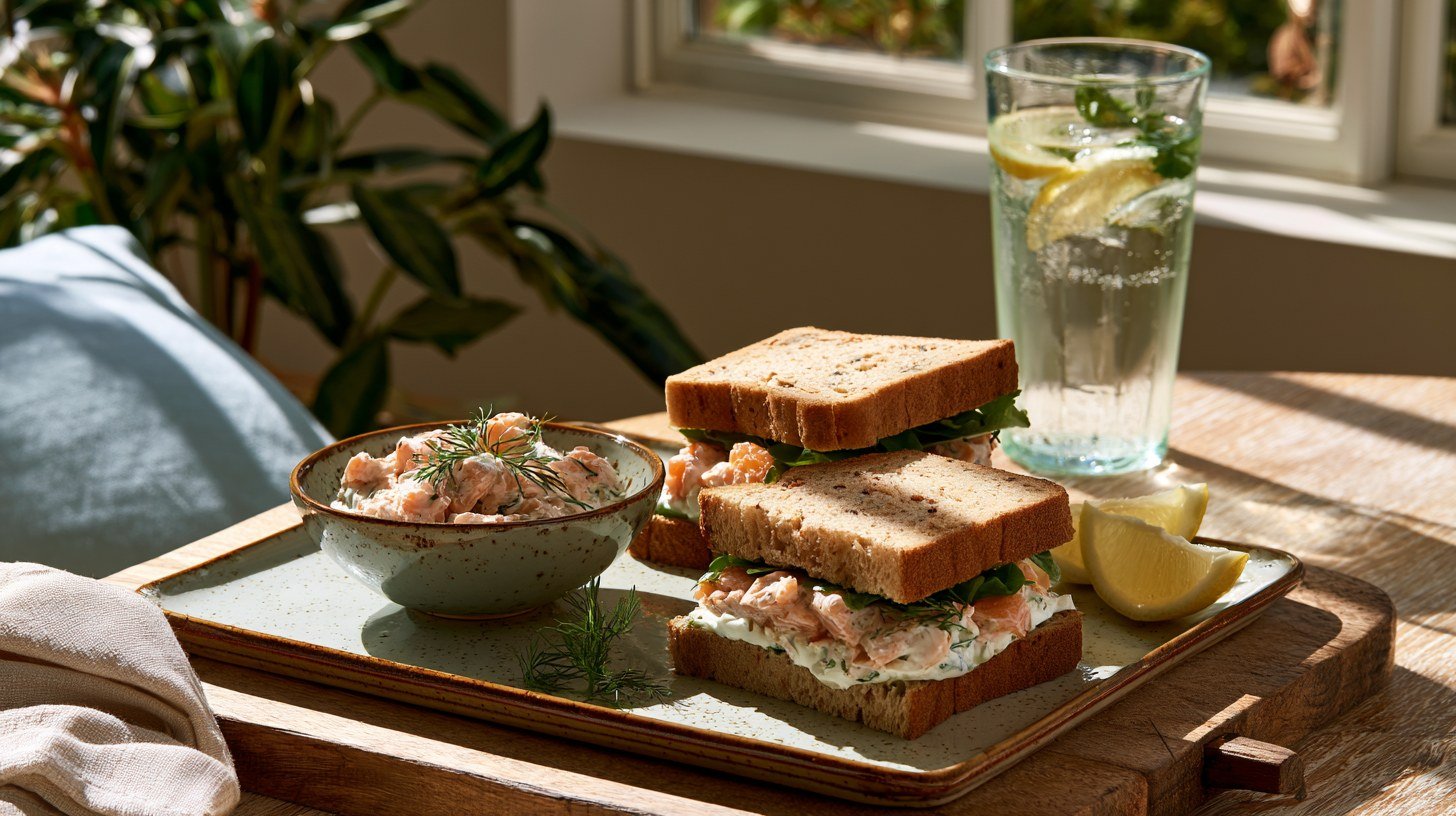
Cover the bowl with plastic wrap or a lid and refrigerate the salmon salad for 15 to 20 minutes before assembling.
Chilling allows the lemon juice, seasoning, and mayonnaise to blend fully, which deepens the flavor and firms up the texture so the salad spreads more evenly on the bread.
This step is optional when you are short on time, but the difference in taste is clear after even a brief rest in the fridge.
Can You Make This Salmon Sandwich Without Mayo?
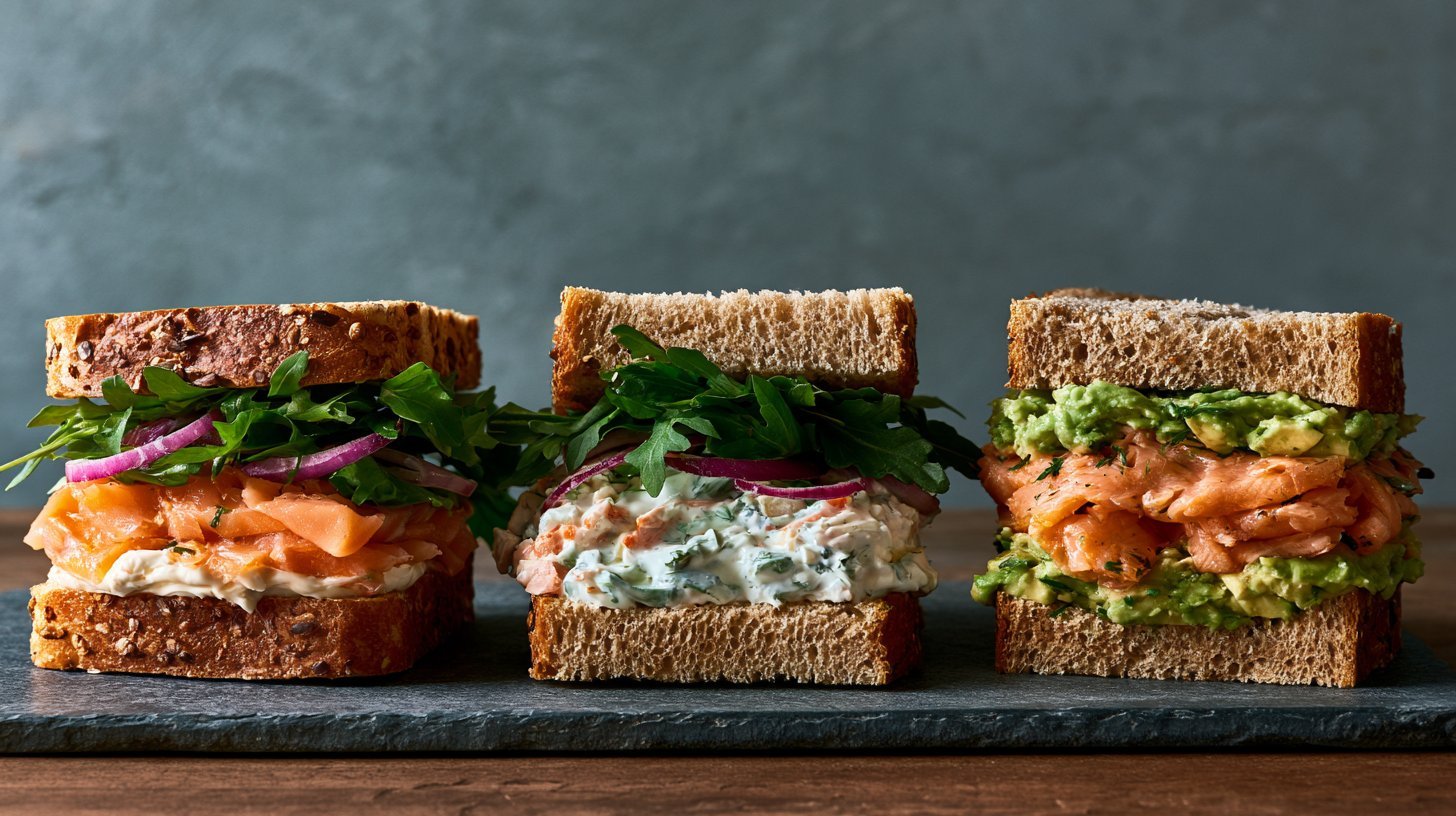
Yes, and both substitutes work well without changing the steps or the quantities. Each one keeps the salad creamy while offering a slightly different texture and flavor profile than standard mayonnaise. Neither requires any additional adjustments to the other ingredients in the recipe.
Classic Mayonnaise Version
This is the base recipe and the version most people are familiar with. Mayonnaise gives the salad a smooth, creamy texture and a mild flavor that lets the salmon and lemon juice come through clearly.
It also acts as a binder that holds the flaked fish, celery, and onion together so the salad stays in place when you take a bite. Use full-fat mayonnaise for the best texture. Reduced-fat versions tend to make the mix slightly looser.
Greek Yogurt Version
Swap the mayonnaise for an equal amount of plain full-fat Greek yogurt. The yogurt keeps the salad smooth and creamy while adding a mild, slightly tangy flavor that pairs well with the lemon juice and dill.
It reduces the fat content compared to mayo without making the mix taste thin or watered down. This version works especially well if you are making the sandwich for a lighter weekday lunch and still want it to feel filling.
Avocado Version
Mash half a ripe avocado with a fork until it reaches a smooth consistency, then stir it into the salmon salad in place of mayonnaise. The avocado adds a rich, buttery texture and a subtle earthy flavor that complements the brightness of the lemon juice.
This version is higher in healthy fats and works best when you plan to eat the sandwich the same day, since cut avocado browns within a few hours even in the fridge.
What Should You Serve with a Salmon Sandwich?
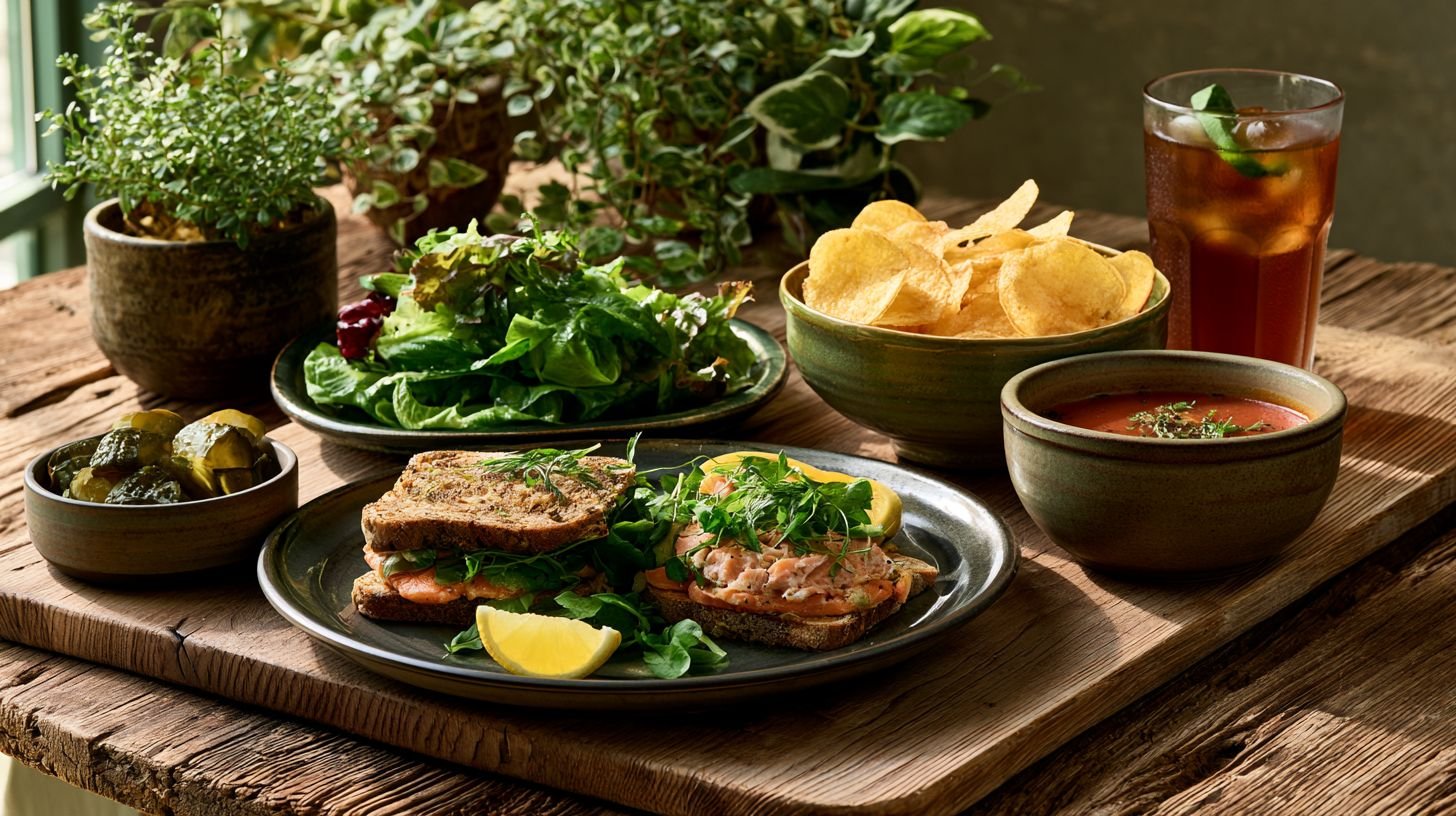
A salmon sandwich pairs well with sides that add contrast in texture or temperature. The best choices stay light so they support the meal without competing with the fish or making the plate feel too heavy.
Avoid sides with strong flavors like garlic-heavy dishes, which can overwhelm the delicate taste of the salmon.
- Chips or crackers add crunch and keep the meal casual
- Simple green salad with a light vinaigrette balances the richness of the salmon
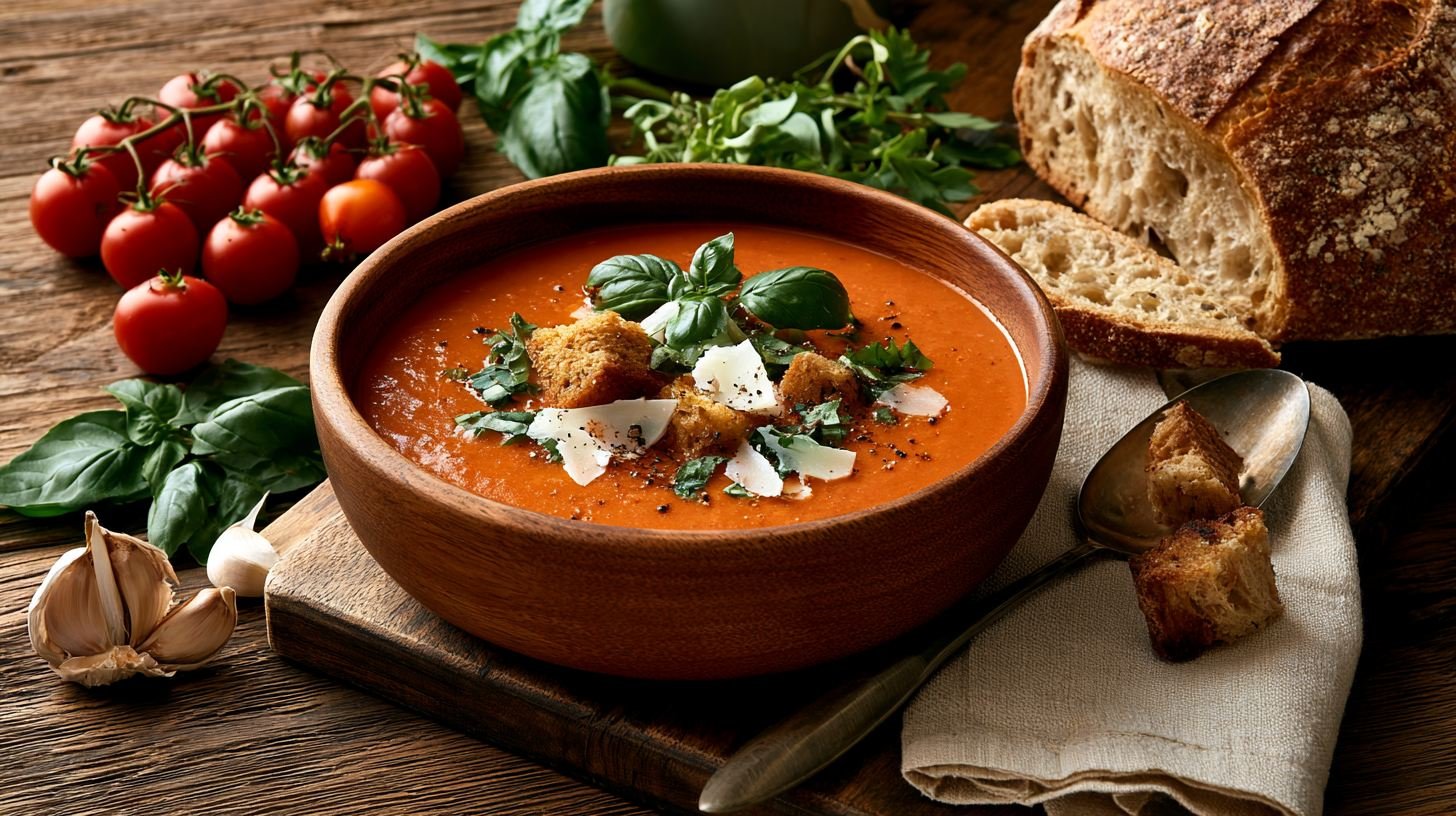
- Tomato soup or vegetable soup turns the sandwich into a full warm meal
- Sliced pickles cut through the creaminess and sharpen each bite
- Fresh fruit cup adds natural sweetness and works well for packed lunches
For drinks, iced tea, sparkling water with lemon, or plain cold water all work well alongside the savory, creamy flavors in the sandwich.
Avoid drinks that are too sweet, since heavy sweetness can dull the brightness of the lemon and fresh toppings. A light, citrusy drink keeps the palate clean between bites.
How Do You Store Leftover Salmon Salad?
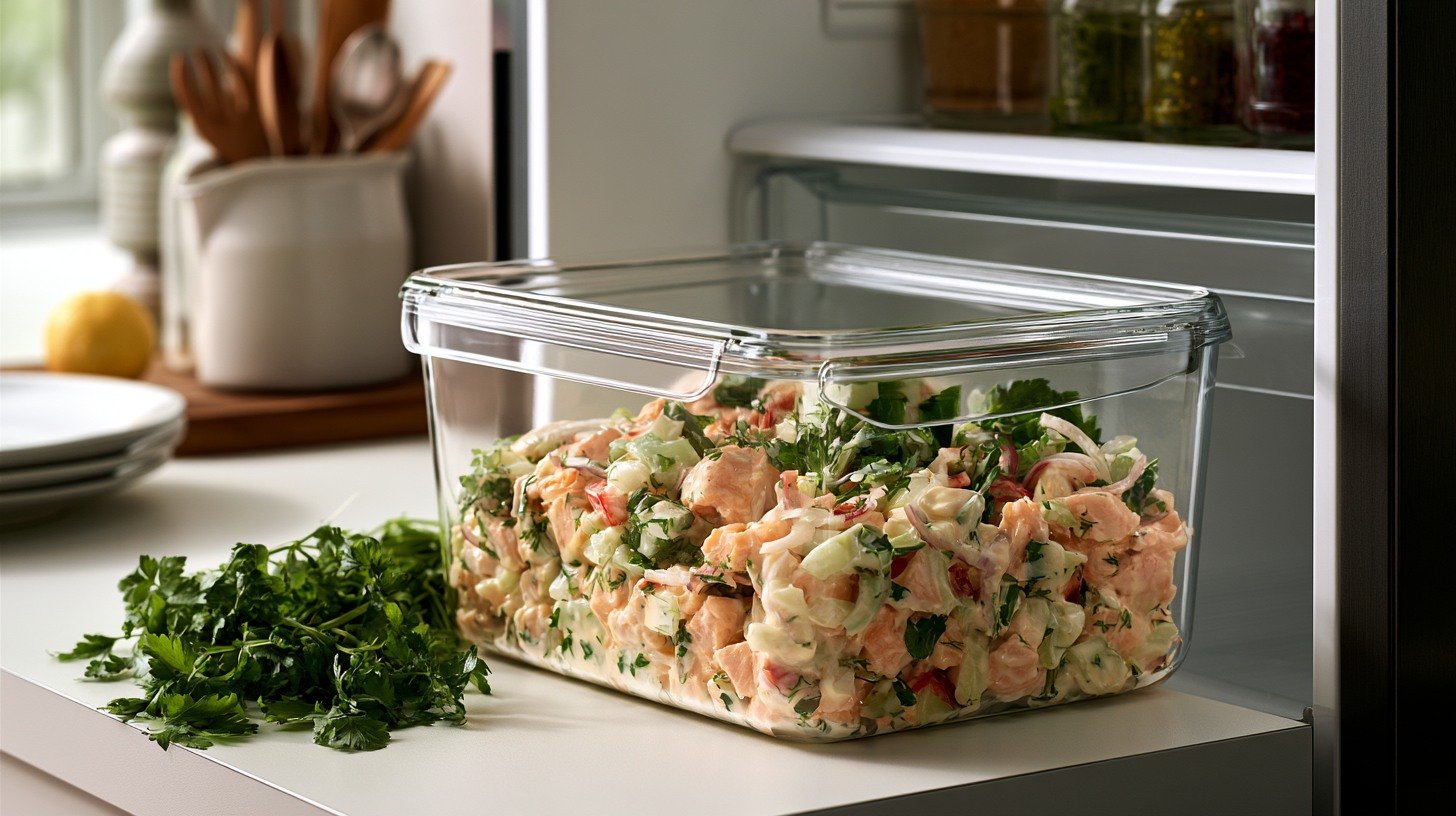
Store the salmon salad in an airtight container in the refrigerator for up to three days. Keep it away from the bread until you are ready to assemble. Bread stored with the filling absorbs moisture quickly and turns soft, which affects both texture and taste.
Do not freeze salmon salad. Mayonnaise and Greek yogurt both separate when frozen and thawed, leaving a grainy texture that does not recover when stirred.
If you made too much salad, use it within three days on toast, crackers, or alongside a simple green salad instead of wasting it.
Tips to Get the Best Texture and Flavor Every Time
Small adjustments at each stage produce a noticeably better sandwich. These tips address the most common problems home cooks run into, from a watery salad to bread that turns soggy before lunch even starts.
Most of them take seconds but have a clear impact on the final texture and taste.
- Drain the salmon completely before mixing. Any leftover liquid makes the salad watery and causes the bread to go soggy within minutes.
- Chop celery and onion finely so they blend into the mix rather than dominating individual bites.
- Add mayonnaise gradually rather than all at once. Start with two tablespoons and add more only if the salad feels too dry.
- Chill before assembling for 15 to 20 minutes. Cold salad is firmer and easier to spread without tearing the bread.
- Keep the salad and bread separate if you are storing the sandwich for later. Assemble only when you are ready to eat.
- Taste after chilling. Cold temperatures mute salt and acid, so you may need a small adjustment before serving.
Conclusion
I make this salmon sandwich recipe on busy weeknights when I want something fast but still filling.
The first time I tried the Greek yogurt version, I honestly could not tell the difference from the mayo one, and now it is my go-to.
Give it a try this week and see which version becomes your favorite. Drop a comment and let me know how yours turned out, or share this post with someone who needs a quick lunch idea.
Frequently Asked Questions
Can I use fresh salmon instead of canned?
Yes. Cooked and fully cooled baked or grilled salmon works well in this recipe, flake it into small, even pieces before mixing with the mayonnaise and other ingredients, exactly as you would with canned fish. Fresh salmon produces a firmer salad with a richer, more pronounced flavor than canned. Make sure the fish is completely cool before mixing so it does not warm the mayonnaise and loosen the salad.
How long does salmon salad last in the fridge?
Salmon salad stays fresh in an airtight container in the refrigerator for up to three days. Always store the salad separately from the bread left in contact with the moist filling that turns soft and unpleasant within a few hours. Assemble the sandwich right before eating for the best texture. If the salad looks or smells off before the three-day mark, discard it rather than risk eating spoiled fish.
Can I make this recipe ahead of time?
Yes. Prepare the salmon salad up to one day ahead and store it covered in the refrigerator. The resting time actually deepens the flavor as the lemon juice and seasoning settle. Assemble the sandwich only when you are ready to eat so the bread does not absorb moisture and turn soft. Chop the lettuce and tomato in advance too, but keep everything separate until you are ready to build the sandwich.
What bread works best for a salmon sandwich?
Toasted sourdough, whole wheat, or a crusty dinner roll hold up best against the moist salmon filling without falling apart. The firm surface of toasted bread also adds a satisfying crunch that contrasts well with the soft salad. Soft white sandwich bread works fine as long as you eat the sandwich right after assembling and do not let it sit. Avoid very thin or delicate bread, which can tear when you spread the salad.
Is Greek yogurt a good substitute for mayonnaise?
Plain full-fat Greek yogurt is the closest substitute for mayonnaise in this recipe. It keeps the salad creamy and smooth with a slight tang that pairs well with the lemon juice. Swap it in using the same amount called for in the recipe no other adjustments needed. Avoid low-fat or non-fat yogurt, as both tend to make the salad thinner and more watery than full-fat versions.