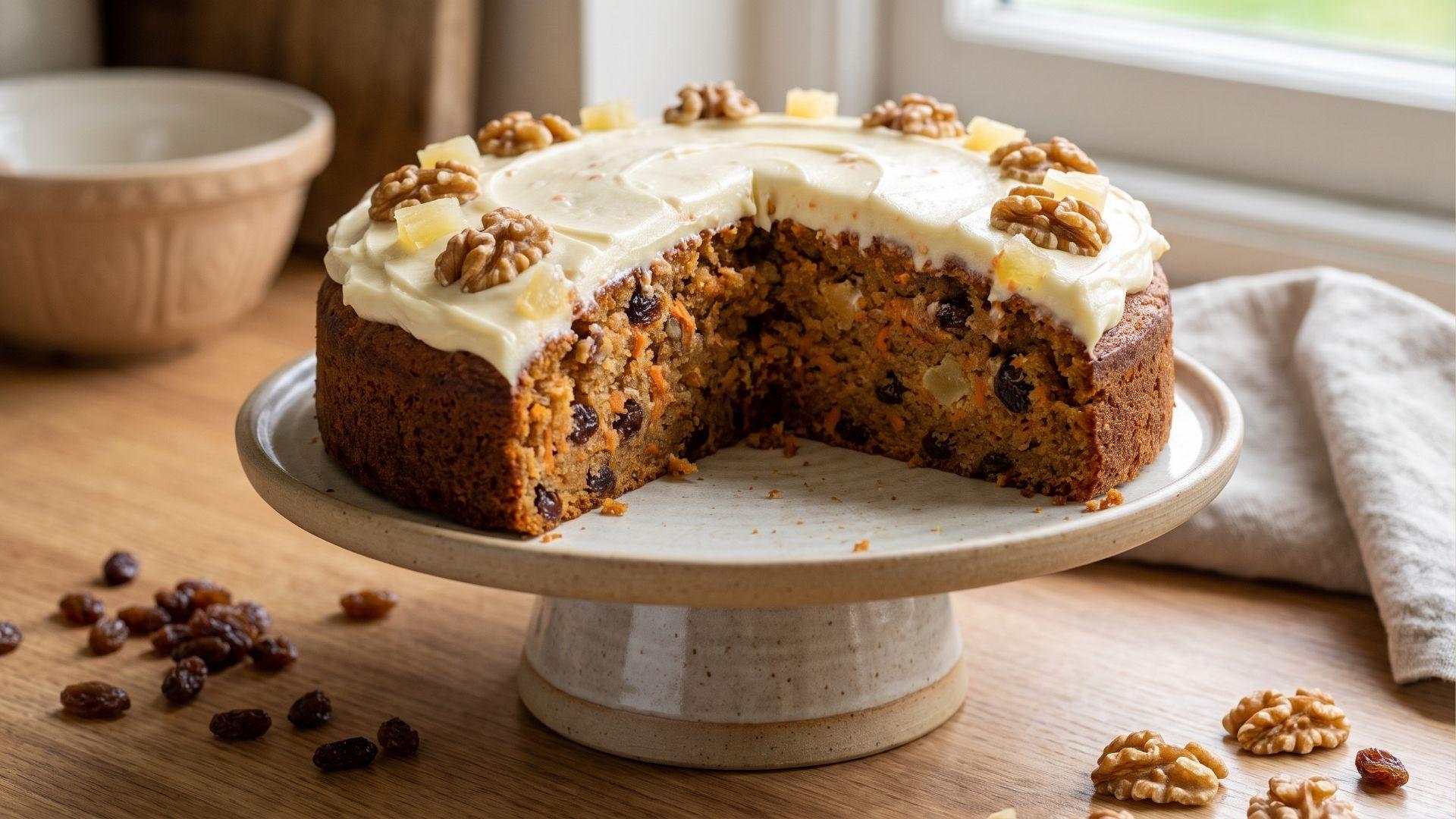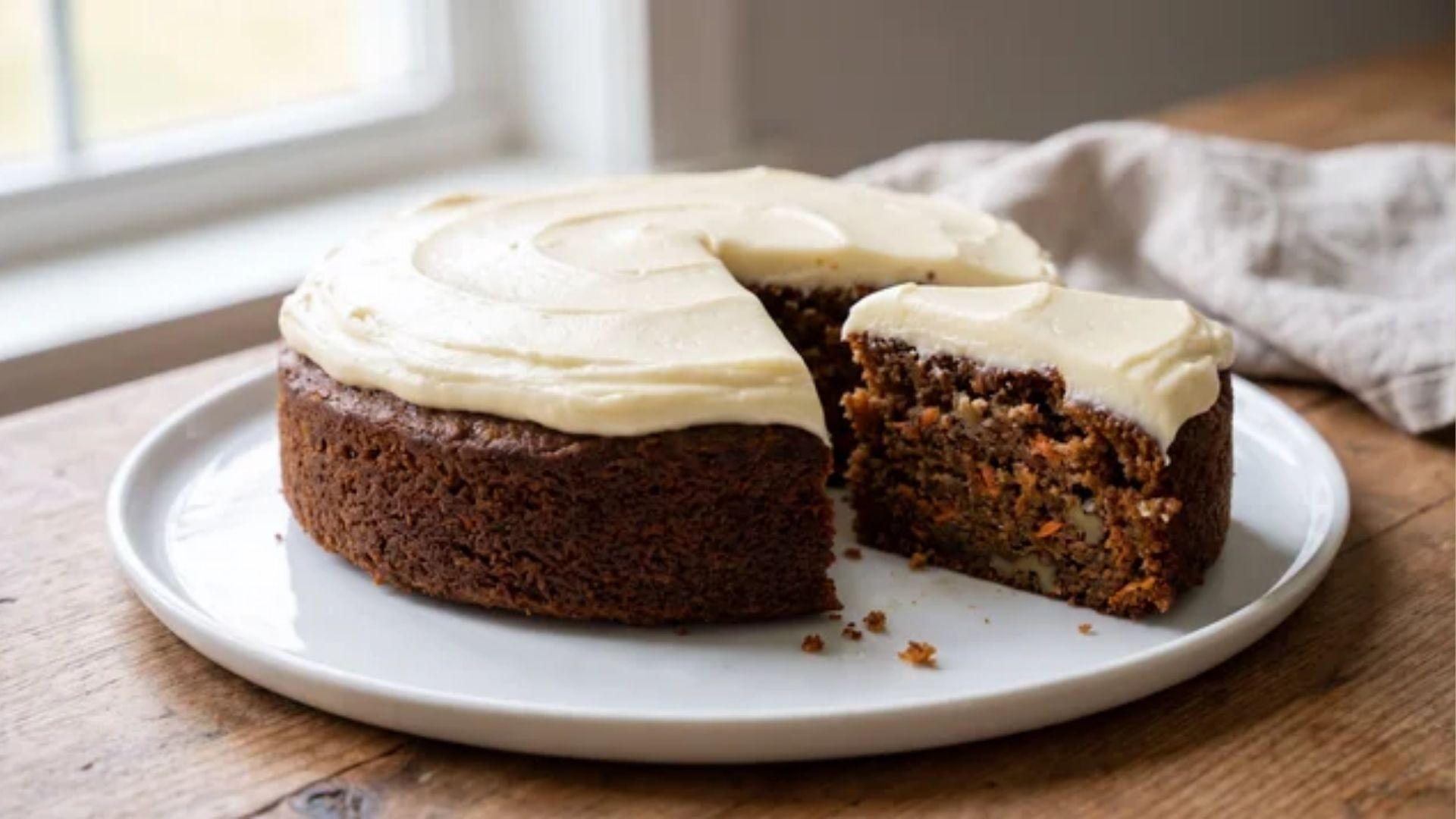
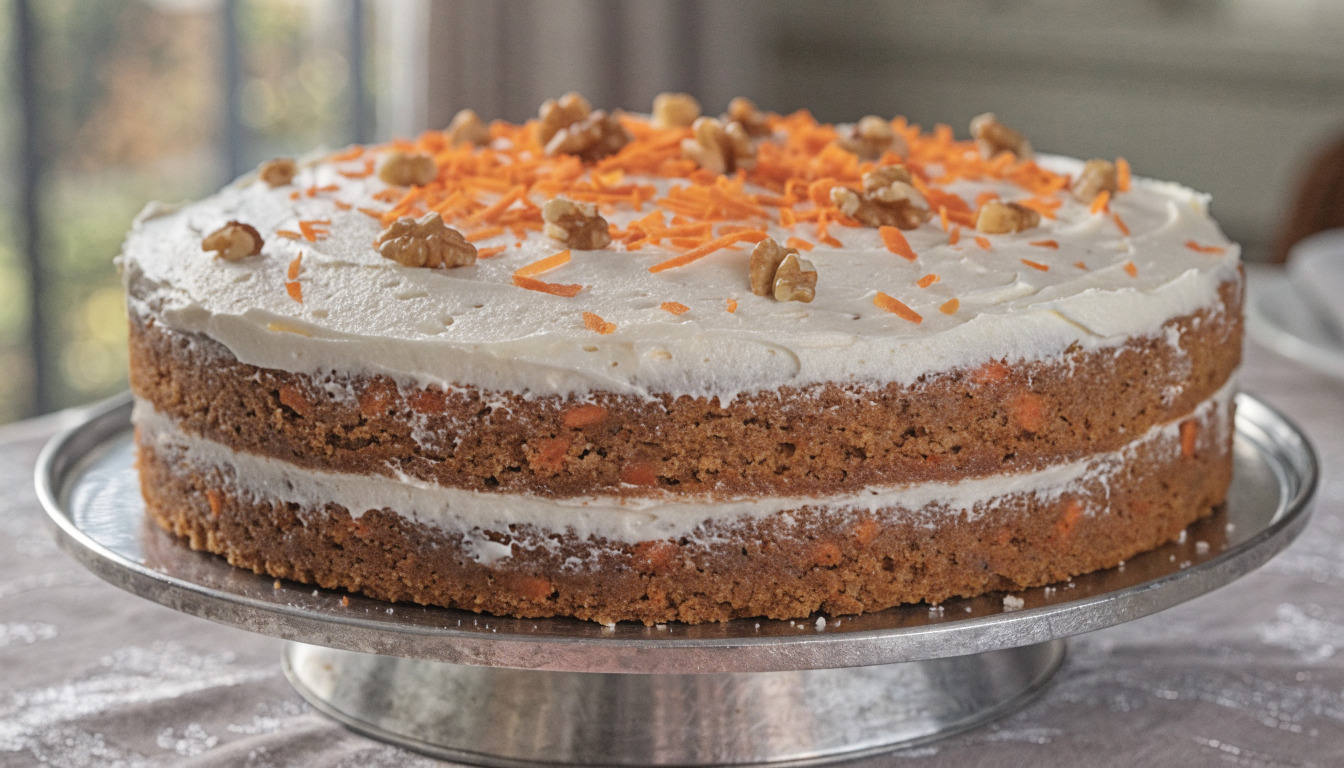
An eggless carrot cake replaces the eggs with yogurt, oil, and a spoonful of vinegar, and it bakes into a soft, spiced 8-inch cake topped with cream cheese frosting.
Finely grated carrot supplies the rest of the moisture, so the crumb holds together without a single egg.
The first time I baked one, I expected a dense slice I’d finish out of politeness. It came out softer than the egg version I had been making for years, and I wanted to know why.
The answer was that the eggs had been doing less work than I assumed, while the carrots, the oil, and the leavening carried most of the load.
Below, you’ll find what each swap does, which egg substitutes are worth using, the full recipe in seven steps, and the fixes for a dense or dry slice.
Why Skipping the Eggs Isn’t the Risk You Think
Most of my early eggless failures had nothing to do with the missing eggs.
They came from habits that only make sense when eggs are in the bowl, such as beating the batter smooth, letting it rest while the oven heated, or adding extra milk to be safe.
I’ve been baking for more than nine years, and egg-free cakes taught me more about technique than almost anything else.
A batter without eggs needs a lighter hand and a hot oven waiting for it, and those rules make sense once you see what an egg normally does.
What Makes an Eggless Carrot Cake Work Without Eggs?
An eggless carrot cake works because three ingredients split the egg’s jobs between them.
Oil keeps the crumb tender, baking soda reacting with yogurt and vinegar provides the lift, and yogurt plus grated carrot bind the crumb as it bakes, so leaving any one of them out shows up in the slice.
Baking soda is the part beginners underestimate. NC State’s guide to baking soda and acids explains that soda reacts almost immediately when it meets an acid, releasing carbon dioxide bubbles, and notes that eggs help a rising batter set.
Without eggs, the batter has to set from oven heat alone, which is why it should reach the oven while those bubbles are still forming.
Carrots matter more than they seem, too, because they are mostly water and release it as the cake bakes, so this batter needs less added liquid than you’d expect.
Extra milk added for safety is a frequent cause of a gummy, underset middle in an eggless carrot cake recipe. Measure the liquids as written and let the carrots supply the rest.
What You Need for Carrot Cake With No Eggs
This recipe makes one 8-inch round cake, about 8 slices, and every ingredient is a pantry staple.
For the cake:
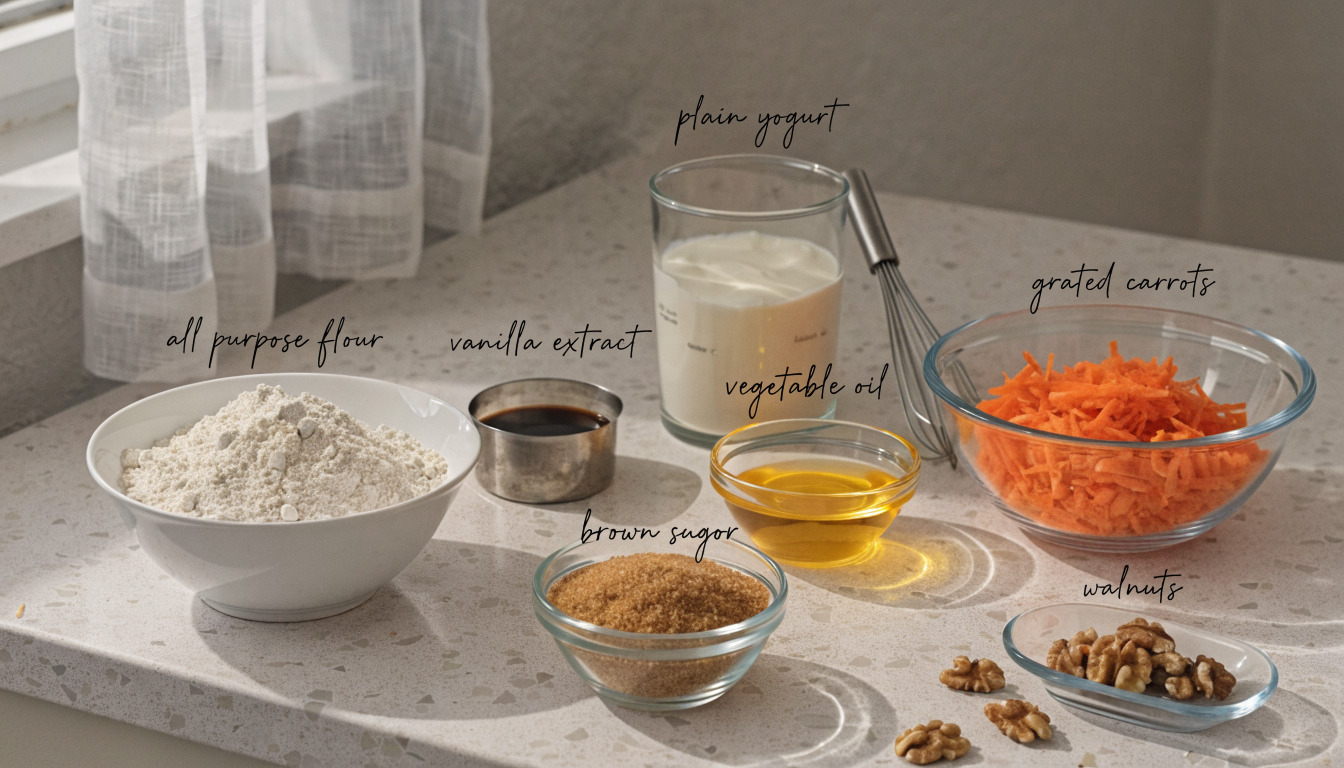
- 1½ cups (190 g) all-purpose flour
- 1 teaspoon baking powder
- ½ teaspoon baking soda
- 1½ teaspoons ground cinnamon
- ½ teaspoon ground ginger
- ¼ teaspoon salt
- ½ cup (120 ml) neutral oil, such as canola
- ¾ cup (150 g) packed brown sugar
- ½ cup (120 g) plain whole-milk yogurt
- 1½ cups (about 150 g) finely grated carrots, from about 3 medium carrots
- ½ cup (55 g) chopped walnuts, optional
- 1 tablespoon (15 ml) white or apple cider vinegar
For the cream cheese frosting:
- 4 ounces (113 g) cream cheese, softened
- 3 tablespoons (42 g) butter, softened
- ¾ to 1 cup (90 to 120 g) powdered sugar
- ½ teaspoon vanilla extract
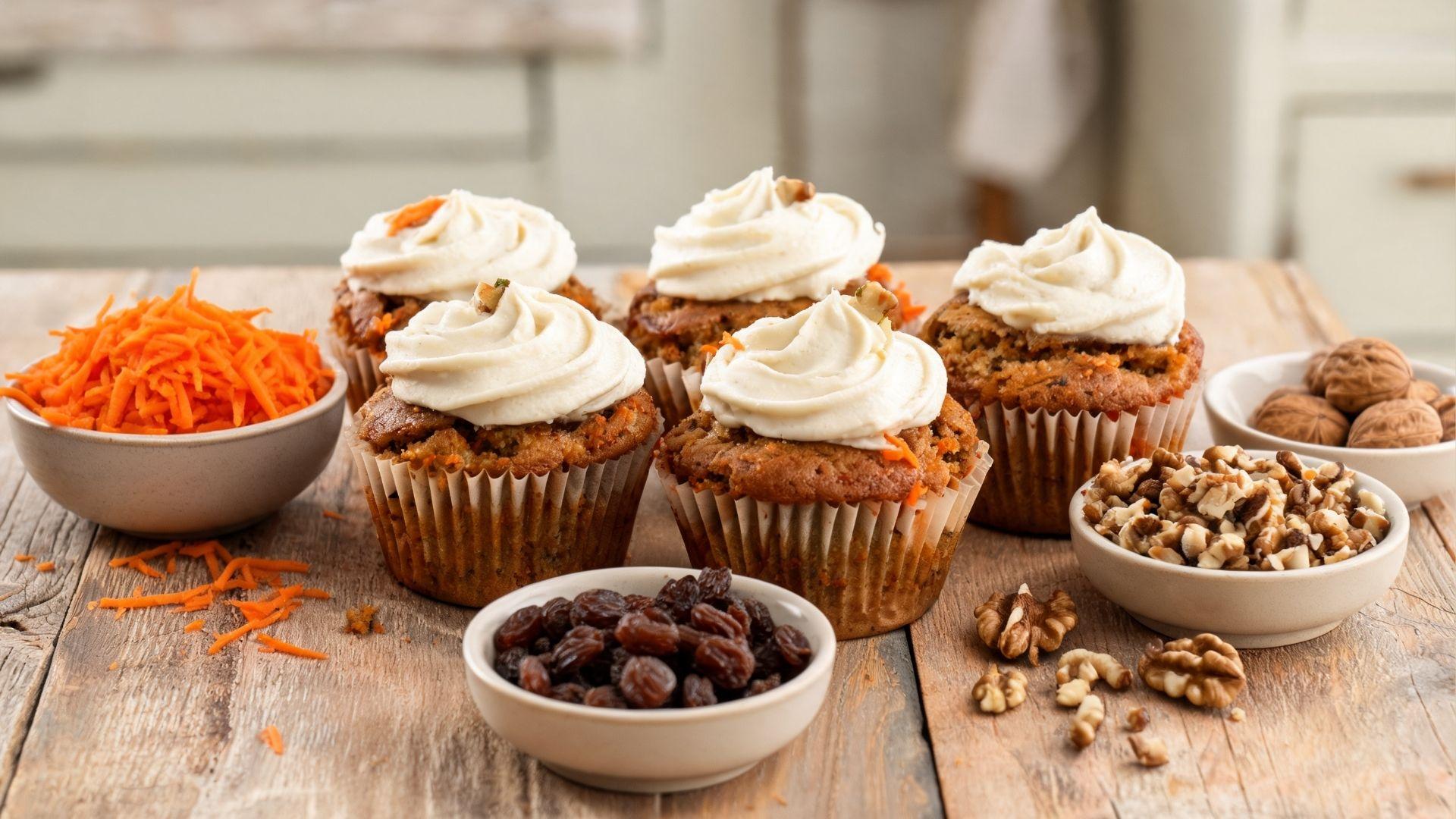
Oil keeps this cake tender for days because it stays liquid at room temperature, while butter firms up as it cools, which is also why our carrot cake muffins recipe skips butter altogether.
The frosting starts at ¾ cup of powdered sugar, which is lighter than many cream cheese frostings and lets the tang of the cheese come through.
There are no eggs here, but the cake contains wheat and milk, and the walnuts add a tree nut.
If you’re baking for someone with a food allergy, check the labels on the yogurt, the cream cheese, and any packaged nuts.
The eggless blog now has 4 links, and this one sits in the upper half, so both link rules still hold.
Eggless Carrot Cake Swaps: Choosing an Egg Substitute
This is for those who don’t prefer eggs. The best egg substitute for carrot cake depends on the crumb you want, since plain yogurt gives a soft and slightly tangy slice, condensed milk makes it richer and sweeter, and a flax egg adds a nutty, denser bite.
Each option below replaces the ½ cup of yogurt, and the rest of the recipe stays the same unless the table says otherwise.
| Swap | Amount | What Changes | Good to Know |
|---|---|---|---|
| Plain yogurt (as written) | ½ cup (120 g) | Soft, tender crumb with a mild tang | Its acid helps activate the baking soda |
| Sweetened condensed milk | ½ cup (150 g) | Richer, sweeter, slightly denser cake | Cut the brown sugar roughly in half |
| Milk | ½ cup (120 ml) | Lighter, more open crumb with less tang | Keep the 1 tablespoon of vinegar |
| Unsweetened applesauce | ½ cup (120 g) | Moister and a little denser, with no tang | Suits a dairy-free cake |
| Flax eggs | 2 tablespoons ground flaxseed plus 6 tablespoons water | Nutty flavor and a denser crumb | Rest it 5 to 10 minutes until thick |
For an eggless carrot cake with condensed milk, the sugar cut matters most, because sweetened condensed milk is roughly half sugar by weight.
Skipping that adjustment leaves the center heavy and the cake noticeably sweeter.
Flax gel works the same way in our baked healthy donut recipe, where it binds a soft batter without eggs.
In my test batches for this cake, though, plain yogurt still gave the softest slice, which is why it stays the default.
How to Make Eggless Carrot Cake Step by Step
To make eggless carrot cake, whisk the dry ingredients in one bowl and the oil, brown sugar, and yogurt in another, then fold them together with the carrots and walnuts.
Stir in the vinegar last, bake at 350°F (175°C) for 30 to 35 minutes, and cool the cake completely before frosting.
Plan on about 20 minutes of mixing, 30 to 35 minutes in the oven, and roughly an hour of cooling.
You need two bowls, a whisk, and a spatula, with no mixer, which keeps it manageable on a weeknight.
Step 1: Heat the Oven and Mix the Dry Ingredients
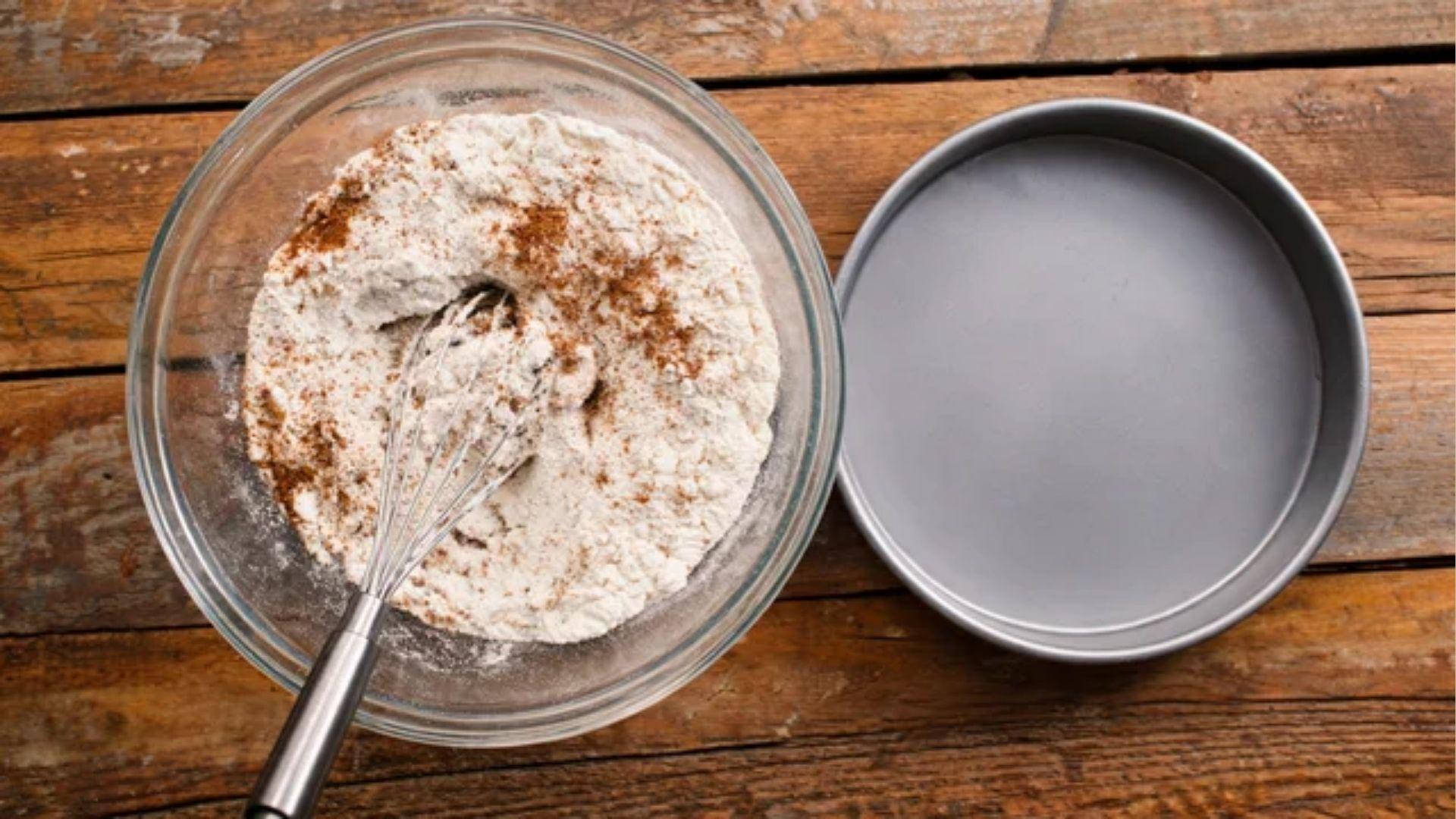
Heat the oven to 350°F (175°C), then grease an 8-inch round cake pan and line the bottom with parchment. In a large bowl, whisk together the flour, baking powder, baking soda, cinnamon, ginger, and salt.
Whisk for a full 30 seconds so the leaveners and spices spread evenly, since a pocket of baking soda tastes bitter and leaves uneven holes in the crumb.
Step 2: Mix the Wet Ingredients
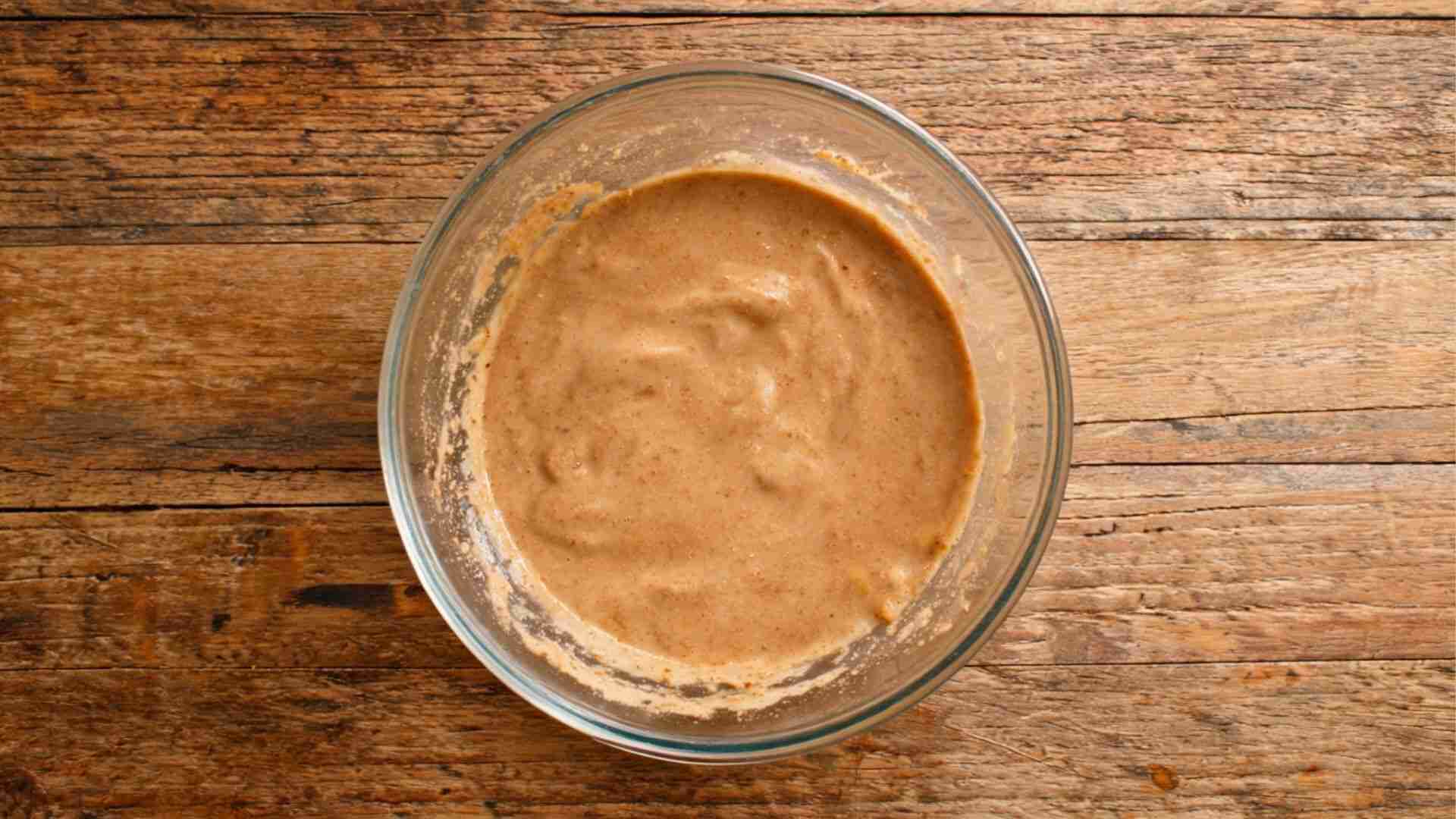
In a second bowl, whisk the oil, brown sugar, and yogurt until smooth. Press out any lumps of brown sugar with the whisk, because they leave sticky pockets in the baked cake.
Step 3: Fold the Batter Together
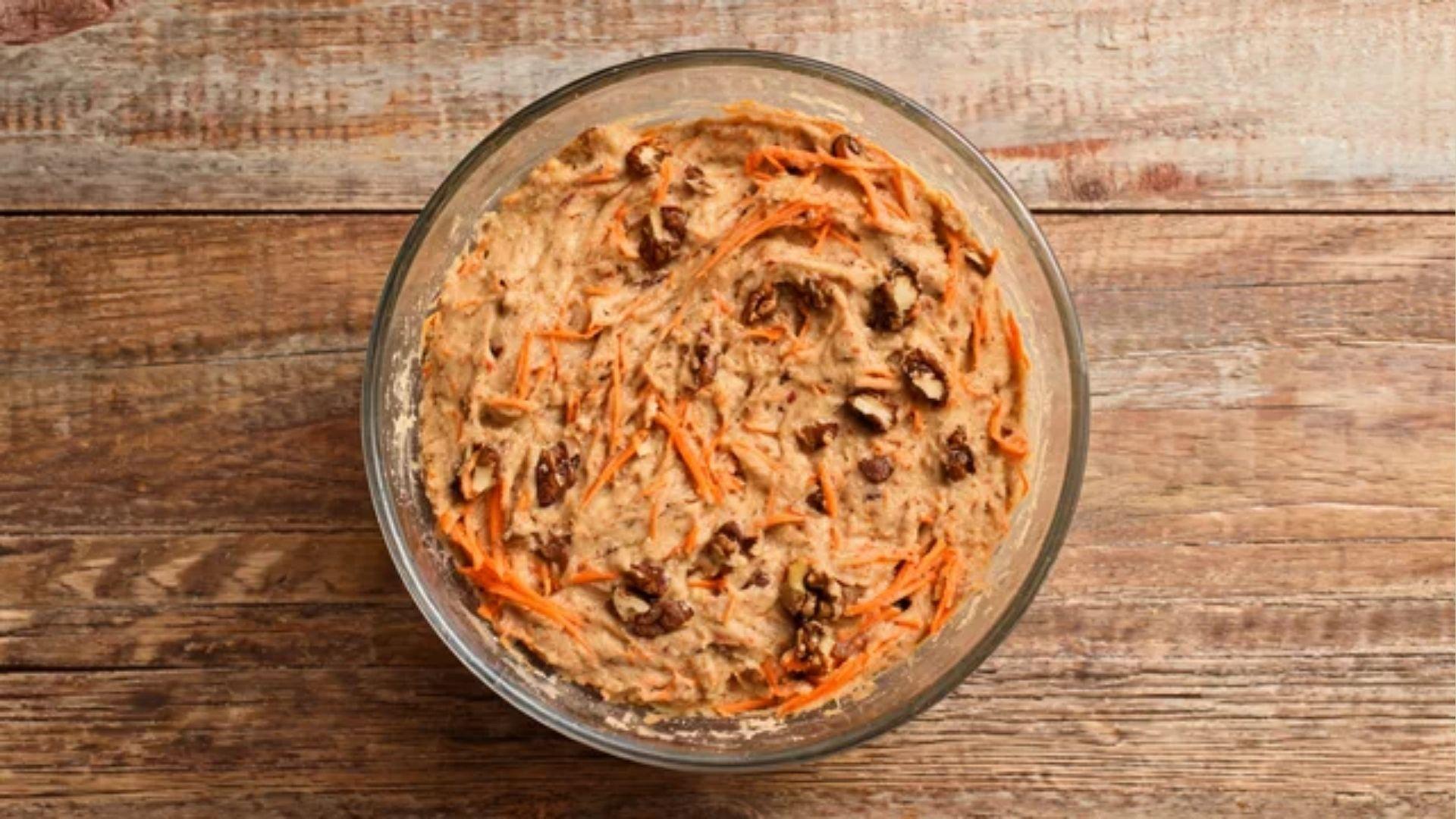
Tip the dry mixture into the wet and fold with a spatula until the last flour streaks disappear.
Add the grated carrots and walnuts and fold only until they’re evenly spread, because extra strokes build gluten and tighten the crumb.
Step 4: Add the Vinegar Last
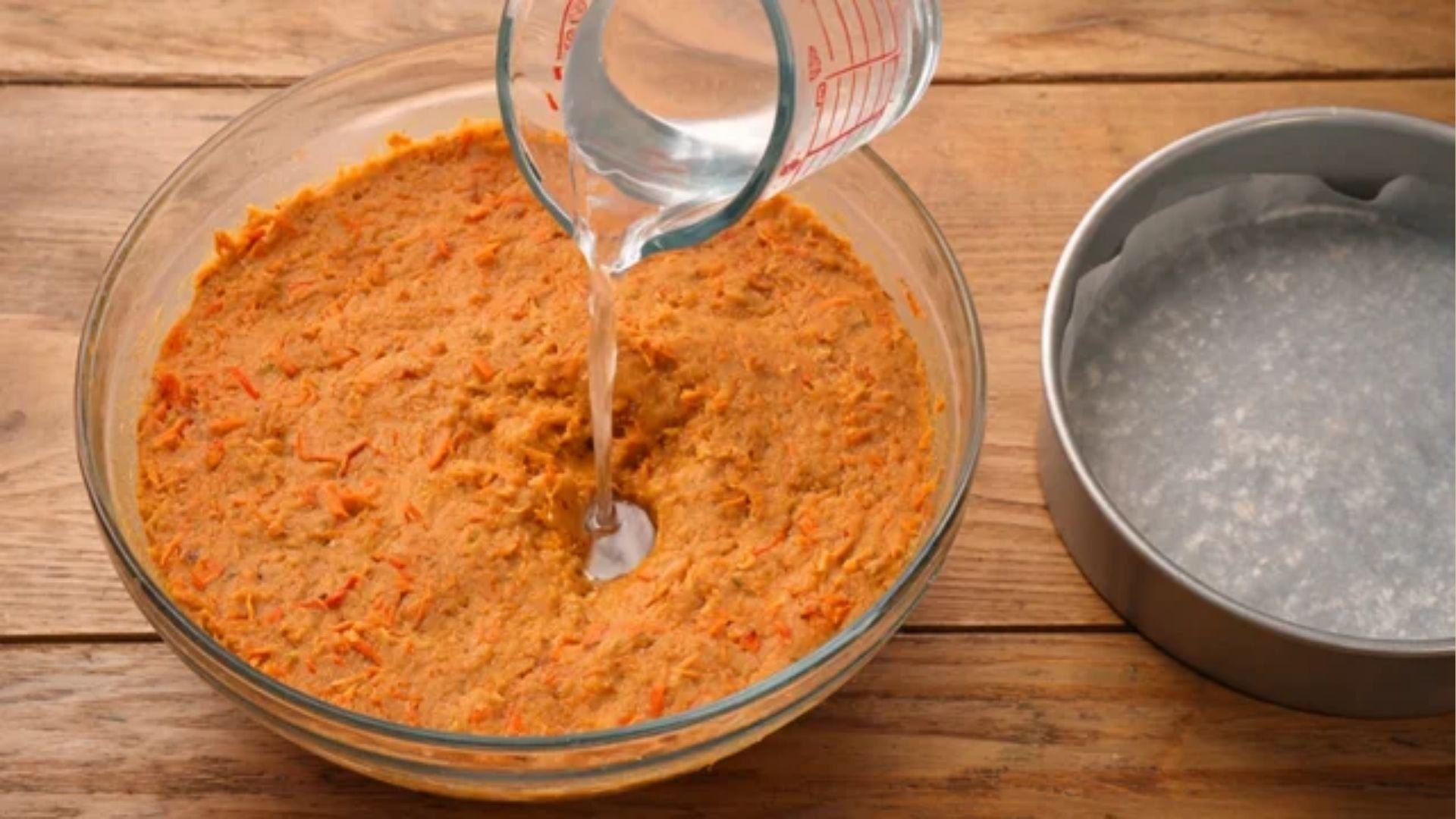
Stir in the vinegar with a few quick folds, then pour the batter into the prepared pan right away and smooth the top.
The vinegar starts the baking soda working the moment it goes in, so those bubbles belong in the oven rather than in a bowl on the counter.
Step 5: Bake and Check
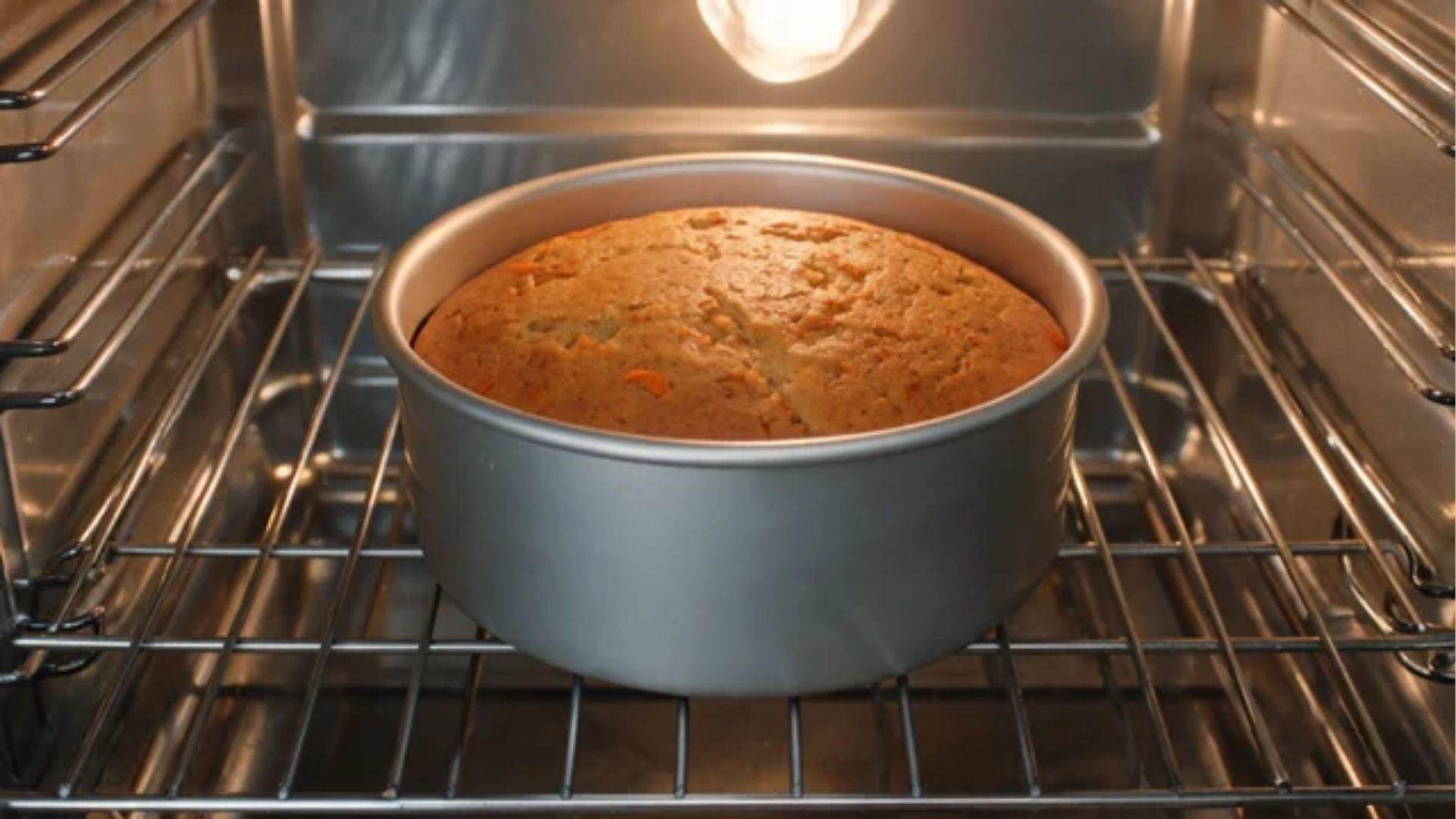
Bake for 30 to 35 minutes, until a skewer pushed into the center comes out with a few moist crumbs and no wet batter.
In a 9-inch pan, start checking about 5 minutes earlier, since the shallower batter bakes faster.
If your oven runs hot and the top browns before the center is done, lay a sheet of foil loosely over the pan for the remaining time.
Step 6: Let it Cool
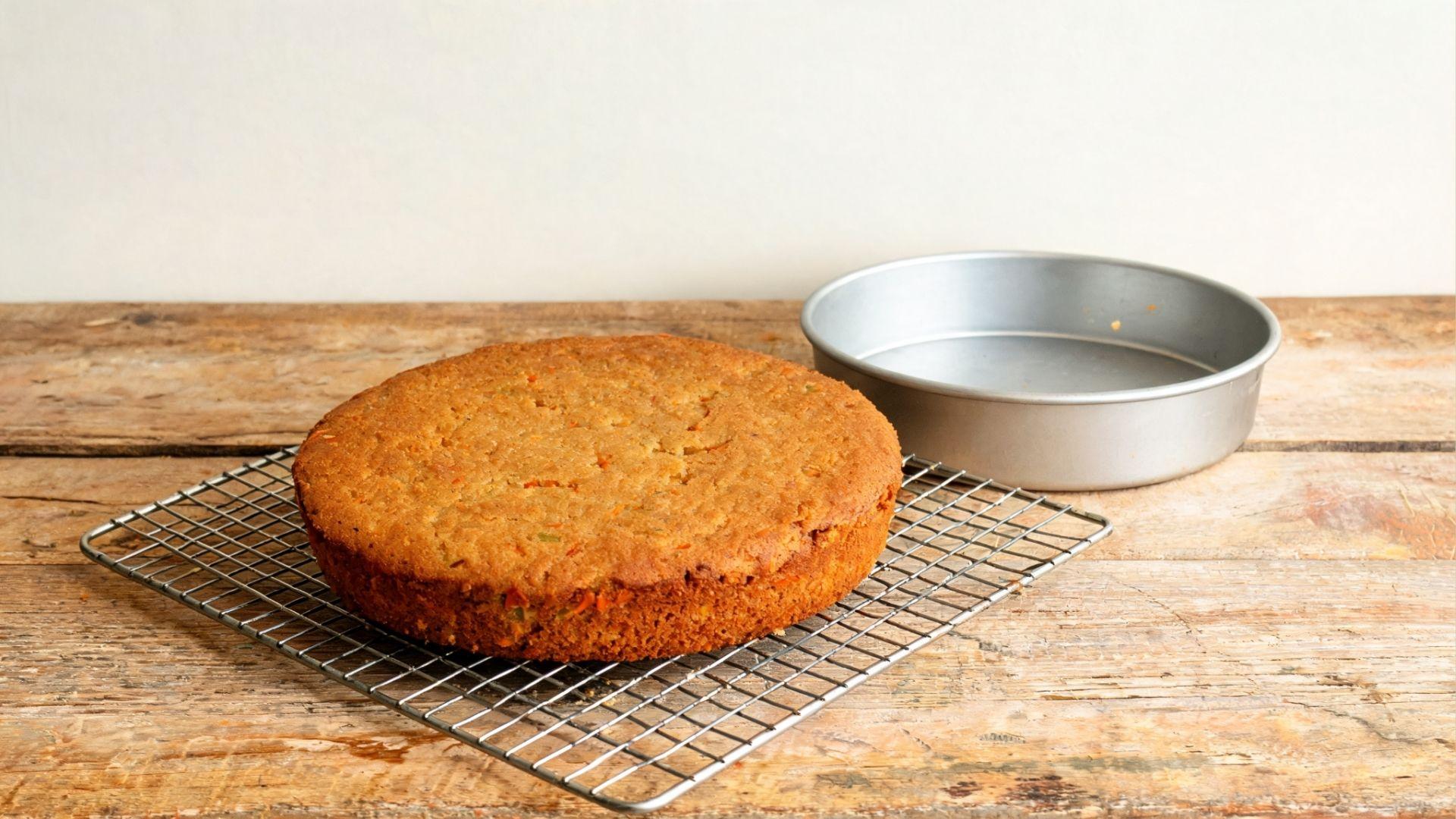
Cool the cake in the pan for 10 minutes, then run a knife around the edge and turn it out onto a wire rack.
Let it cool completely, which takes about an hour, because warm cake melts cream cheese frosting.
Step 7: Make the Cream Cheese Frosting
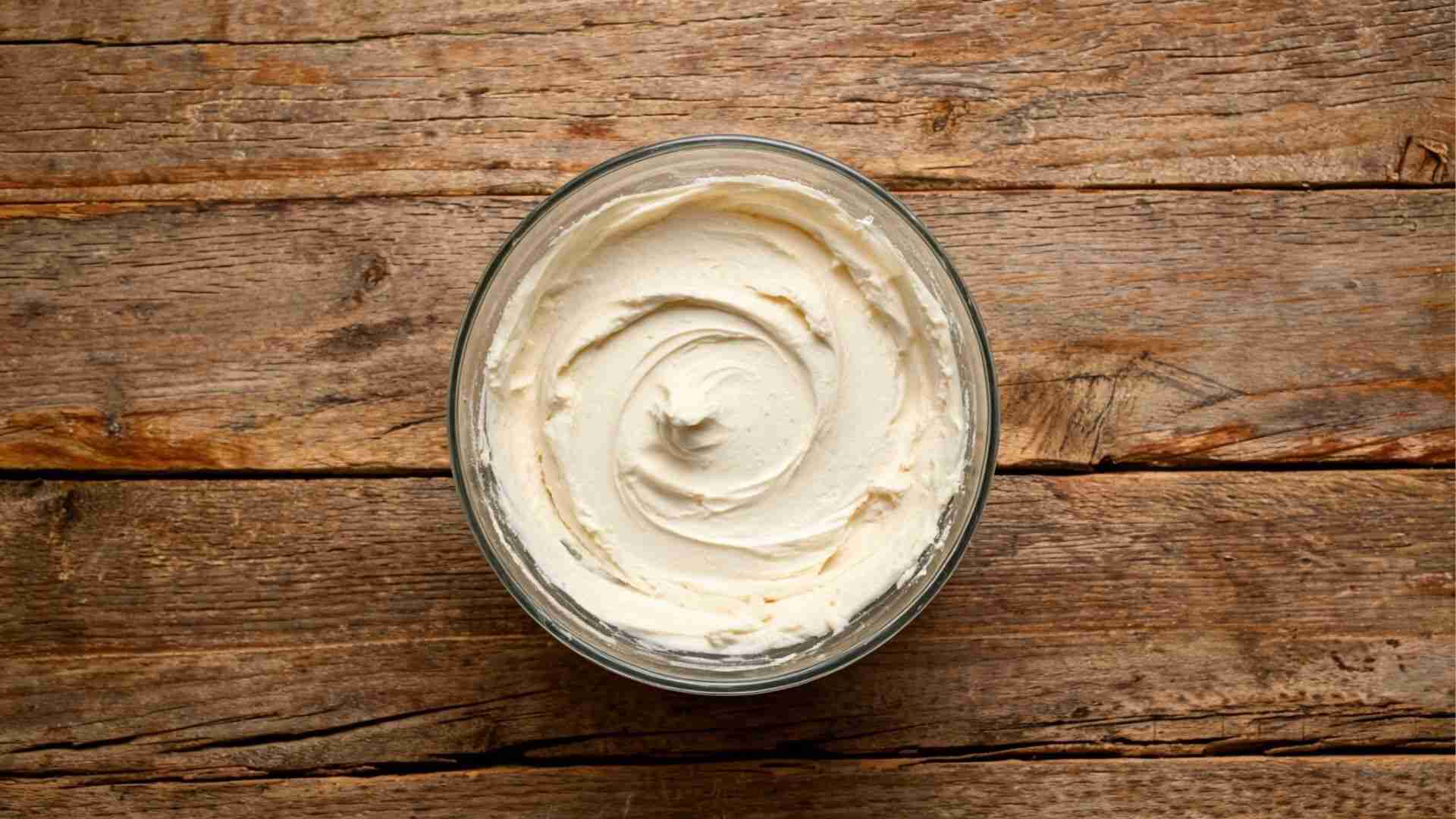
Beat the softened cream cheese and butter until smooth, then add ¾ cup of the powdered sugar and the vanilla and beat until creamy. Taste it and add the remaining ¼ cup only if you want it sweeter.
Spread the frosting over the top of the cooled cake, then chill it for about 20 minutes so the slices cut cleanly.
When an egg-free cake comes out heavier or drier than planned, the cause is usually easy to trace.
Why Did My Eggless Carrot Cake Turn Out Dense or Dry?
A dense eggless carrot cake usually comes from overmixing, old baking soda, or a batter that waited before baking, not from the missing eggs.
A dry one usually means it stayed in the oven too long, so the two problems need different fixes.
1. Dense or Gummy Crumb
Overmixing builds gluten, which turns an egg-free crumb tight and rubbery, and baking soda that has sat open for months loses strength and leaves too little lift.
A batter that waits after the vinegar goes in also bakes up flat, because the gas escapes before the heat can set the crumb around it.
A gummy streak near the bottom usually points to extra liquid, such as an added splash of milk or condensed milk used without cutting the sugar.
Fold gently, use fresh leavening, measure liquids as written, and get the pan into the oven right away.
2. Dry or Crumbly Texture
Overbaking is the usual reason, followed by too little oil or carrots grated on the coarse side of the grater.
Eggless cakes can brown on top and set at the edges before the center is ready, so go by the skewer rather than the color.
Pull the cake when the skewer shows a few moist crumbs, because it keeps cooking in the hot pan for several minutes after it leaves the oven.
How to Store Eggless Carrot Cake
Once frosted, keep the cake covered in the refrigerator for up to 4 days, because cream cheese frosting is perishable.
Unfrosted, the cake keeps at room temperature for about 2 days if it’s wrapped well.
For a party table, follow the USDA Danger Zone guidance, which limits perishable food to 2 hours at room temperature, or 1 hour above 90°F.
Take chilled slices out about 20 minutes before serving so the spice and frosting soften.
Wrapping it Up
An eggless carrot cake depends on three swaps working together: oil for tenderness, an acid with baking soda for lift, and yogurt with finely grated carrot for structure.
Mix lightly, bake as soon as the vinegar goes in, and trust the skewer over the clock, and the cake comes out soft on the first try.
Start by checking the date on your baking soda, then grate three carrots and bake this one as written this week.
Frequently Asked Questions
Can I Use Whole Wheat Flour in Eggless Carrot Cake?
Yes, swap whole wheat flour in for up to half the all-purpose flour. A fully whole wheat batter turns noticeably denser without eggs, and a tablespoon of extra yogurt loosens it if it feels stiff.
Can I Make Eggless Carrot Cake Dairy-Free?
Yes, use an unsweetened plant-based yogurt in the cake, then frost it with dairy-free cream cheese and plant butter. Sweetened yogurts push the cake past its intended sweetness, so check the label first.
Can I Bake This in a Loaf or Bundt Pan?
Yes, a 9×5-inch loaf pan or a 6-cup Bundt pan holds this batter, filled no more than two-thirds full. Deeper pans bake slower, so start checking at 45 minutes and tent with foil if needed.